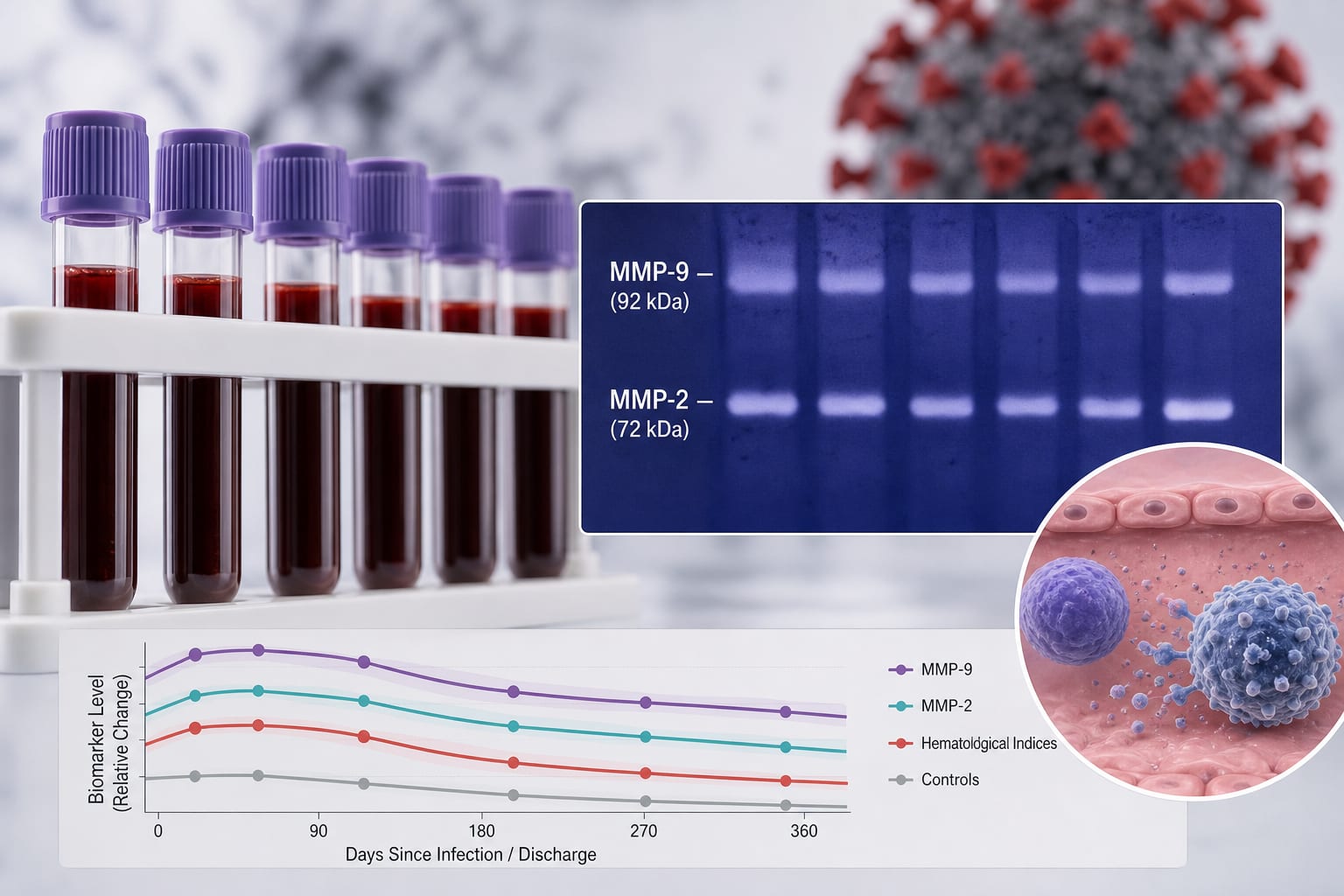
Longitudinal trajectories of hematological indices and serum metalloproteinases-2 and 9 over 1 year after moderate and severe COVID-19 - Scorecard - MDSpire

Longitudinal trajectories of hematological indices and serum metalloproteinases-2 and 9 over 1 year after moderate and severe COVID-19

  • By

  • Rebecca Salomão

  • Gabriel Pasquarelli-do-Nascimento

  • Mayara Ananias

  • Victoria Assis

  • Leandro Gomes de Jesus Ferreira

  • Isabella da Silva Almeida

  • Leandra Silva

  • Katiane Tostes

  • Bruna Pereira Sorroche

  • Lidia Maria Rebolho Batista Arantes

  • Kelly Grace Magalhães

  • Liliana Torcoroma García

  • Rochelle Rocha Costa

  • João Luiz Quagliotti Durigan

  • Rita de Cássia Marqueti

  • June 12, 2026

  • 0 min

Share

Clinical Scorecard: Year-long Analysis of Hematological Parameters and Serum Metalloproteinases-2 and 9 Following Moderate to Severe COVID-19

At a Glance

CategoryDetail
Condition
Key Mechanisms
Target PopulationAdults aged 18–80 years with moderate or severe COVID-19, including non-COVID-19 controls.
Care Setting

Key Highlights

  • Renal function tests and hepatic enzymes remained stable across groups.

Guideline-Based Recommendations

Diagnosis

    Management

      Monitoring & Follow-up

        Risks

          Patient & Prescribing Data

          Biomarker panels may inform future studies on post-acute risk stratification and guide treatment decisions.

          Clinical Best Practices

          • Utilize blood-based biomarkers for monitoring long-term sequelae of COVID-19.
          • Evaluate hematological parameters regularly in patients with a history of severe COVID-19 and ensure follow-ups to monitor changes.

          Related Resources & Content

          Original Source(s)

          Related Content