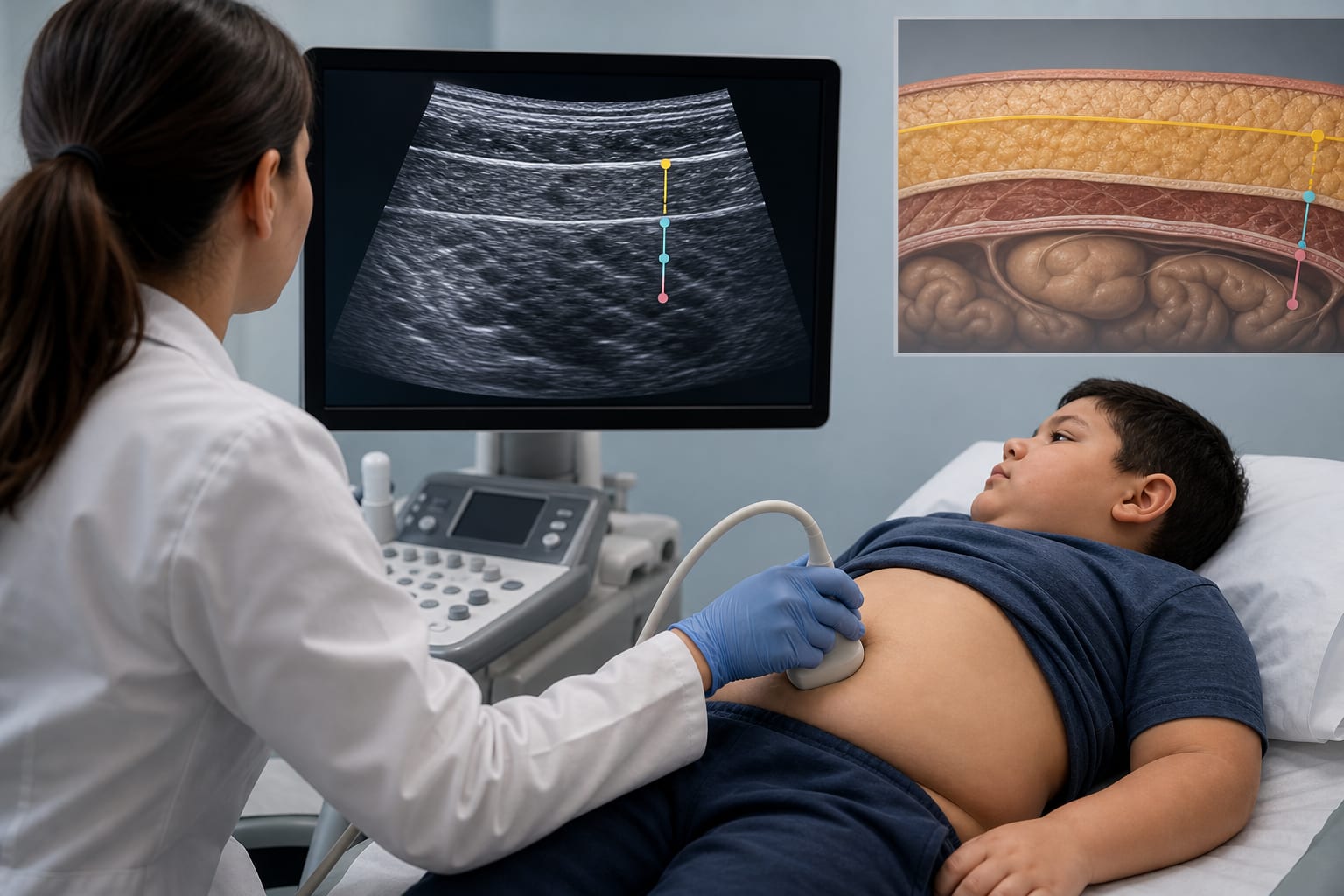
Ultrasound omental fat as a precocious marker of metabolic adiposity in children
-
By
-
Daniel Sánchez-Ruiz
-
Mònica Peitx
-
Marta Calbo
-
Olga Rossell
-
Laia Dachs
-
Júlia Bonet
-
Andrea Jover
-
Guillem Cuatrecasas
-
May 28, 2026
-
Clinical Scorecard: Ultrasound Assessment of Omental Fat as an Early Indicator of Metabolic Adiposity in Pediatric Patients
At a Glance
| Category | Detail |
|---|
| Condition | |
| Key Mechanisms | Assessment of visceral fat compartments using Eco-Obesity ultrasound (source needed). |
| Target Population | |
| Care Setting | |
Key Highlights
- Omental fat thickness correlates with metabolic risk markers in pediatric obesity (source needed).
- Sex-specific thresholds for omental fat are lower than adult reference values (source needed).
- 28.3% of the cohort presented ultrasound-diagnosed hepatic steatosis (source needed).
Guideline-Based Recommendations
Diagnosis
- Utilize Eco-Obesity ultrasound for quantifying abdominal fat layers (source needed).
Management
- Implement risk stratification strategies based on visceral fat assessment (source needed).
Monitoring & Follow-up
- Regularly assess omental fat thickness and associated metabolic parameters (source needed).
Risks
- Monitor for insulin resistance, dyslipidemia, and hepatic steatosis (source needed).
Patient & Prescribing Data
Omental fat is a key indicator of metabolic health in this population (source needed).
Clinical Best Practices
- Incorporate ultrasound assessment of visceral fat in pediatric obesity evaluations (source needed).
- Consider sex differences in fat distribution when assessing metabolic risk (source needed).
Related Resources & Content