Initial Presentation of Purpura in a Patient with Concurrent IgG4-Related Disease and Systemic Lupus Erythematosus: A Case Study
By
Yi Wei
Fuhua Chen
Ruomeng Li
Zhen Zhao
Yajuan Huang
June 22, 2026
Clinical Scorecard: Initial Presentation of Purpura in a Patient with Concurrent IgG4-Related Disease and Systemic Lupus Erythematosus: A Case Study
At a Glance
Category Detail
Condition Concurrent IgG4-related disease and systemic lupus erythematosus Key Mechanisms Immune-mediated fibro-inflammatory disorder with elevated serum IgG4 levels and autoimmune features Target Population Adults with purpura and suspected immune-related disorders Care Setting Dermatology and nephrology outpatient clinics
Key Highlights
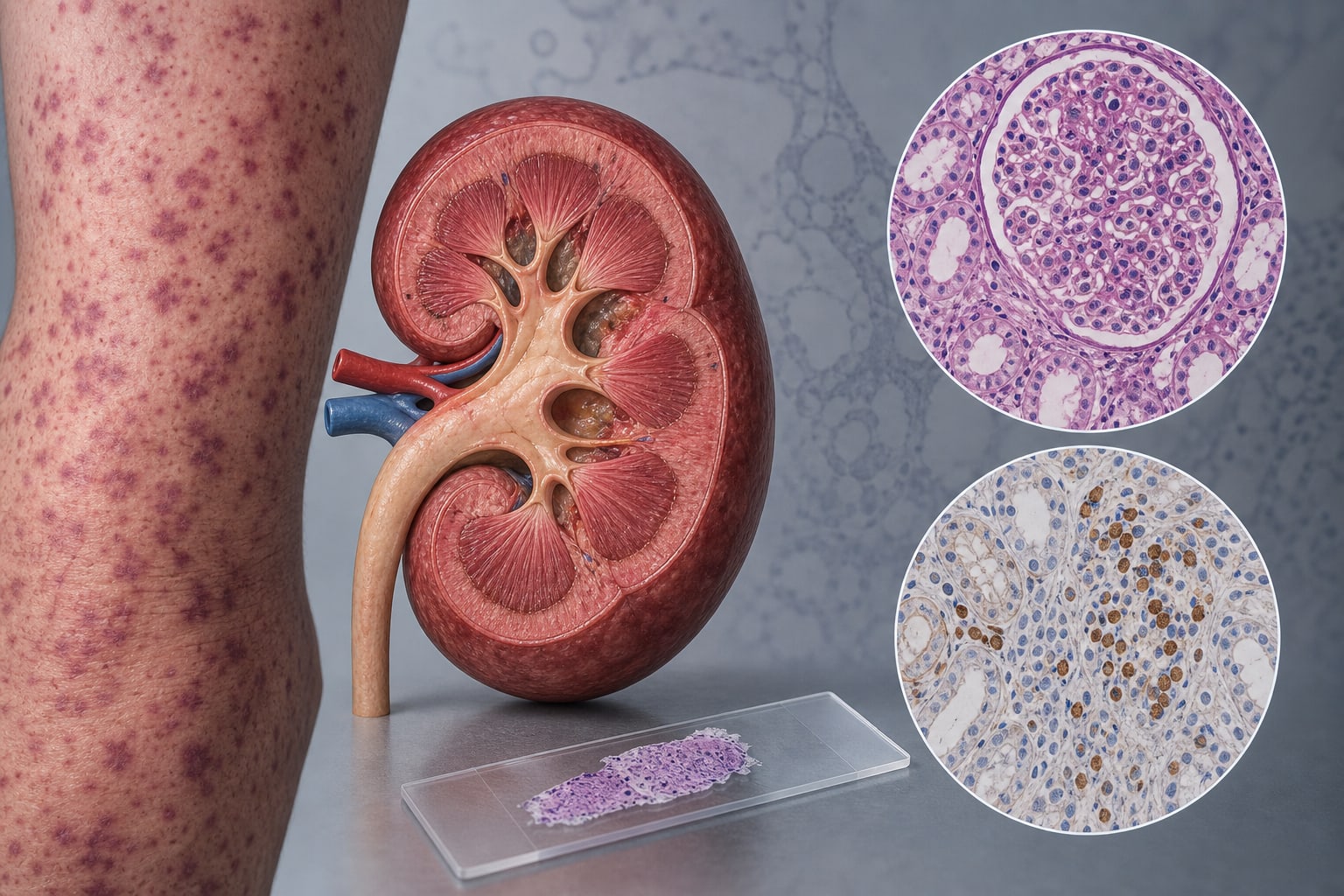
Purpura as the initial presentation of concurrent IgG4-RD and SLE Patient treated with prednisone, hydroxychloroquine, and mycophenolate mofetil Sustained clinical improvement observed within 8 months Novel renal pathological overlap characterized by IgG4-related tubulointerstitial injury and lupus-induced mesangioproliferative glomerulonephritis Importance of renal biopsy in diagnosing SLE Guideline-Based Recommendations
Diagnosis
Renal biopsy is vital for diagnosing systemic lupus erythematosus Monitor for specific autoimmune antibodies in suspected cases Management
First-line therapy includes glucocorticoids for IgG4-RD Combination therapy with immunosuppressants may be necessary for SLE Monitoring & Follow-up
Regular follow-up required to monitor drug-related adverse effects Risks
Potential for renal damage if not properly managed Adverse effects from long-term glucocorticoid use Patient & Prescribing Data
61-year-old male with purpura and concurrent autoimmune diseases
Combination therapy led to resolution of purpura and improvement in renal function
Clinical Best Practices
Consider differential diagnoses when purpura is present Utilize comprehensive laboratory evaluations to guide diagnosis Implement a multidisciplinary approach involving dermatology and nephrology Related Resources & Content