Clinical and CT angiography characteristics of Chinese stroke patients with carotid web: a retrospective study
-
By
-
Zhuoman Chen
-
Jingjing Cai
-
Xianfu Hu
-
Jiaming Huang
-
Yougang Ke
-
Jing Hu
-
Siping Luo
-
Lijie Ren
-
June 17, 2026
-
Clinical Scorecard: Characteristics of Clinical Presentation and CT Angiography in Chinese Stroke Patients with Carotid Web: A Retrospective Analysis
At a Glance
| Category | Detail |
|---|
| Condition | Carotid Web (CaW) |
| Key Mechanisms | Intimal fibromuscular dysplasia leading to ischemic stroke risk. |
| Target Population | Chinese stroke patients. |
| Care Setting | Single center in southern China. |
Key Highlights
- Prevalence of CaW in the studied population was 0.37%.
- Majority of CaWs located at the common carotid artery bifurcation.
- Cerebral infarction was the most common diagnosis among patients with CaW.
- Hypertension was significantly more prevalent in the cerebral infarction group.
- Mild stenosis (1%-30%) accounted for 64.7% of cases.
Guideline-Based Recommendations
Diagnosis
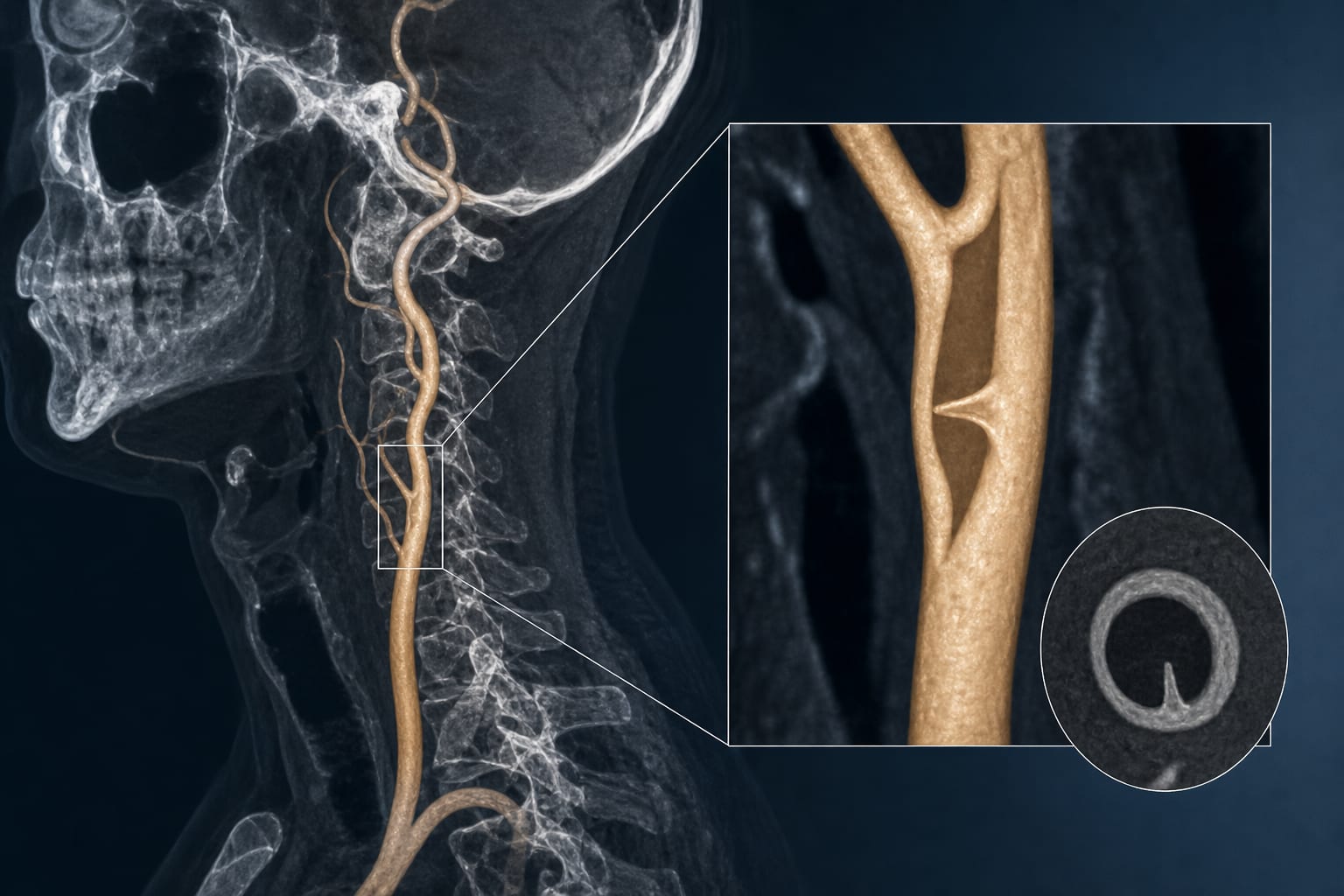
- CaW diagnosed on CTA as a thin, membrane-like intraluminal filling defect.
Management
- Individualized management strategies based on CTA evaluation.
Monitoring & Follow-up
- Careful evaluation of lumen diameter at CaW sites.
Risks
- CaW is an important risk factor for cryptogenic cerebral infarction.
Patient & Prescribing Data
34 patients (32 males, 2 females; mean age 56.97 ± 14.75 years).
CaW associated with high risk of recurrent stroke or TIA despite antithrombotic use.
Clinical Best Practices
- Use multiplane reconstruction to improve diagnostic performance.
- Consensus review by multiple physicians to enhance diagnostic reliability.
Related Resources & Content