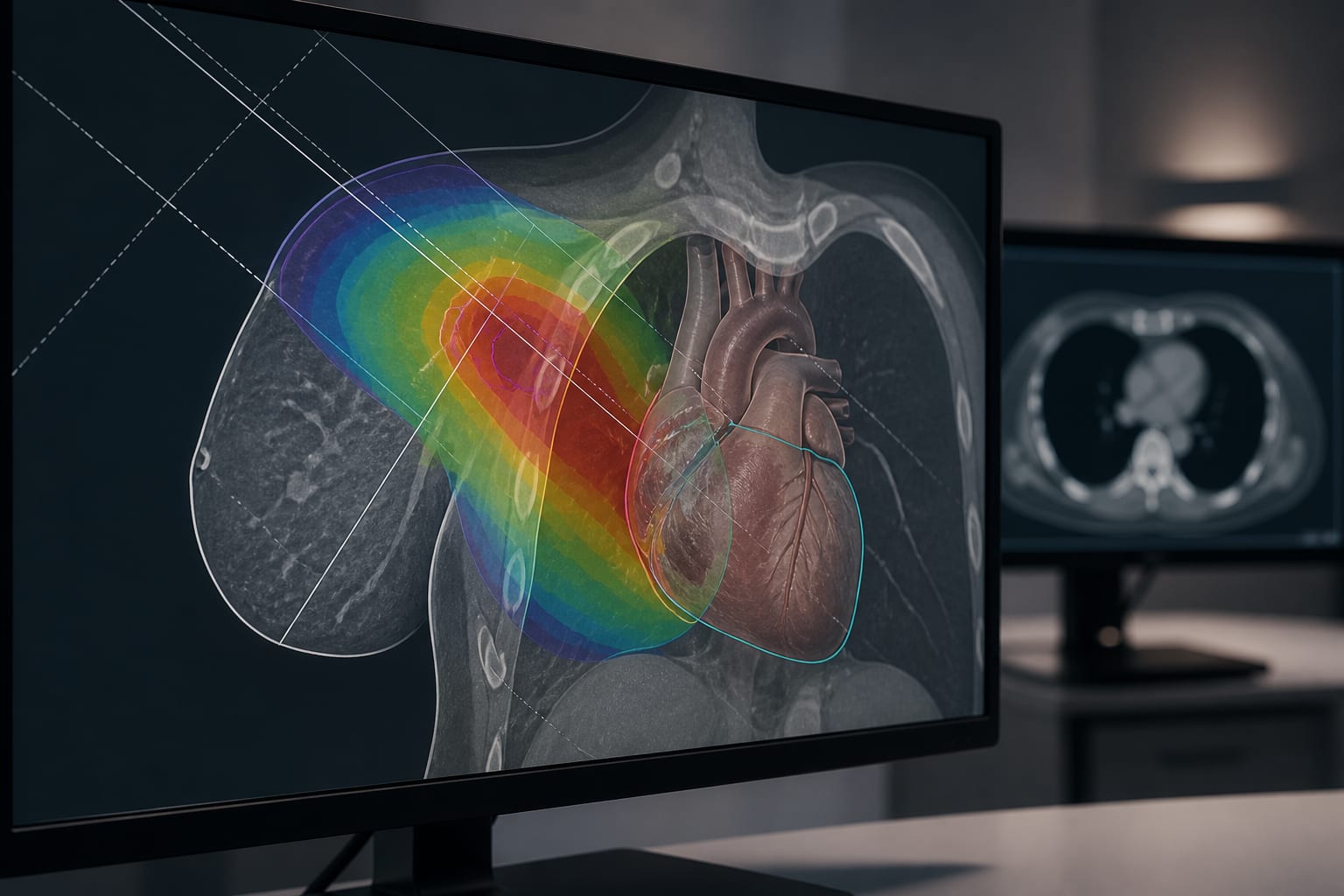
Editorial: Enhancing the Effectiveness and Safety of Radiotherapy in Cervical Cancer Through Brachytherapy Integration
-
By
-
Irina Vergalasova
-
Chunling Jiang
-
Tao Song
-
Dorothy Lombe
-
July 17, 2026
Clinical Scorecard: Enhancing the Effectiveness and Safety of Radiotherapy in Cervical Cancer Through Brachytherapy Integration
At a Glance
| Category | Detail |
|---|
| Condition | Cervical Cancer |
| Key Mechanisms | Integration of brachytherapy and advanced imaging techniques to optimize treatment efficacy and safety. |
| Target Population | Patients with cervical cancer, particularly in resource-limited settings. |
| Care Setting | Radiotherapy centers, including those in Low- and Middle-Income Countries. |
Key Highlights
- Shortened radiotherapy courses may reduce acute toxicities and socioeconomic burdens.
- MRI is the gold standard for brachytherapy imaging, but CBCT may offer practical alternatives.
- Integration of artificial intelligence is essential for optimizing brachytherapy practices.
- Predictive modeling can help match patients with appropriate treatment regimens.
- Workflow innovations are critical for improving treatment quality.
Guideline-Based Recommendations
Diagnosis
- Utilize advanced imaging techniques for accurate diagnosis and treatment planning.
Management
- Consider hypofractionation in resource-limited settings to optimize treatment delivery.
Monitoring & Follow-up
- Implement toxicity prediction and management strategies to mitigate adverse effects.
Risks
- Acute toxicities typically peak between two to six weeks after treatment initiation.
Patient & Prescribing Data
Patients undergoing treatment for cervical cancer.
Shortened treatment courses may allow completion of therapy before peak toxicity.
Clinical Best Practices
- Incorporate imaging and predictive modeling in treatment planning.
- Explore the use of cone beam CT for improved dosimetry and needle placement.
- Integrate artificial intelligence to enhance resource utilization in brachytherapy.
Related Resources & Content