Perioperative nursing outcomes and management strategies in cold plasma ablation for superficial corneal disorders - Scorecard - MDSpire

Perioperative nursing outcomes and management strategies in cold plasma ablation for superficial corneal disorders

  • By

  • Dan Hu

  • Yuan Lin

  • Huping Wu

  • June 10, 2026

  • 0 min

Share

Clinical Scorecard: Nursing Outcomes and Management Approaches During Perioperative Care for Superficial Corneal Disorders Treated with Cold Plasma Ablation

At a Glance

CategoryDetail
ConditionSuperficial corneal disorders
Key MechanismsLow-temperature plasma ablation (LTPA) for precise tissue removal with minimal collateral damage.
Target PopulationPatients with superficial corneal lesions unresponsive to conventional therapy.
Care SettingOphthalmology clinics and surgical centers.

Key Highlights

  • 38 patients analyzed, mean age 51.97 years.
  • Infectious group had longer epithelial healing times and higher pain scores.
  • No severe postoperative complications reported.
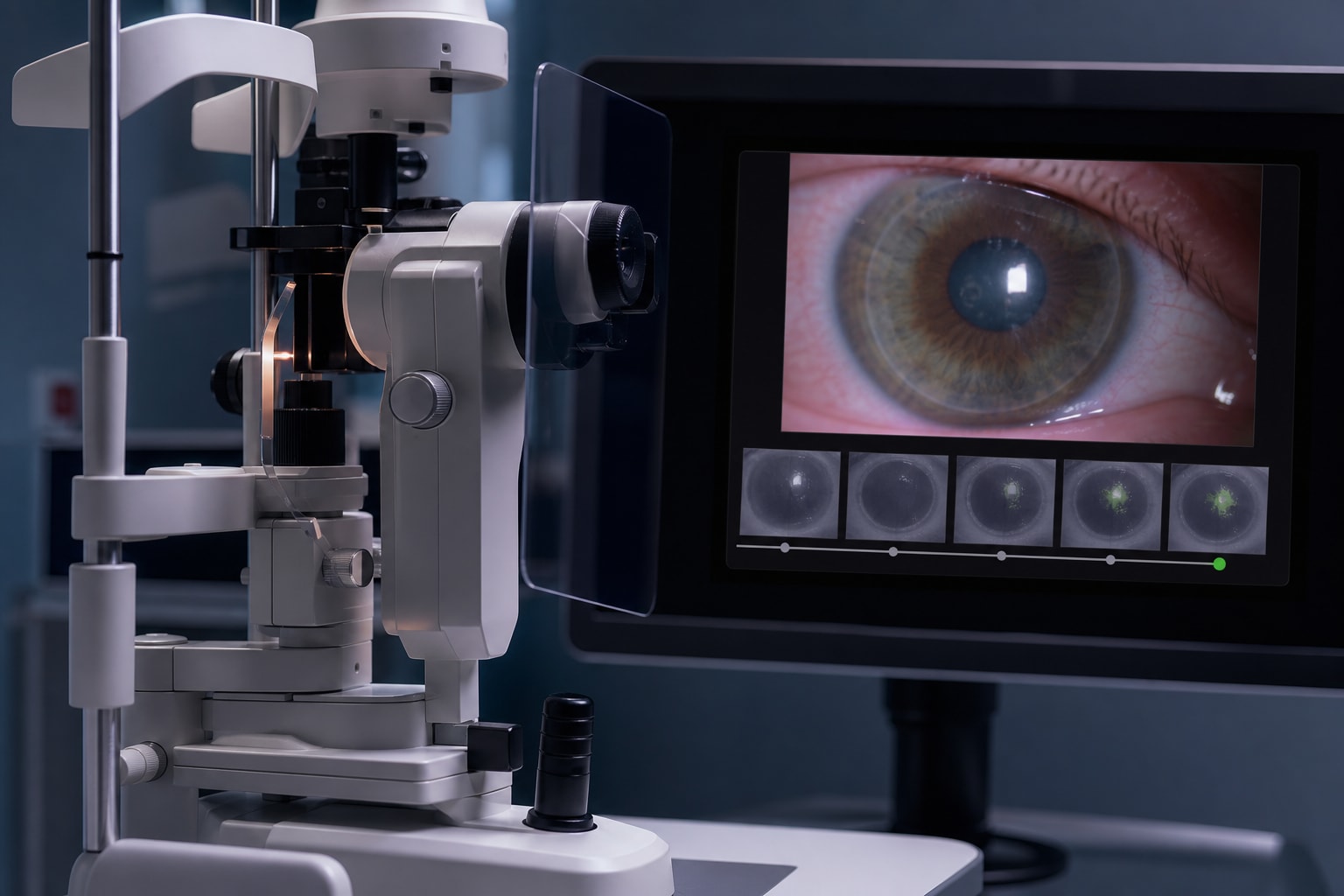
  • Digital slit-lamp imaging used for objective healing assessment.
  • Nursing satisfaction scores lower in the infectious group.
Guideline-Based Recommendations

Diagnosis

  • Confirm superficial corneal lesions via anterior segment optical coherence tomography (AS-OCT).

Management

  • Utilize low-temperature plasma ablation (LTPA) for treatment of superficial corneal lesions.

Monitoring & Follow-up

  • Monitor epithelial healing and pain scores using visual analog scale (VAS).

Risks

  • Consider risks of corneal haze, infection, and delayed epithelial healing.

Patient & Prescribing Data

Patients with superficial corneal lesions limited to the anterior one-third of the stroma.

LTPA is effective for both infectious and noninfectious superficial corneal diseases.

Clinical Best Practices

  • Implement tailored perioperative nursing protocols.
  • Use digital image-based monitoring for healing assessment.
  • Ensure control of acute suppuration in infectious cases prior to surgery.

Related Resources & Content

    Original Source(s)

    Related Content