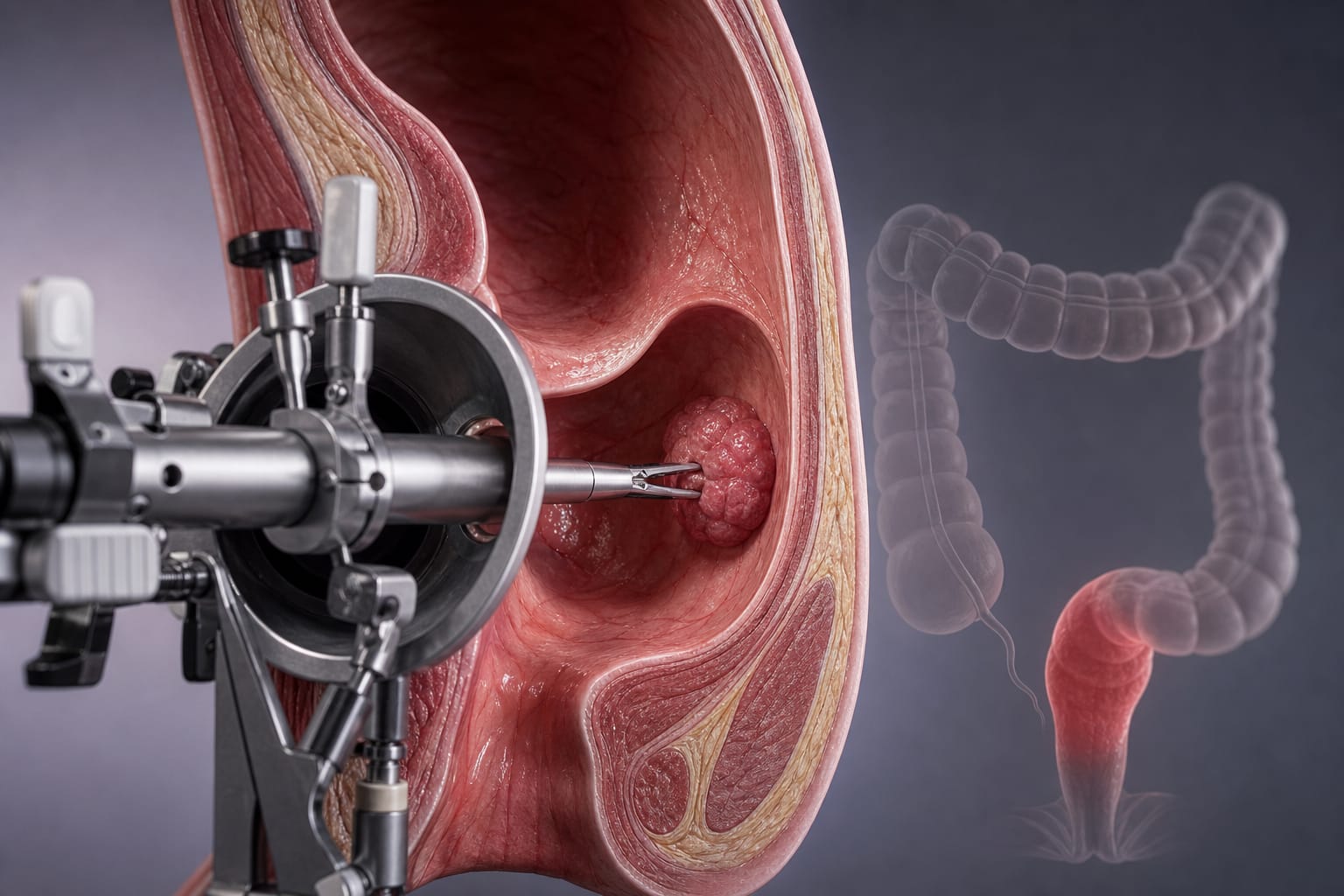
Transanal endoscopic microsurgery was associated with higher recurrence rate in both low- and high-risk T1 rectal cancer compared to surgical resection - Scorecard - MDSpire
Advertisement
Transanal endoscopic microsurgery was associated with higher recurrence rate in both low- and high-risk T1 rectal cancer compared to surgical resection
Clinical Scorecard: Transanal endoscopic microsurgery shows increased recurrence rates in T1 rectal cancer patients, regardless of risk classification, compared to traditional surgical resection.
At a Glance
Category
Detail
Condition
Key Mechanisms
Comparison of recurrence rates between transanal endoscopic microsurgery (TEM) and traditional surgical resection, including specific statistics.
Target Population
Care Setting
Key Highlights
Surgical resection is the gold standard for pT1 rectal cancer but has high complication risks.
TEM is associated with fewer complications but higher local recurrence rates compared to surgical resection.
High-risk tumors are defined by features such as lymphovascular invasion and incomplete resection.
Current guidelines recommend surgical resection for high-risk tumors and TEM for low-risk tumors.
Recurrence rates are a critical outcome measure for evaluating treatment effectiveness.
Guideline-Based Recommendations
Diagnosis
Management
Completion surgical resection is recommended for high-risk tumors; TEM may be considered for low-risk tumors defined by specific histopathological features.
Monitoring & Follow-up
Risks
Patient & Prescribing Data
Patients with surgically treated, non-synchronous pT1 rectal cancer.
Local resection techniques like TEM have gained interest due to lower complication rates.
Clinical Best Practices
Incorporate specific follow-up protocols, such as imaging and endoscopic surveillance, in line with current guidelines.