Development and validation of a prediction model for psychological distress in patients with differentiated thyroid cancer undergoing ¹³¹I therapy - Scorecard - MDSpire
Advertisement
Development and validation of a prediction model for psychological distress in patients with differentiated thyroid cancer undergoing ¹³¹I therapy
Clinical Scorecard: Creation and assessment of a predictive model for psychological distress in differentiated thyroid cancer patients receiving ¹³¹I treatment
At a Glance
Category
Detail
Condition
Differentiated Thyroid Cancer (DTC)
Key Mechanisms
Psychological distress related to ¹³¹I therapy, including factors like sleep quality, TSH stimulation, and social support.
Target Population
Patients with differentiated thyroid cancer undergoing ¹³¹I therapy
Care Setting
Tertiary referral hospital
Key Highlights
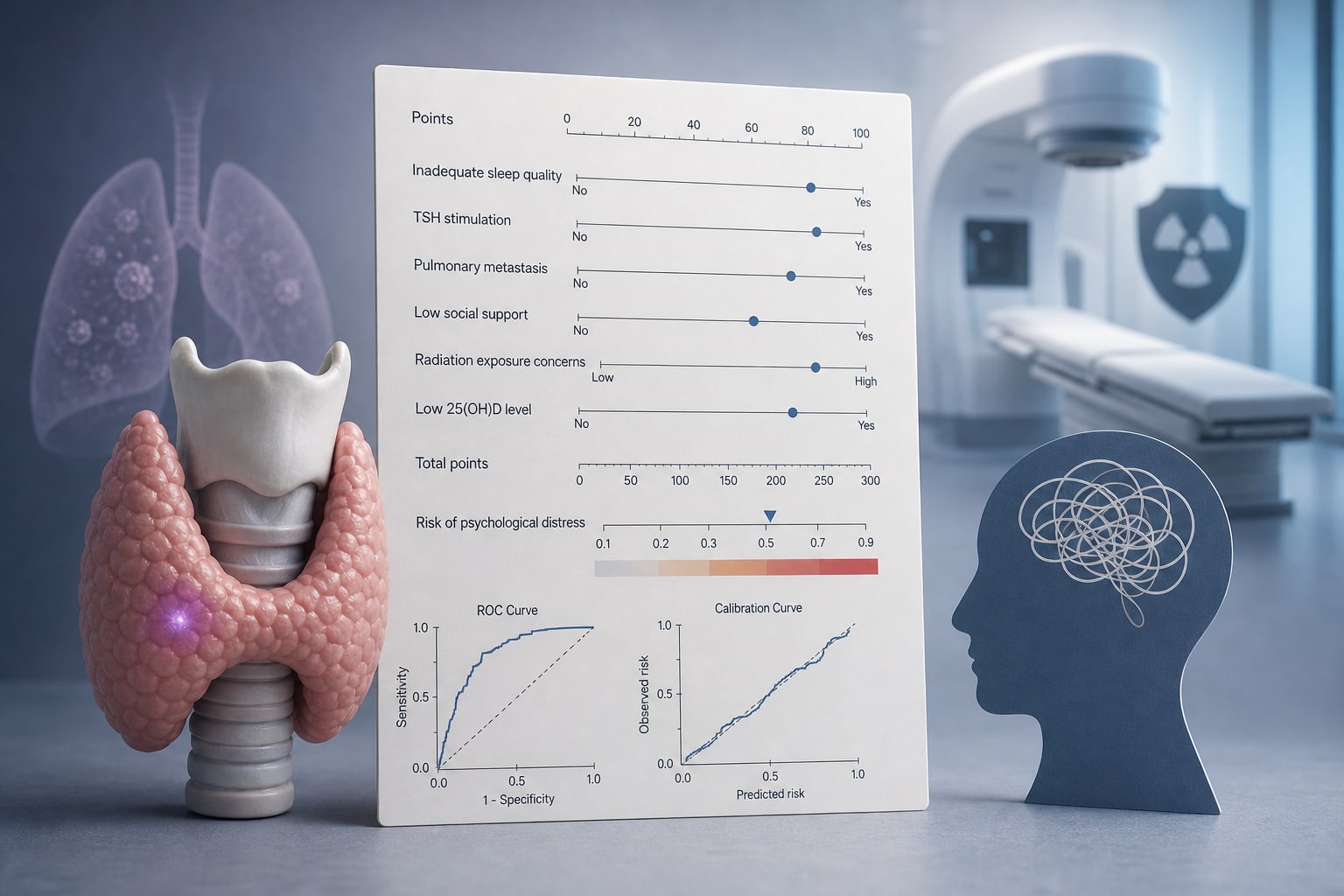
Developed a predictive model for psychological distress in DTC patients receiving ¹³¹I therapy.
Identified independent risk factors: poor sleep quality, TSH stimulation, pulmonary metastasis, social support, radiation exposure concerns, and low serum 25-hydroxyvitamin D levels.
Achieved an AUC of 0.835 for model performance with good calibration and clinical utility.
High prevalence of anxiety and depression in DTC patients receiving ¹³¹I therapy (38.7% to 52.5%).
Model requires external validation in larger, multicenter cohorts.
Guideline-Based Recommendations
Diagnosis
Use the developed nomogram to identify patients at risk for psychological distress.
Management
Consider early interventions for patients identified as high-risk for psychological distress.
Monitoring & Follow-up
Regularly assess psychological well-being in DTC patients undergoing ¹³¹I therapy.
Risks
Monitor for anxiety and depression, which may impair quality of life and treatment adherence.
Patient & Prescribing Data
Patients diagnosed with differentiated thyroid cancer receiving ¹³¹I therapy.
Psychosocial stressors associated with ¹³¹I therapy necessitate attention to psychological health.
Clinical Best Practices
Integrate psychological assessment into routine care for DTC patients.
Utilize the predictive model to tailor support and interventions.