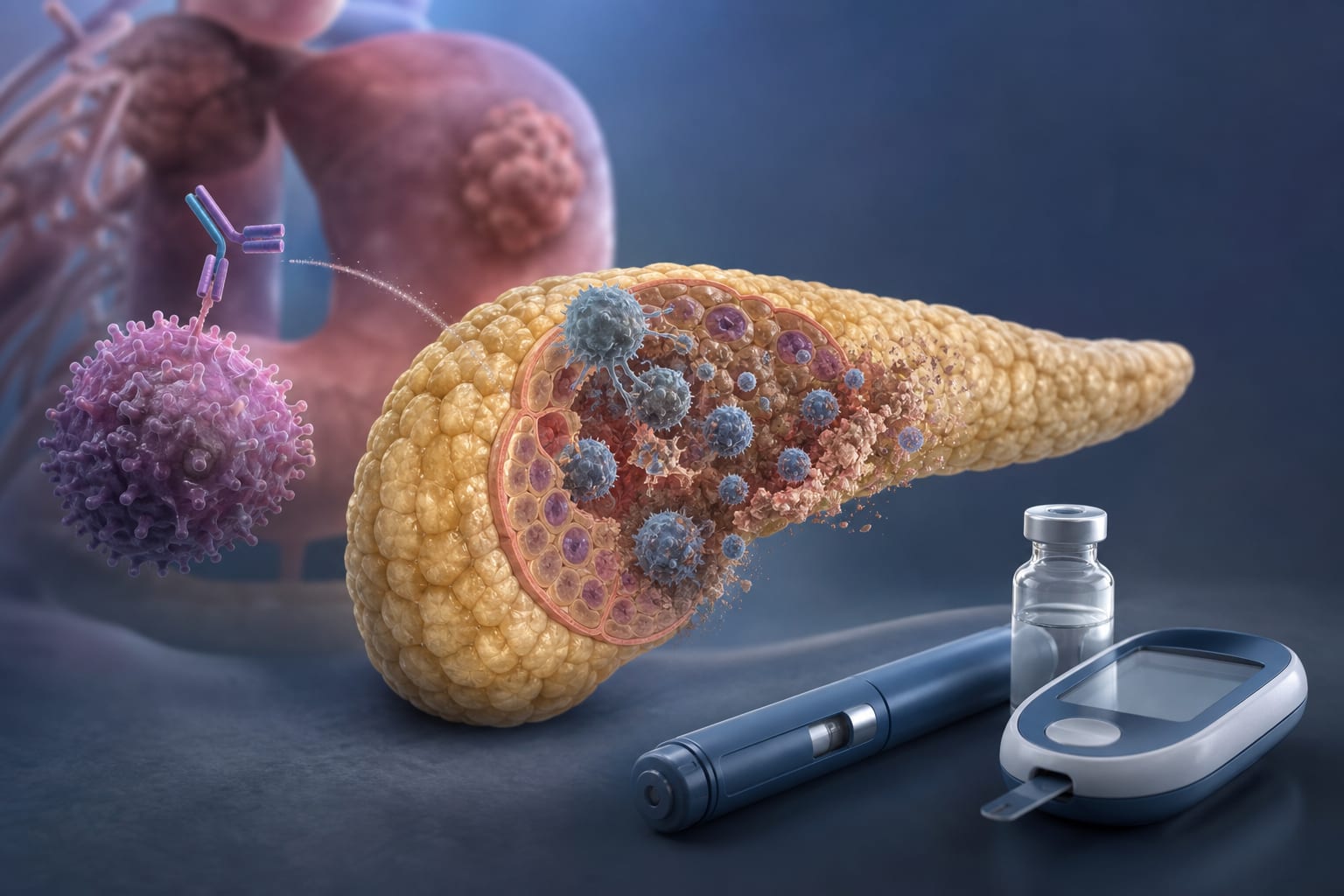
Type 1 diabetes mellitus induced by sintilimab: a case report and related case literature analysis
-
By
-
Hao Su
-
Xinyu Zhao
-
Huayu Liu
-
Mianli Li
-
Haitao Geng
-
July 1, 2026
-
Clinical Scorecard: Case Report and Literature Review on Type 1 Diabetes Mellitus Triggered by Sintilimab Therapy
At a Glance
| Category | Detail |
|---|
| Condition | Type 1 Diabetes Mellitus (ICI-T1DM) |
| Key Mechanisms | Induced by immune checkpoint inhibitors leading to irreversible damage to pancreatic β cells. |
| Target Population | Patients undergoing treatment with immune checkpoint inhibitors, particularly those with malignancies. |
| Care Setting | Oncology and endocrinology clinical settings. |
Key Highlights
- Low incidence rate of ICI-T1DM (0.2%-1.4%) but irreversible β-cell damage.
- Steroid treatment is ineffective for ICI-T1DM.
- Importance of blood glucose monitoring during immune checkpoint inhibitor therapy.
- Case study of a 69-year-old female patient developing ICI-T1DM during Sintilimab treatment.
- Differentiation of ICI-T1DM from classic autoimmune type 1 diabetes.
Guideline-Based Recommendations
Diagnosis
- Consider ICI-T1DM in patients with hyperglycemia during immune checkpoint inhibitor therapy.
- Evaluate for diabetes-related autoantibodies, noting potential seronegative profiles.
Management
- Initiate insulin therapy promptly upon diagnosis of ICI-T1DM.
- Adjust insulin regimen based on blood glucose monitoring.
Monitoring & Follow-up
- Strengthen blood glucose monitoring during treatment with immune checkpoint inhibitors.
- Monitor for symptoms of hyperglycemia and diabetic ketoacidosis.
Risks
- Risk of diabetic ketoacidosis in patients with ICI-T1DM.
- Potential exacerbation of insulin resistance with steroid treatment.
Patient & Prescribing Data
Patients with malignancies receiving immune checkpoint inhibitors.
Insulin therapy is essential for managing ICI-T1DM, with adjustments based on individual glucose levels.
Clinical Best Practices
- Educate patients on recognizing symptoms of hyperglycemia and diabetic ketoacidosis.
- Ensure multidisciplinary collaboration between oncology and endocrinology for optimal management.
Related Resources & Content