Conexiant’s news site is now MDSpire News. Learn more
Advertisement
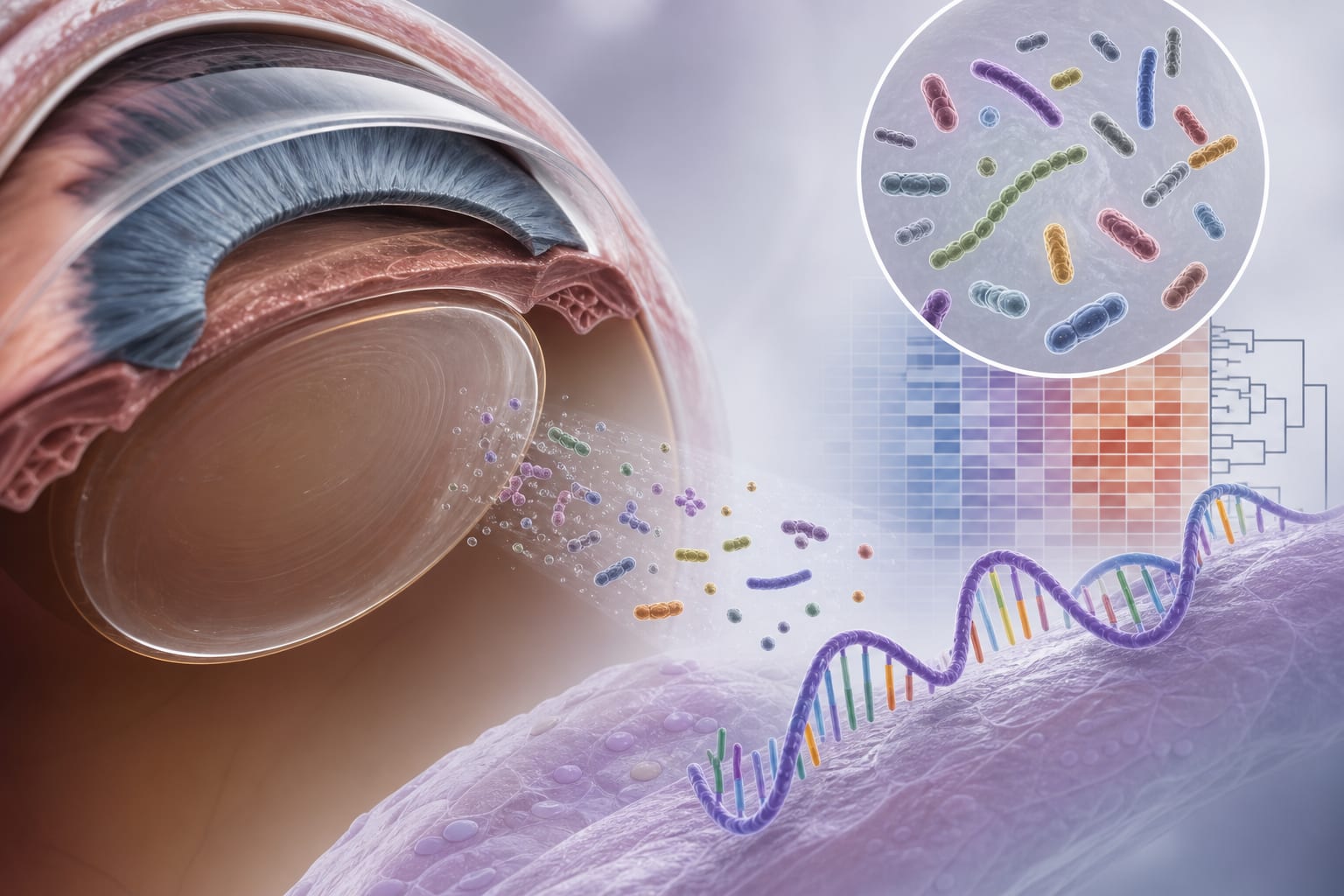
Comprehensive Examination of Aqueous Humor Microbiome and Lens Capsule Transcriptome in Patients with High Myopia Cataract: A Preliminary Investigation
Clinical Scorecard: Comprehensive Examination of Aqueous Humor Microbiome and Lens Capsule Transcriptome in Patients with High Myopia Cataract: A Preliminary Investigation
At a Glance
Category
Detail
Condition
Key Mechanisms
Alterations in aqueous humor microbial diversity and lens capsule transcriptomic changes.
Target Population
Care Setting
Key Highlights
Significant alterations in aqueous humor microbial diversity in high myopia cataract patients.
Decreased abundance of Escherichia and increased abundance of Neisseria and other genera.
Reprogramming of metabolism-related genes in the lens capsule.
Activation of ErbB and HIF-1 signaling pathways linked to lens epithelial cell apoptosis.
Guideline-Based Recommendations
Diagnosis
Assess axial length and cataract type for high myopia patients.
Management
Consider unique anatomical alterations in high myopia during cataract surgery.
Monitoring & Follow-up
Monitor for postoperative complications such as capsular contraction syndrome.
Risks
Increased surgical complexity and postoperative complication rates in high myopia cataract patients.
Patient & Prescribing Data
Patients with high myopia and cataract undergoing surgery.