Clinical Scorecard: Immune Reconstitution Mediated by B Cells Following Lung Transplantation: Mechanisms, Therapeutic Approaches, and Prognostic Assessment
At a Glance
Category
Detail
Condition
Lung Transplantation
Key Mechanisms
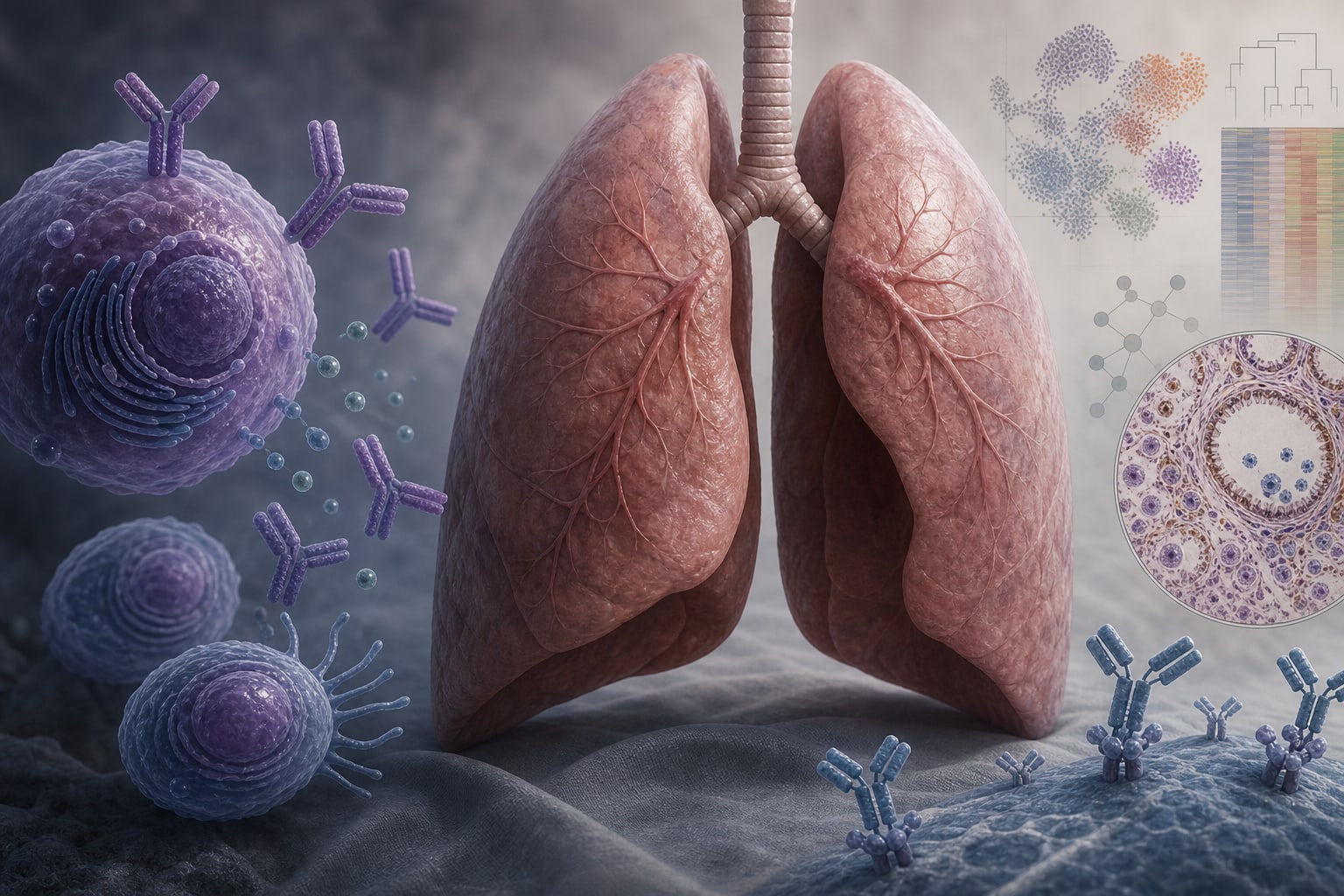
B cells regulate immune responses through antibody production, antigen presentation, and cytokine secretion, contributing to both protective immunity and antibody-mediated rejection.
Target Population
Patients undergoing lung transplantation for end-stage lung disease.
Care Setting
Transplant immunology and post-transplant care.
Key Highlights
B cells play a critical role in both protective immunity and antibody-mediated rejection (AMR) in lung transplantation.
Donor-specific antibodies (DSAs) are linked to chronic lung allograft dysfunction (CLAD).
B cell dysregulation can result from ischemia-reperfusion injury, infection, and immunosuppressive agents like tacrolimus.
Multi-omics technologies enable precise characterization of B cell dynamics for immune monitoring.
Increased microbial burden in lung transplant recipients is associated with adverse outcomes.
Guideline-Based Recommendations
Diagnosis
Monitor for donor-specific antibodies (DSAs) to assess risk of AMR.
Management
Utilize immunosuppressive therapies while balancing the risk of B cell dysregulation.
Monitoring & Follow-up
Employ multi-omics platforms for stratified immune monitoring and risk prediction.
Risks
Increased susceptibility to infections and chronic rejection due to immunosuppressive therapy.
Patient & Prescribing Data
Lung transplant recipients.
Immunosuppressive agents like tacrolimus may lead to B cell dysregulation, necessitating careful management.
Clinical Best Practices
Assess B cell dynamics post-transplant to tailor immunomodulation strategies.
Monitor for signs of infection and chronic rejection in lung transplant recipients.