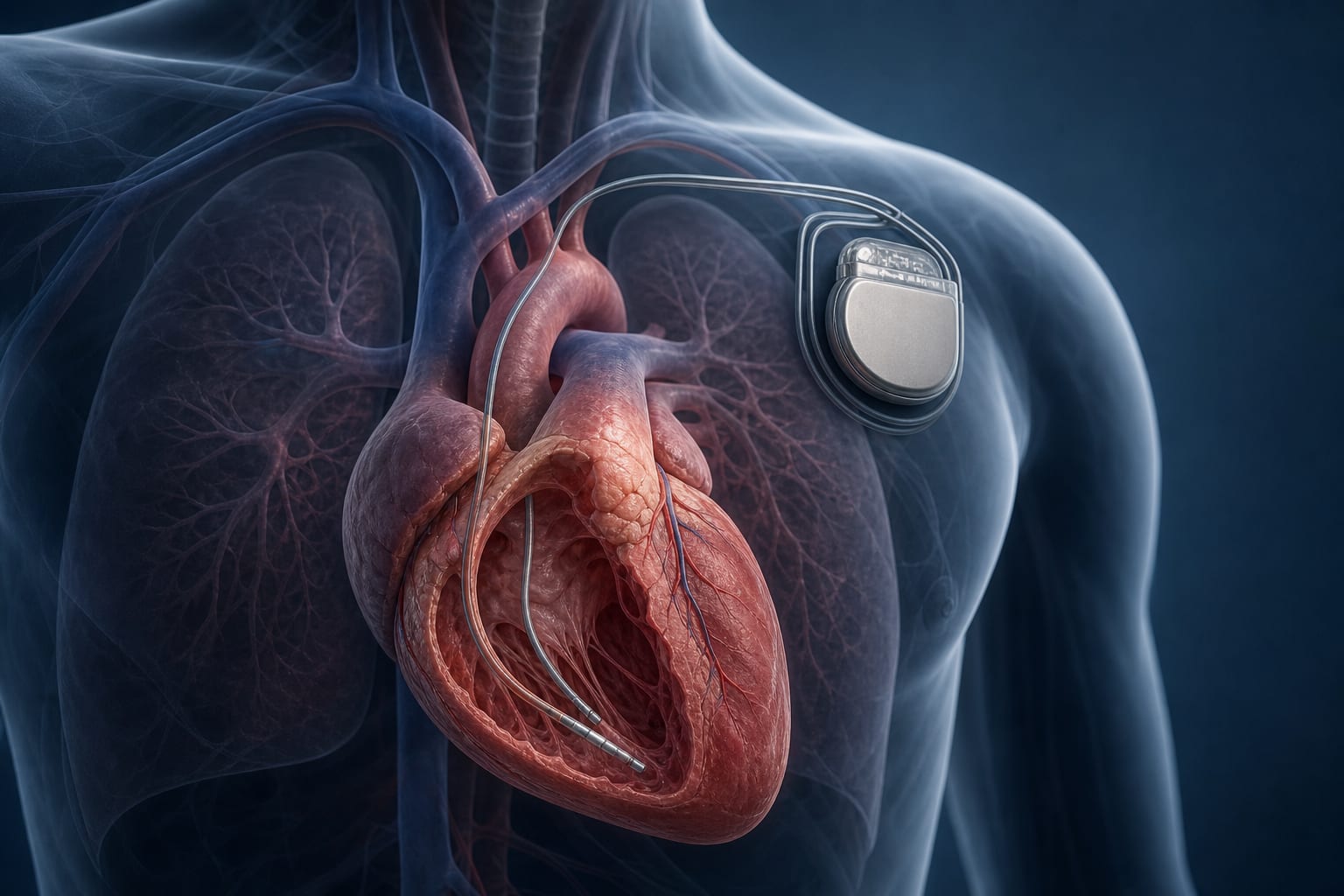
Clinical Scorecard: Advances in Catheter Ablation
At a Glance
| Category | Detail |
|---|---|
| Condition | Atrial and ventricular arrhythmias |
| Key Mechanisms | Catheter ablation including pulse field ablation; stroke prevention via left atrial occlusion device |
| Target Population | Patients with atrial or ventricular arrhythmias, especially those at risk for stroke or with contraindications to blood thinners |
| Care Setting | Specialized electrophysiology centers such as UCI Health |
Key Highlights
- Introduction of pulse field ablation as a revolutionary technique for treating atrial and ventricular arrhythmias
- Use of left atrial occlusion devices for stroke prevention in patients with high bleeding risk or contraindications to anticoagulation
- Comprehensive management strategies combining invasive procedures and stroke prevention tailored to patient risk profiles
Guideline-Based Recommendations
Diagnosis
- Identify atrial and ventricular arrhythmias through clinical evaluation and electrophysiological studies
- Assess stroke risk factors to determine need for prevention strategies
Management
- Employ catheter ablation techniques including pulse field ablation for arrhythmia treatment
- Use left atrial occlusion devices for patients with high bleeding risk or prior bleeding complications
- Consider device therapy alongside pharmacologic stroke prevention when appropriate
Monitoring & Follow-up
- Regular follow-up to assess arrhythmia control and device function
- Monitor for bleeding complications in patients on anticoagulation or with occlusion devices
Risks
- Bleeding complications in patients on blood thinners
- Potential trauma risk in patients prone to falls while on anticoagulation
- Procedure-related risks associated with catheter ablation and device implantation
Patient & Prescribing Data
Patients with atrial or ventricular arrhythmias, especially those at high risk for stroke or bleeding
Patients intolerant to or at high risk from oral anticoagulants may benefit from left atrial occlusion devices; catheter ablation techniques are evolving to improve safety and efficacy
Clinical Best Practices
- Utilize advanced catheter ablation technologies such as pulse field ablation for improved outcomes
- Tailor stroke prevention strategies to individual patient bleeding risk and lifestyle
- Integrate multidisciplinary expertise to optimize arrhythmia management and stroke prevention
References
This content is an AI-generated, fully rewritten summary based on a published scholarly article. It does not reproduce the original text and is not a substitute for the original publication. Readers are encouraged to consult the source for full context, data, and methodology.