Beyond Detection: How AI Is Reshaping Breast Imaging and Risk-Based Screening
-
By
-
October 26, 2026
-
6 min
Clinical Scorecard: Beyond Detection: How AI Is Reshaping Breast Imaging and Risk-Based Screening
At a Glance
| Category | Detail |
|---|---|
| Condition | Breast cancer screening and imaging-based risk assessment |
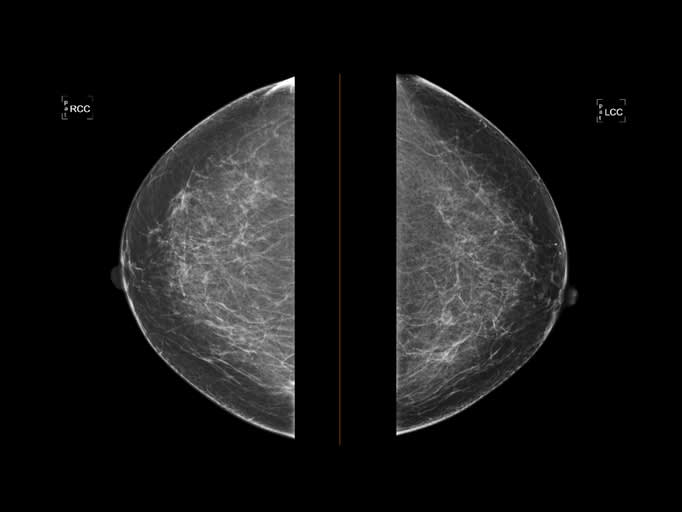
| Key Mechanisms | AI analyzes mammographic findings, breast density, tissue patterns and texture; it can also support workflow triage, technical quality assessment and estimation of future breast cancer risk. |
| Target Population | Women undergoing mammography, including those whose imaging and clinical information may inform individualized screening or supplemental imaging. |
| Care Setting | Breast imaging and screening practices; AI-derived risk approaches remain under investigation and require validation before guiding screening changes. |
Key Highlights
- AI applications extend beyond lesion detection to density measurement, imaging characterization, workflow support and quality assessment.
- Algorithms can estimate short-term risk from mammographic patterns, including after a normal mammogram; this risk may change between examinations.
- Research suggests combining mammographic risk with clinical information improves predictive performance; genetic information may further refine stratification.
- Potential uses include informing supplemental imaging and surveillance, but changing screening frequency or modality requires clinical studies showing improved patient outcomes.
- Dr. Schilling reports practice-level benefits from AI-supported interpretation, including changes in cancer detection, false-positive and false-negative examinations, recalls, biopsies, efficiency and confidence.
Guideline-Based Recommendations
Diagnosis
- AI systems can identify and characterize mammographic findings and assign suspicion levels to examinations and specific abnormalities.
- AI can quantify fibroglandular tissue and analyze imaging features such as tissue distribution, calcifications, masses, asymmetry and texture.
Management
- The source describes combining mammographic risk with clinical information as improving predictive performance; genetic information may further refine stratification.
- Do not change screening frequency or modality on the basis of AI-derived risk until clinical studies demonstrate improved patient outcomes.
Monitoring & Follow-up
- AI can support monitoring of image positioning, breast compression and other technical quality parameters, helping practices maintain Mammography Quality Standards Act requirements.
Risks
- High breast density is a breast cancer risk factor and decreases mammographic sensitivity, but density alone does not identify every woman at elevated risk.
- AI-derived risk approaches and related screening changes remain under investigation.
Patient & Prescribing Data
Women undergoing breast screening; the article discusses potential risk stratification using mammographic, clinical and possibly genetic information.
No treatment regimen is described. AI-derived risk may eventually inform supplemental MRI, ultrasound or intensified surveillance, but these approaches remain under investigation and should not be used to change screening without outcome evidence.
Clinical Best Practices
- The source describes AI as supporting cancer detection and characterization, risk assessment, workflow triage and technical quality assessment.
- The source states that screening frequency or modality should not be changed on the basis of AI-derived risk until clinical studies demonstrate improved patient outcomes.
Related Resources & Content
Based on findings from:
Beyond Detection: How AI Is Reshaping Breast Imaging and Risk-Based Screening
Baptist Health South Florida, 2026.
https://physicianresources.baptisthealth.net/news/beyond-detection-how-ai-is-reshaping-breast-imaging-and-risk-based-screening
This content is an AI-generated, fully rewritten summary based on a published scholarly article. It does not reproduce the original text and is not a substitute for the original publication. Readers are encouraged to consult the source for full context, data, and methodology.