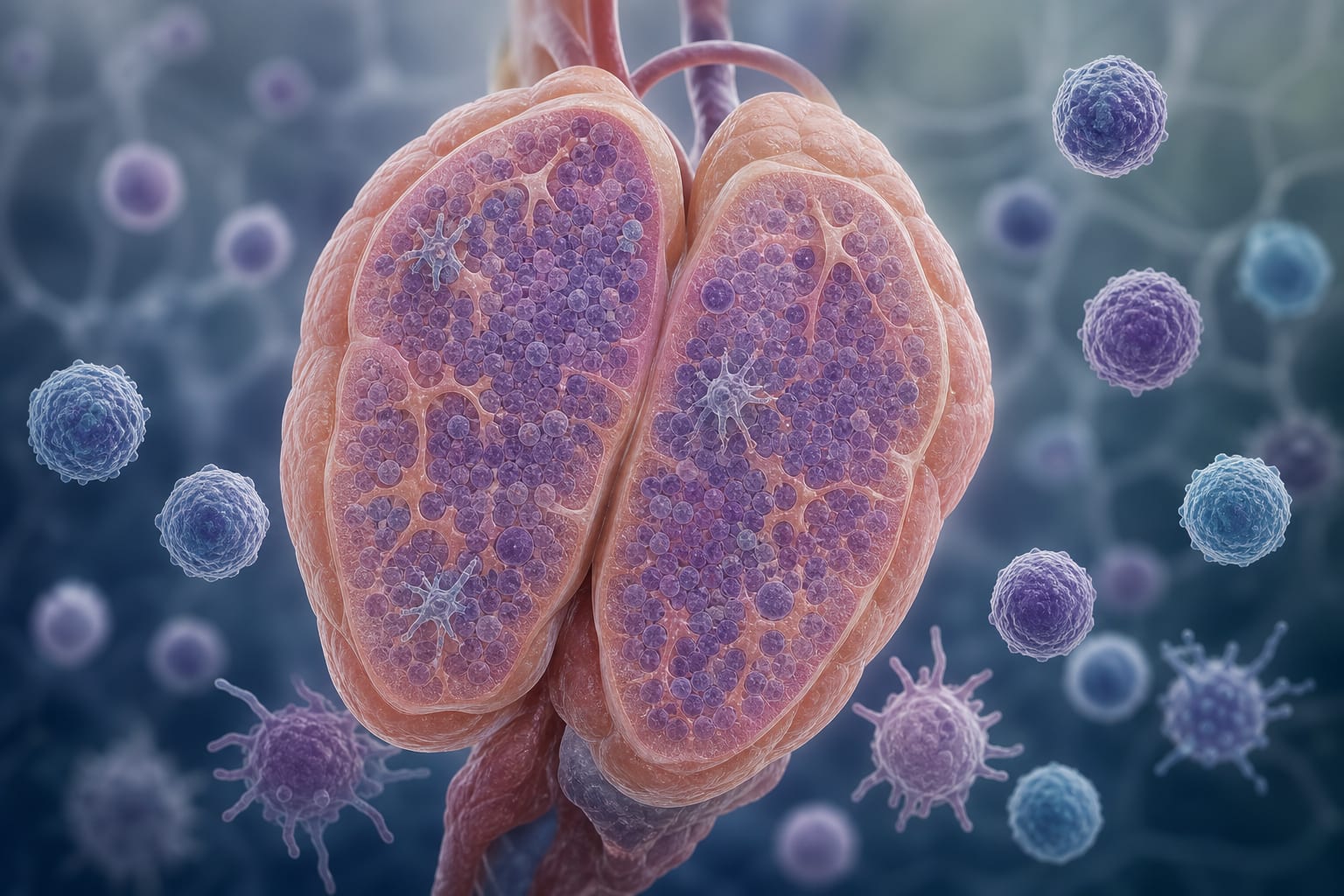
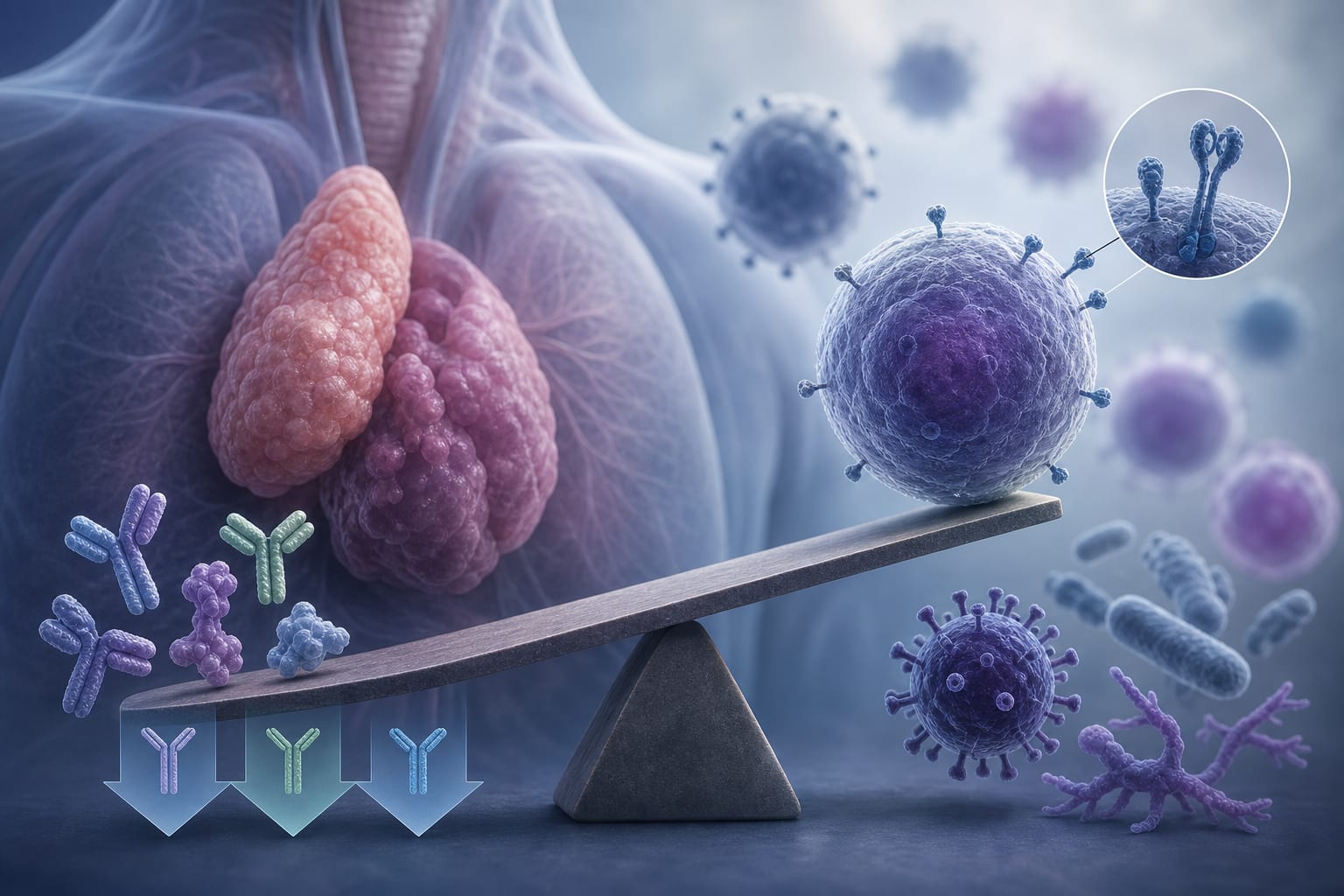
Editorial: Thymus research and development: a new look at the past, current knowledge, and future perspectives
-
By
-
Valentin P. Shichkin
-
Miho Shinzawa
-
Dominik Filipp
-
Mariastefania Antica
-
Domenico V. Delfino
-
July 10, 2026
-
Clinical Scorecard: Perspectives on Thymus Research and Development: Revisiting Historical Insights, Current Understanding, and Future Directions
At a Glance
| Category | Detail |
|---|
| Condition | Thymic Biology |
| Key Mechanisms | Thymocyte development, immune tolerance, T-cell maturation, and thymic regeneration. |
| Target Population | Individuals with immune deficiencies or thymic dysfunction. |
| Care Setting | Research and clinical settings focused on immunology and regenerative medicine. |
Key Highlights
- Thymus is crucial for T-cell development and immune homeostasis.
- Technological advances have enhanced understanding of thymic cellular heterogeneity.
- Thymic involution impacts immunosenescence and susceptibility to infections.
- Regulatory T cells (tTregs) play a key role in immune tolerance.
- Thymic epithelial cells are essential for thymopoiesis and maintaining the thymic niche.
Guideline-Based Recommendations
Diagnosis
- Characterization of thymic function and T-cell repertoire diversity.
Management
- Therapeutic strategies aimed at preserving or restoring thymic function.
Monitoring & Follow-up
- Tracking Treg ontogeny and thymic architecture integrity.
Risks
- Increased susceptibility to infections and autoimmunity due to thymic dysfunction.
Patient & Prescribing Data
Patients with thymic injury or immune deficiencies.
Potential for regenerative interventions targeting thymic epithelial cells.
Clinical Best Practices
- Utilization of single-cell multi-omics and advanced imaging techniques in thymic research.
- Focus on the role of microenvironmental signals in T-cell maturation.
Related Resources & Content