Efficient Deep Learning Framework with Attention Mechanism for Screening Gastrointestinal Precancerous Lesions
By
Shuai Chen
Jingyao Cai
Zhixiang Wu
Xiangyu Liu
Qing Wang
Liming Zhou
June 4, 2026
Clinical Scorecard: Efficient Deep Learning Framework with Attention Mechanism for Screening Gastrointestinal Precancerous Lesions
At a Glance
Category Detail
Condition Gastrointestinal precancerous lesions Key Mechanisms Attention-enhanced lightweight MobileNetV3 model with Spatial-Channel Attention (SCA) module Target Population Patients at risk for gastric cancer due to precancerous lesions Care Setting Endoscopic screening and diagnosis
Key Highlights
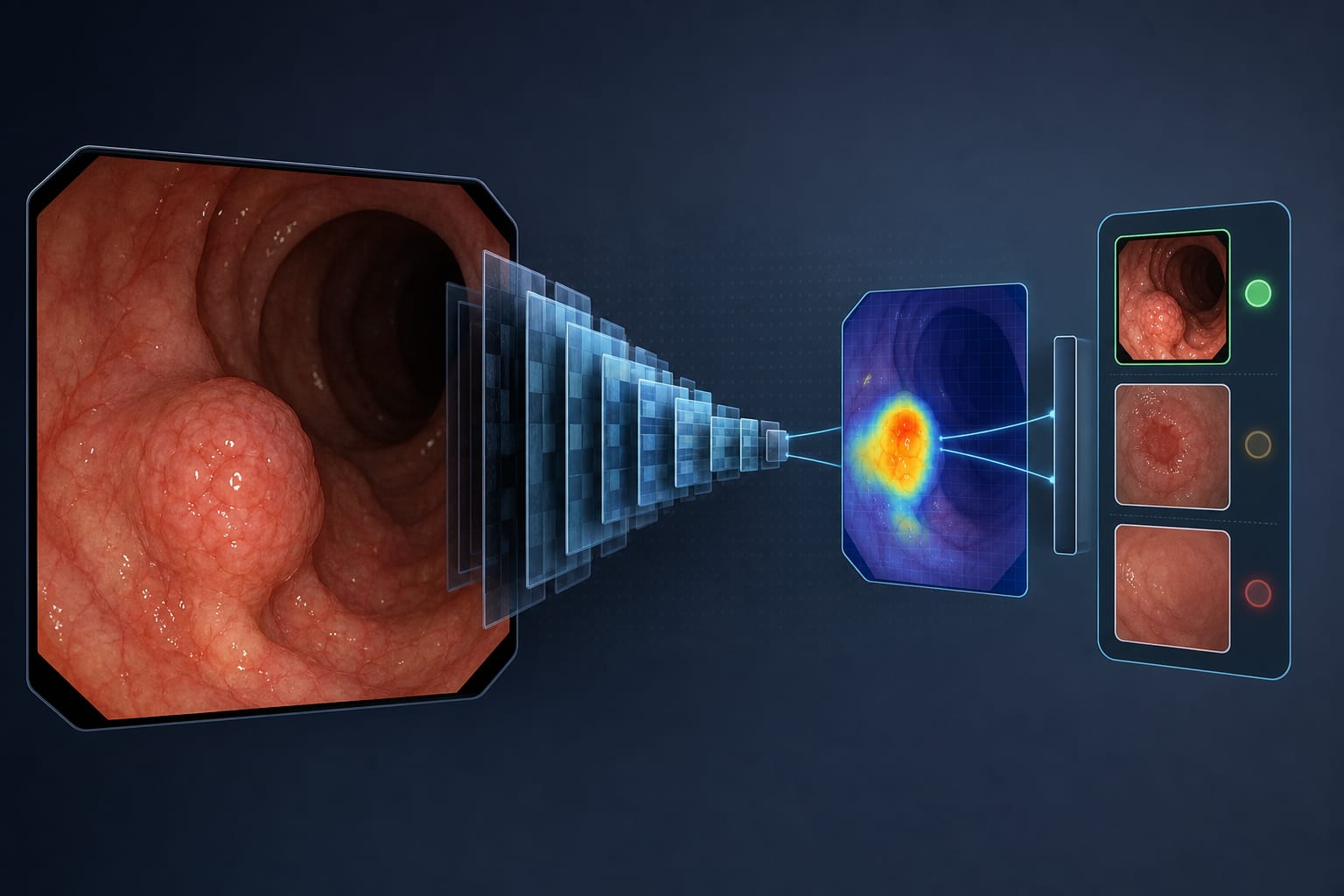
Achieved 99.10% overall accuracy and 100% precision for polyp detection Utilized GradCAM for model interpretability and decision-making visualization Maintained ultra-lightweight characteristics with only 1.05 M parameters Improved core metrics by 0.07% with the SCA module without increasing computational load Supports real-time deployment on endoscopic devices Guideline-Based Recommendations
Diagnosis
Endoscopy is the gold standard for identifying gastric precancerous lesions. Management
Early detection and intervention can reduce the risk of malignant transformation by up to 80%. Monitoring & Follow-up
Regular screening for high-risk populations is essential. Risks
Misdiagnosis and missed diagnosis in clinical screening can occur without AI assistance. Patient & Prescribing Data
Individuals undergoing endoscopic screening for gastric cancer risk
AI-assisted tools can enhance diagnostic accuracy and reduce clinician workload.
Clinical Best Practices
Incorporate AI models with interpretability tools like GradCAM in clinical workflows. Utilize lightweight models to improve accessibility in resource-limited settings. Focus on enhancing feature discrimination between lesions and healthy tissue. Related Resources & Content