Clinical Scorecard: Outcomes After De-Escalation of Adjuvant Radiotherapy Following Oncoplastic Breast-Conserving Surgery
At a Glance
Category
Detail
Condition
Clinical topic addressed by the source article: Outcomes After De-Escalation of Adjuvant Radiotherapy Following Oncoplastic Breast-Conserving Surgery
Key Mechanisms
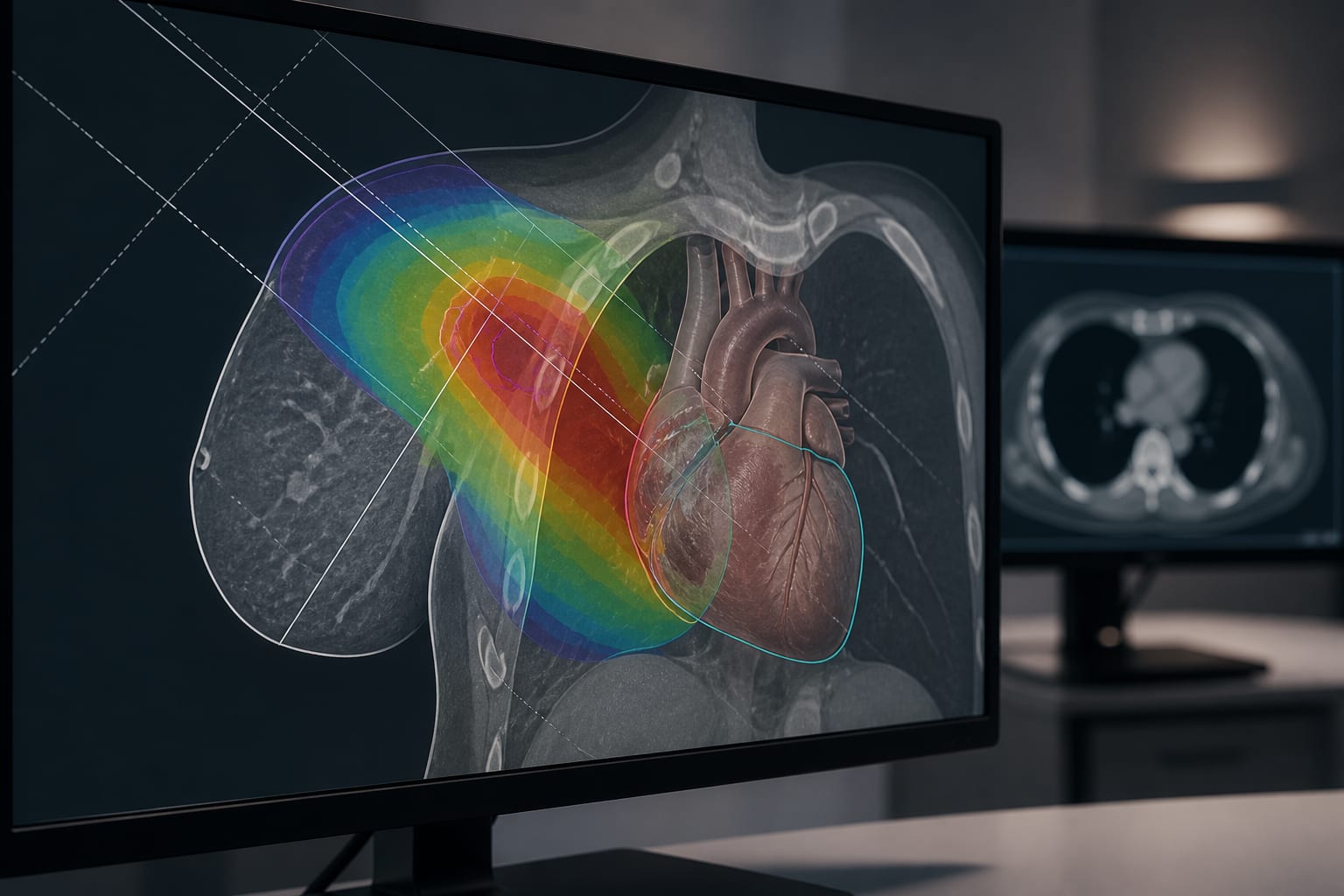
The introduction describes adjuvant radiotherapy as part of the conventional approach to reduce locoregional recurrence risk and notes associated tissue effects, including microvascular injury, fibrosis, fat necrosis, skin contracture, and breast volume loss.
Target Population
Patients or participants described in the source article.
Care Setting
Retrospective study of adult women treated within the authors’ healthcare network with lumpectomy and immediate or delayed oncoplastic reconstruction.
Key Highlights
The study assessed whether radiotherapy omission was associated with postoperative complications and patient-reported outcomes after oncoplastic breast-conserving surgery.
Participants were grouped according to receipt or omission of adjuvant radiotherapy; patients who refused radiotherapy were included in the omission group.
Recorded complications included infection, seroma, hematoma, wound separation, delayed healing, skin-flap necrosis, and fat necrosis.
Patient-reported outcomes were assessed using the BREAST-Q Reconstruction Module; the supplied text identifies Satisfaction with Breasts and Psychosocial well-being domains, but ends before the full list is given.
The supplied article text describes study methods but does not report outcome results.
Guideline-Based Recommendations
Diagnosis
Management
Monitoring & Follow-up
Risks
Patient & Prescribing Data
Adult women older than 18 years who underwent oncoplastic breast-conserving surgery within the authors’ healthcare network from 2017 through 2024; patients undergoing mastectomy or lacking complete data were excluded.
The study compared patients who received adjuvant radiotherapy with those who did not; patients refusing radiotherapy were included in the omission group. The supplied text does not report treatment-effect results.
Clinical Best Practices
Study methods: The validated BREAST-Q Reconstruction Module was used to assess patient-reported outcomes; the supplied text names Satisfaction with Breasts and Psychosocial well-being and is truncated before the full domain list.
Study methods: Investigators documented locoregional and distant recurrence, postoperative complications, complication-related reoperations, and later revision procedures.
by Abbas M. Hassan, Carson Park, Kathryn Borders, Rachel M. Danforth, Ravinder Bamba, R. Jason VonDerHaar, Ivan Hadad, Mary E. Lester, Carla S. Fisher, Aladdin H. Hassanein
Patients with estrogen-receptor-positive (ER+) HER-2-negative advanced breast cancer experienced significantly improved progression-free survival (PFS) when treated with an oral combination regimen that included giredestrant, a novel, next-generation selective ER degrader and full antagonist (SERD), compared to a standard combination approach.