Time-dependent microbiology of peripancreatic drainage fluid in severe acute pancreatitis: a prospective real-world observational study using metagenomic sequencing and culture - Scorecard - MDSpire
Advertisement
Time-dependent microbiology of peripancreatic drainage fluid in severe acute pancreatitis: a prospective real-world observational study using metagenomic sequencing and culture
Clinical Scorecard: Temporal Changes in Microbial Composition of Peripancreatic Drainage Fluid During Severe Acute Pancreatitis: A Prospective Observational Study Utilizing Metagenomic Sequencing and Culture Techniques
At a Glance
Category
Detail
Condition
Key Mechanisms
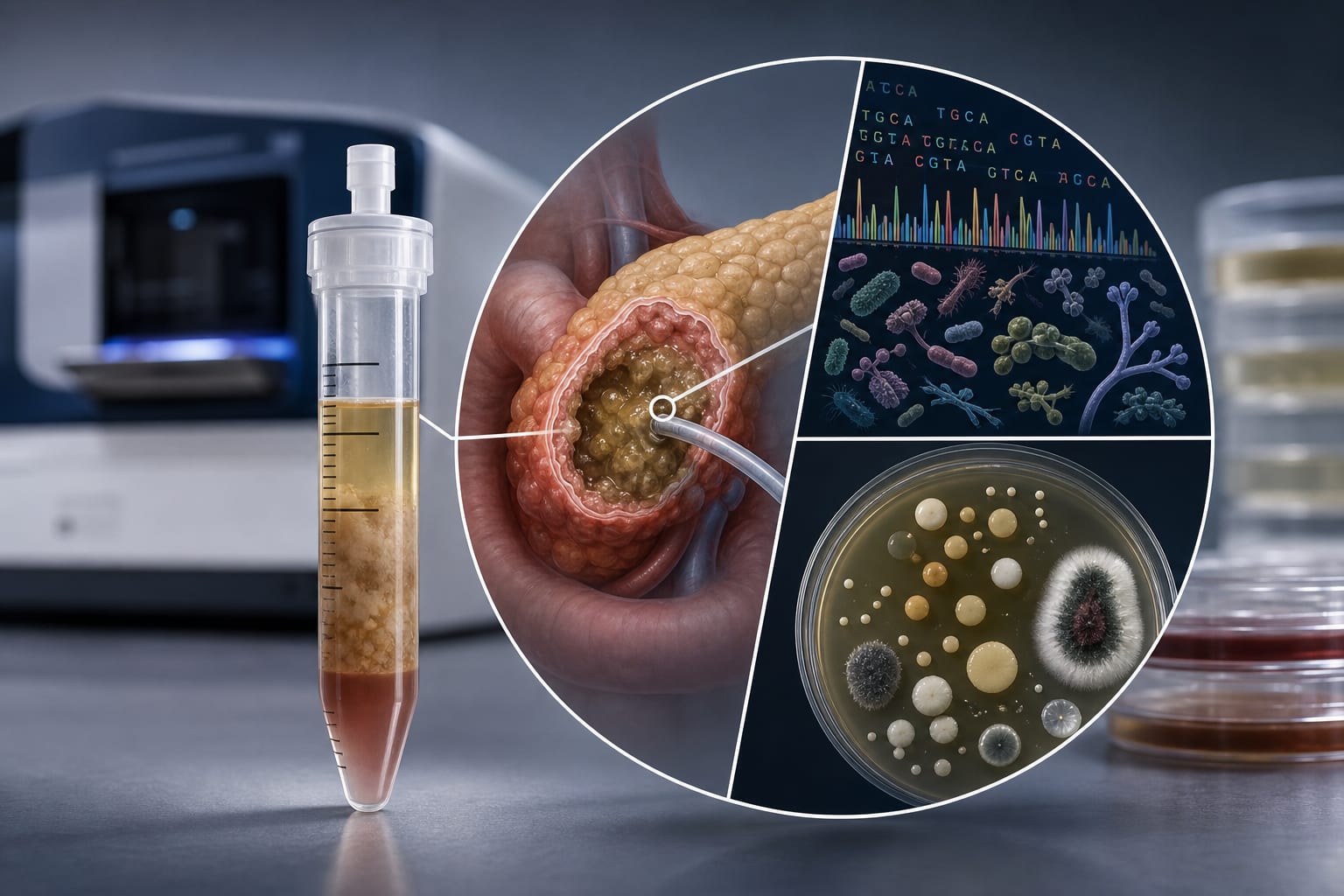
Microbial composition changes in peripancreatic collections over time, with early stages often being sterile; mNGS enhances pathogen detection.
Target Population
Care Setting
Key Highlights
mNGS identified pathogens in 45% of cases, while conventional culture identified pathogens in 30%.
Microbiological positivity increased significantly after 14 days from disease onset.
Enterococcus species and Klebsiella pneumoniae were the most frequently detected pathogens.
Early necrosis is commonly sterile, while later stages reveal a broader spectrum of pathogens, particularly detected by mNGS.
mNGS provides complementary information beyond conventional culture methods.
Guideline-Based Recommendations
Diagnosis
Diagnosis of infected pancreatic necrosis (IPN) relies on CT imaging, microbiological culture, and clinical signs of sepsis.
Management
The step-up approach is recommended, favoring minimally invasive drainage as the initial intervention, with timing considerations based on microbiological findings.
Monitoring & Follow-up
Careful interpretation of microbiological findings in relation to disease timing and clinical context is essential.
Risks
Infected pancreatic necrosis significantly increases mortality risk, especially with organ failure.
Patient & Prescribing Data
Adult patients with severe acute pancreatitis undergoing first-time percutaneous catheter drainage.
Antimicrobial therapy decisions are made by treating clinical teams as part of routine care.
Clinical Best Practices
Utilize both mNGS and conventional culture for pathogen detection in peripancreatic drainage fluid.
Consider the timing of intervention when interpreting microbiological results, integrating clinical context.