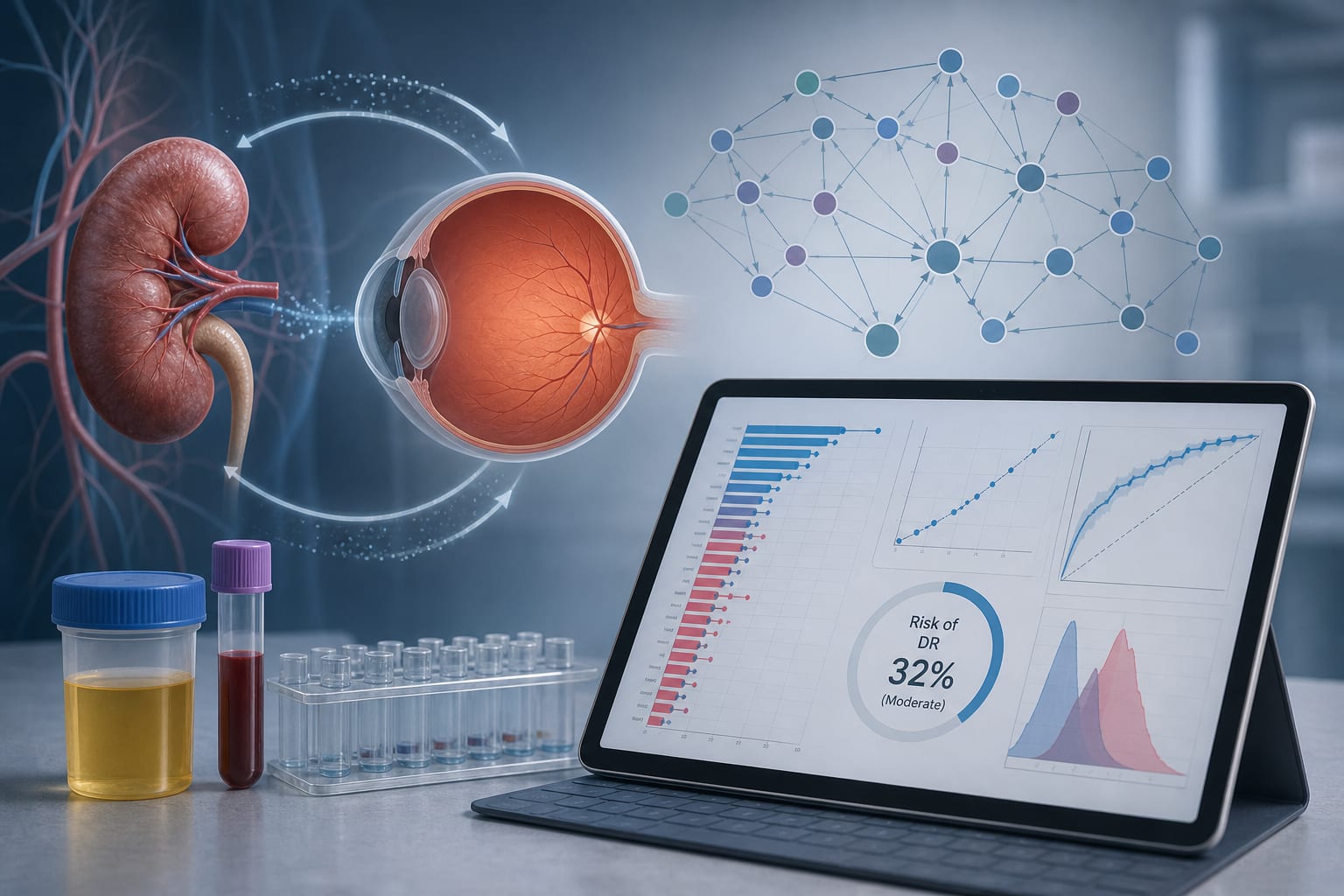
A clinically interpretable machine learning model for early detection of diabetic retinopathy in multiple community health centers - Scorecard - MDSpire

A clinically interpretable machine learning model for early detection of diabetic retinopathy in multiple community health centers

  • By

  • Juncheng Tong

  • Aifa Tang

  • Lifang Liu

  • Luyuan Zhang

  • Hainan Wang

  • Mengyuan Qu

  • Bing Liu

  • May 4, 2026

  • 0 min

Share

Clinical Scorecard: A machine learning approach for the early identification of diabetic retinopathy in various community health settings

At a Glance

CategoryDetail
ConditionDiabetic Retinopathy (DR)
Key MechanismsMachine learning models utilizing health data to predict DR risk.
Target PopulationDiabetic individuals aged ≥18 years from community health facilities.
Care SettingPrimary care settings in low- and middle-income countries.

Key Highlights

  • Prevalence of DR was found to be 13.5% in the study cohort.
  • GLMNET model achieved an AUROC of 0.770 and AUPRC of 0.452.
  • Urine glucose identified as the most significant predictor of DR.
  • Decision curve analysis indicated net benefit for threshold probabilities of 10% to 40%.
  • Study emphasizes the need for external validation before clinical application.

Guideline-Based Recommendations

Diagnosis

  • Utilize routine fundus examinations for DR identification.
  • Employ machine learning models for risk stratification in primary care.

Management

  • Incorporate clinical variables such as diabetes type, duration, and HbA1c levels.

Monitoring & Follow-up

  • Regularly assess patients for DR risk using predictive models.

Risks

  • Low compliance with ophthalmology referrals in community settings.

Patient & Prescribing Data

Diabetic individuals from community health facilities in China.

Focus on early identification and risk stratification to prevent visual impairment.

Clinical Best Practices

  • Integrate machine learning tools into routine clinical workflows.
  • Ensure model interpretability to enhance provider confidence in decision-making.
  • Conduct prospective studies for validation of predictive models.

References

Original Source(s)

Related Content