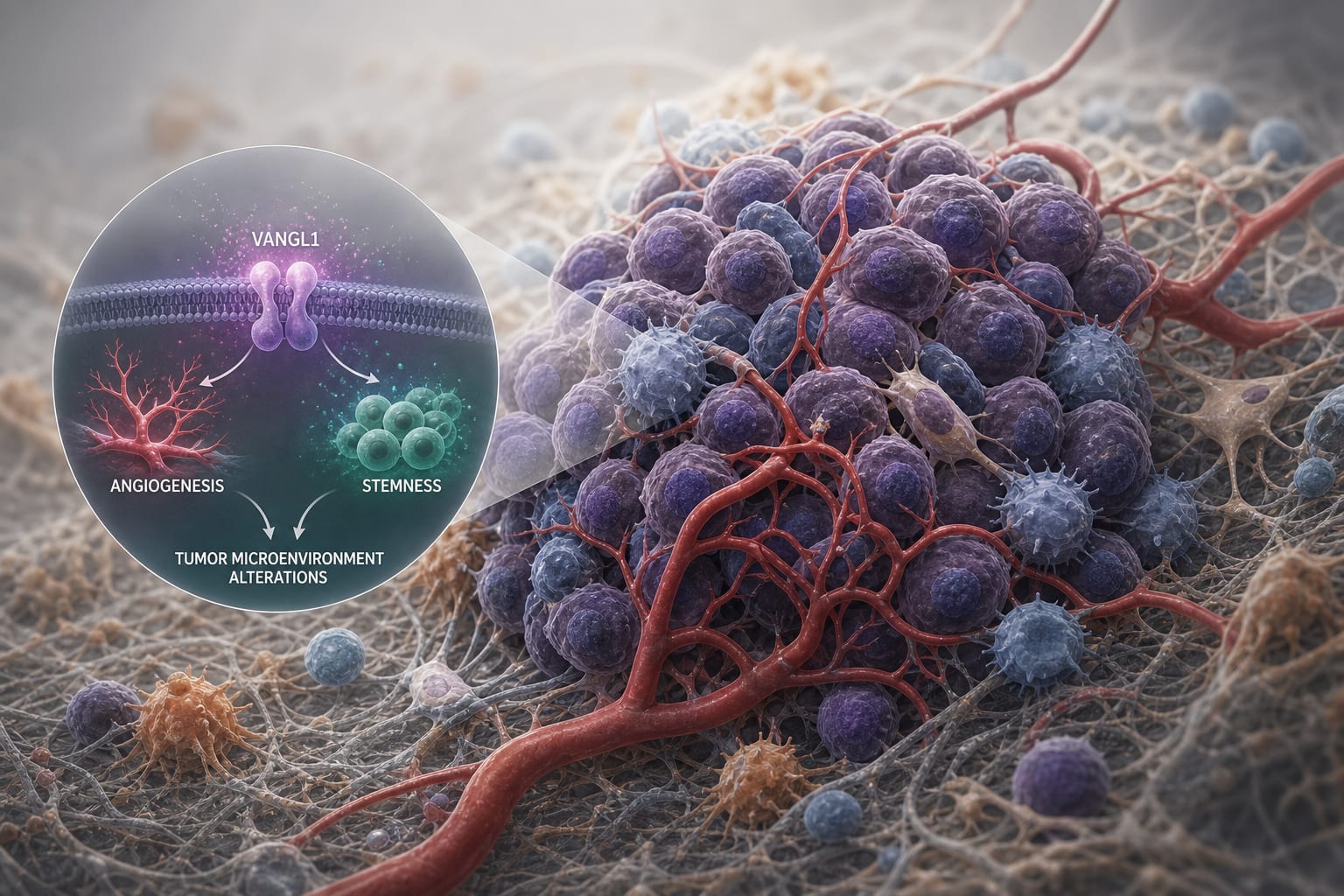
Tumor immune microenvironment in non-small cell lung cancer progression
-
By
-
Jie Jiang
-
Mingqiang Zhong
-
Jian Wang
-
Zhiya Zhang
-
Wenqiang Li
-
Zhiping Deng
-
May 18, 2026
-
Clinical Scorecard: The Role of Tumor Immune Microenvironment in the Advancement of Non-Small Cell Lung Cancer
At a Glance
| Category | Detail |
|---|
| Condition | |
| Key Mechanisms | Tumor immune microenvironment (TIME) influences disease progression, immune evasion, and therapeutic resistance, involving diverse immune cell types. |
| Target Population | |
| Care Setting | |
Key Highlights
- TIME is critical in regulating malignant progression and immune escape.
- Immune cell heterogeneity impacts responses to immunotherapy.
- Tumor-associated macrophages (TAMs) can polarize into tumor-supportive or tumor-suppressive roles.
- Neutrophils exhibit plasticity, influencing NSCLC progression.
- Targeting components of TIME may enhance therapeutic efficacy.
- Metabolic factors play a significant role in TAM polarization.
Guideline-Based Recommendations
Diagnosis
- Assess immune cell populations within the tumor microenvironment.
Management
- Consider TIME characteristics when designing immunotherapeutic strategies.
- Monitor metabolic changes in the TIME.
Monitoring & Follow-up
- Monitor changes in immune cell profiles during treatment.
Risks
- Be aware of potential immune evasion mechanisms linked to TIME.
Patient & Prescribing Data
Patients diagnosed with Non-Small Cell Lung Cancer.
Responses to immunotherapy are variable, with only one-third of patients benefiting.
Clinical Best Practices
- Incorporate TIME analysis in treatment planning, considering its dynamic state.
- Utilize combinatorial immunotherapeutic approaches based on immune profiling.
- Regularly evaluate immune cell dynamics during therapy.
Related Resources & Content