Monitoring Alerts in Extended Home Mechanical Ventilation
-
By
-
Sonia Khirani
-
Plamen Bokov
-
Karl Leroux
-
Hélène Prigent
-
Jean-Michel Arnal
-
May 28, 2026
Clinical Scorecard: Monitoring Alerts in Extended Home Mechanical Ventilation
At a Glance
| Category | Detail |
|---|
| Condition | Home Mechanical Ventilation |
| Key Mechanisms | Ventilator alarms and monitoring parameters to prevent adverse events. |
| Target Population | Pediatric and adult patients requiring home mechanical ventilation. |
| Care Setting | Home care environment. |
Key Highlights
- Ventilator-dependent patients are at high risk for life-threatening complications.
- Proper alarm settings are crucial for patient safety and require personalization.
- External monitors like pulse oximeters are recommended for children on invasive ventilation.
- Alarm settings should balance sensitivity with the risk of alarm fatigue.
- Regular review and adjustment of alarm settings are necessary as patients grow or change.
Guideline-Based Recommendations
Diagnosis
- Monitor ventilator data and event logs to detect deterioration in respiratory mechanics.
Management
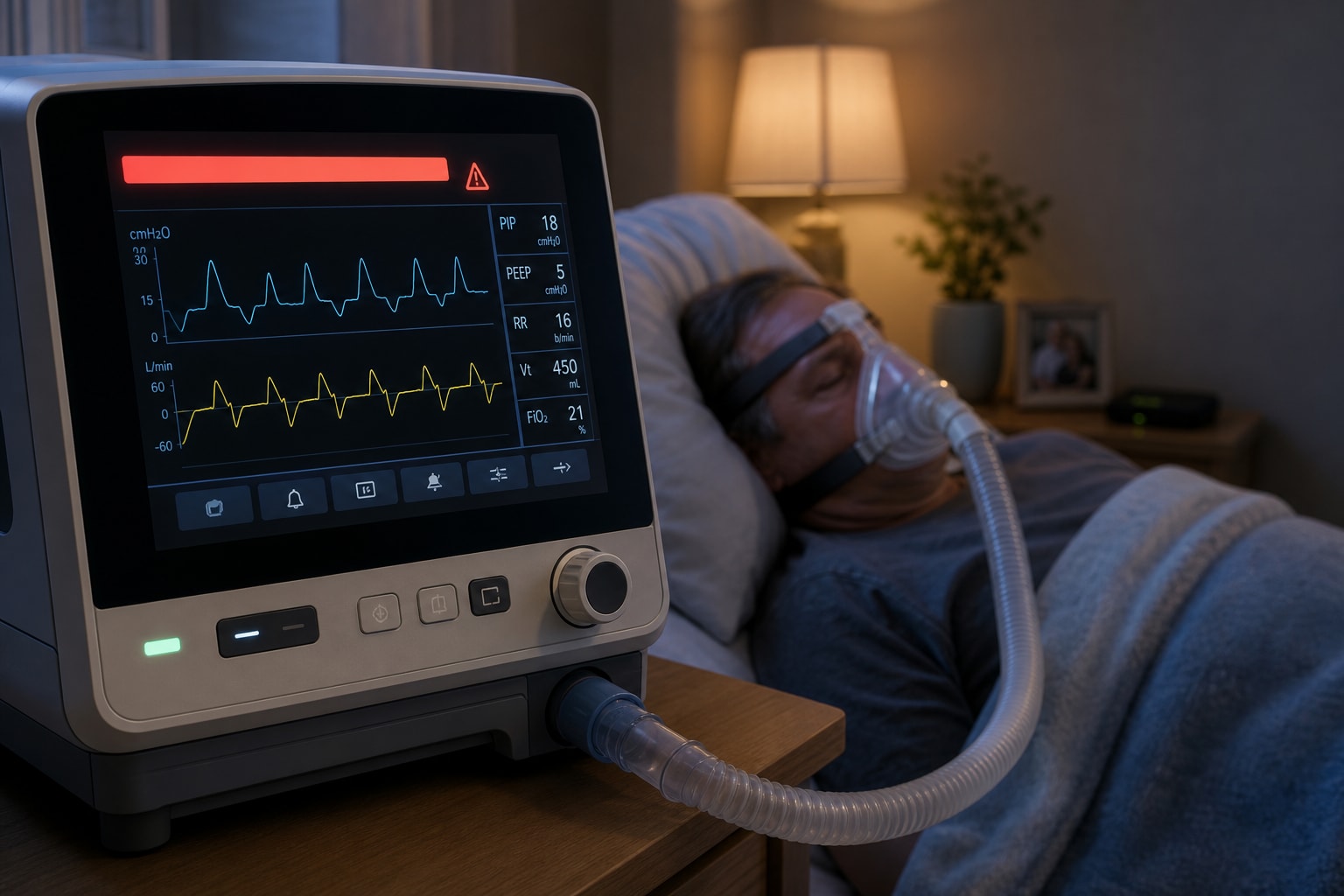
- Set alarms to alert caregivers for circuit disconnections and mask displacements.
Monitoring & Follow-up
- Regularly assess alarm settings based on patient condition and caregiver presence.
Risks
- Failure to set appropriate alarms can lead to severe desaturation and potential cardiac arrest.
Patient & Prescribing Data
Patients dependent on home mechanical ventilation or invasive CPAP.
Ventilators should have battery backup and alarms for power failure.
Clinical Best Practices
- Educate patients and caregivers on alarm management and significance.
- Adjust alarm volume and type based on the patient's environment and needs.
- Use visual alarms in noisy environments to ensure alerts are perceived.
Related Resources & Content