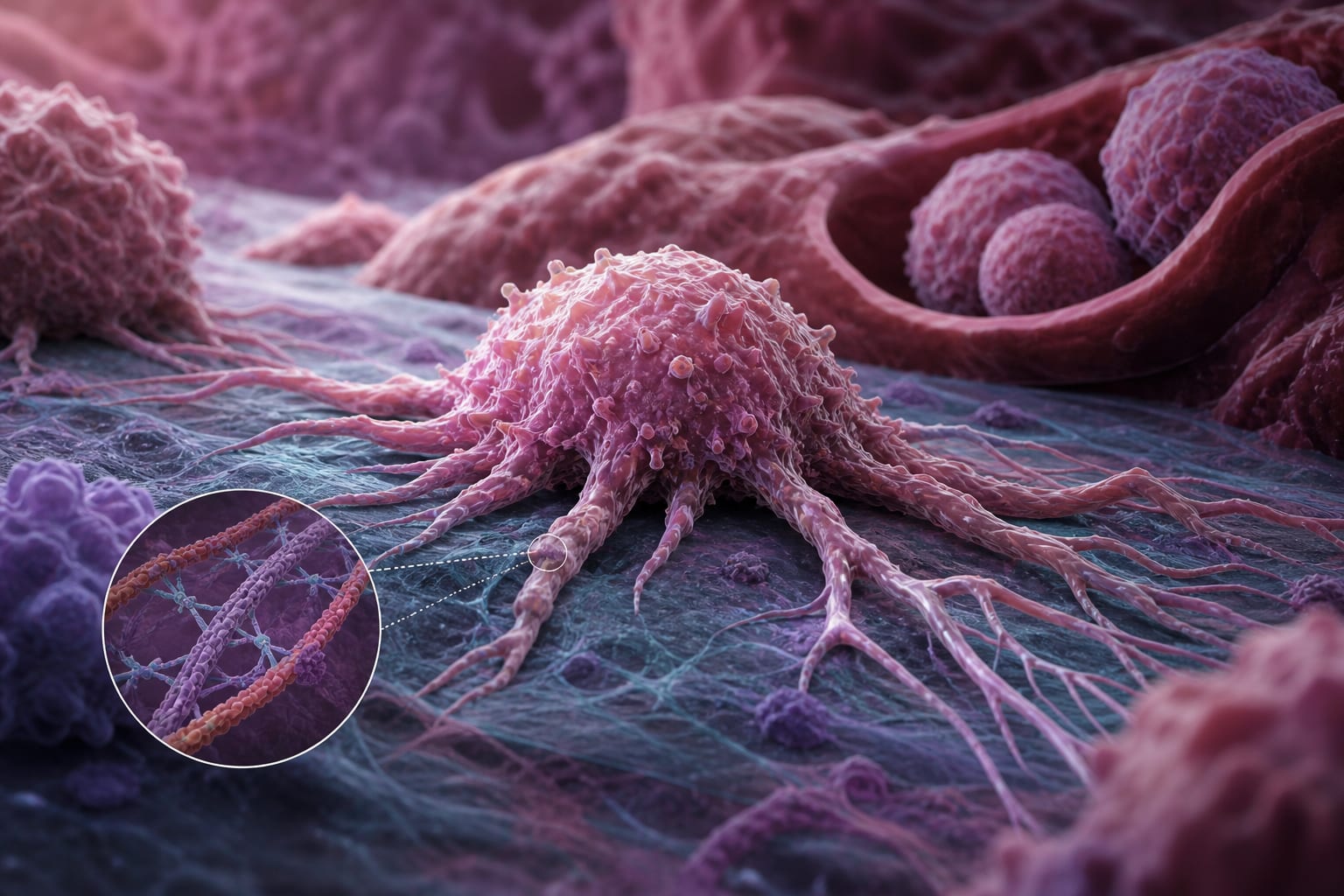
Migrastatics: A Comprehensive Review of Present Developments and Future Directions in Cancer Therapy
By
Irene Olivas-Cano
M. Angeles Juanes
September 2, 2026
Clinical Scorecard: Migrastatics: A Comprehensive Review of Present Developments and Future Directions in Cancer Therapy
At a Glance
Category Detail
Condition Metastasis in Cancer Key Mechanisms Disruption of cytoskeletal dynamics affecting cell motility and invasiveness. Target Population Patients with metastatic cancer. Care Setting Oncology
Key Highlights
Metastasis is the leading cause of cancer-related mortality. Migrastatics are designed to impede metastatic spread by targeting cellular invasiveness. Cytoskeletal dynamics play a crucial role in the regulation of metastasis. Current limitations of migrastatics include substantial toxicity and adverse effects. Co-administration with cytotoxic therapies may enhance treatment efficacy. Guideline-Based Recommendations
Diagnosis
Identify metastatic disease through imaging and biomarkers. Management
Consider the use of migrastatics in conjunction with existing cytotoxic therapies. Monitoring & Follow-up
Monitor for signs of toxicity and adverse effects during treatment. Risks
Be aware of the potential for significant toxicity associated with migrastatics. Patient & Prescribing Data
Patients with advanced or metastatic cancer.
Migrastatics may be used to prevent relapse after cytotoxic therapy.
Clinical Best Practices
Integrate migrastatics into treatment plans for metastatic cancer with caution. Evaluate the patient's response to therapy and adjust as necessary. Related Resources & Content