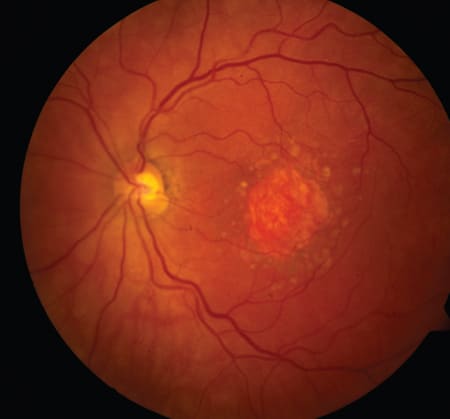
The Therapeutic Pipeline for Geographic Atrophy
-
By
-
Benedict Uzorka, BS
-
Jessica D. Randolph, MD
-
March 1, 2026
-
Clinical Scorecard: The Therapeutic Pipeline for Geographic Atrophy
At a Glance
| Category | Detail |
|---|
| Condition | Geographic Atrophy (GA) |
| Key Mechanisms | Dysregulation of the complement system, oxidative stress, mitochondrial dysfunction, and metabolic impairment of the retinal pigment epithelium (RPE). |
| Target Population | Older adults with advanced nonexudative age-related macular degeneration (AMD). |
| Care Setting | Ophthalmology clinics and clinical trial settings. |
Key Highlights
- GA leads to irreversible central vision loss due to retinal damage.
- Pegcetacoplan and avacincaptad pegol are the first approved therapies targeting complement inhibition.
- Emerging therapies include gene therapies and mitochondrial-targeted treatments.
- Clinical trials are ongoing for multiple investigational therapies.
- Therapeutic strategies aim for precise, durable, and function-preserving interventions.
Guideline-Based Recommendations
Diagnosis
- Diagnosis of GA is based on clinical examination and imaging techniques.
Management
- Complement inhibitors are the current standard of care for GA.
Monitoring & Follow-up
- Regular monitoring of visual acuity and lesion growth is recommended.
Risks
- Potential risks include conversion to exudative AMD and intraocular inflammation.
Patient & Prescribing Data
Patients with geographic atrophy secondary to AMD.
Therapies focus on complement inhibition and mitochondrial support.
Clinical Best Practices
- Incorporate regular assessments of visual function and retinal health.
- Stay updated on emerging therapies and clinical trial results.
Related Resources & Content