Alternative splicing-based therapeutics for neurodegenerative diseases: a dual-database bibliometric and NLP-driven analysis (2000–2025) - Scorecard - MDSpire
Advertisement
Alternative splicing-based therapeutics for neurodegenerative diseases: a dual-database bibliometric and NLP-driven analysis (2000–2025)
Clinical Scorecard: Therapeutic Approaches Targeting Alternative Splicing in Neurodegenerative Disorders: A Bibliometric and NLP Analysis from 2000 to 2025
At a Glance
Category
Detail
Condition
Neurodegenerative Diseases (NDDs)
Key Mechanisms
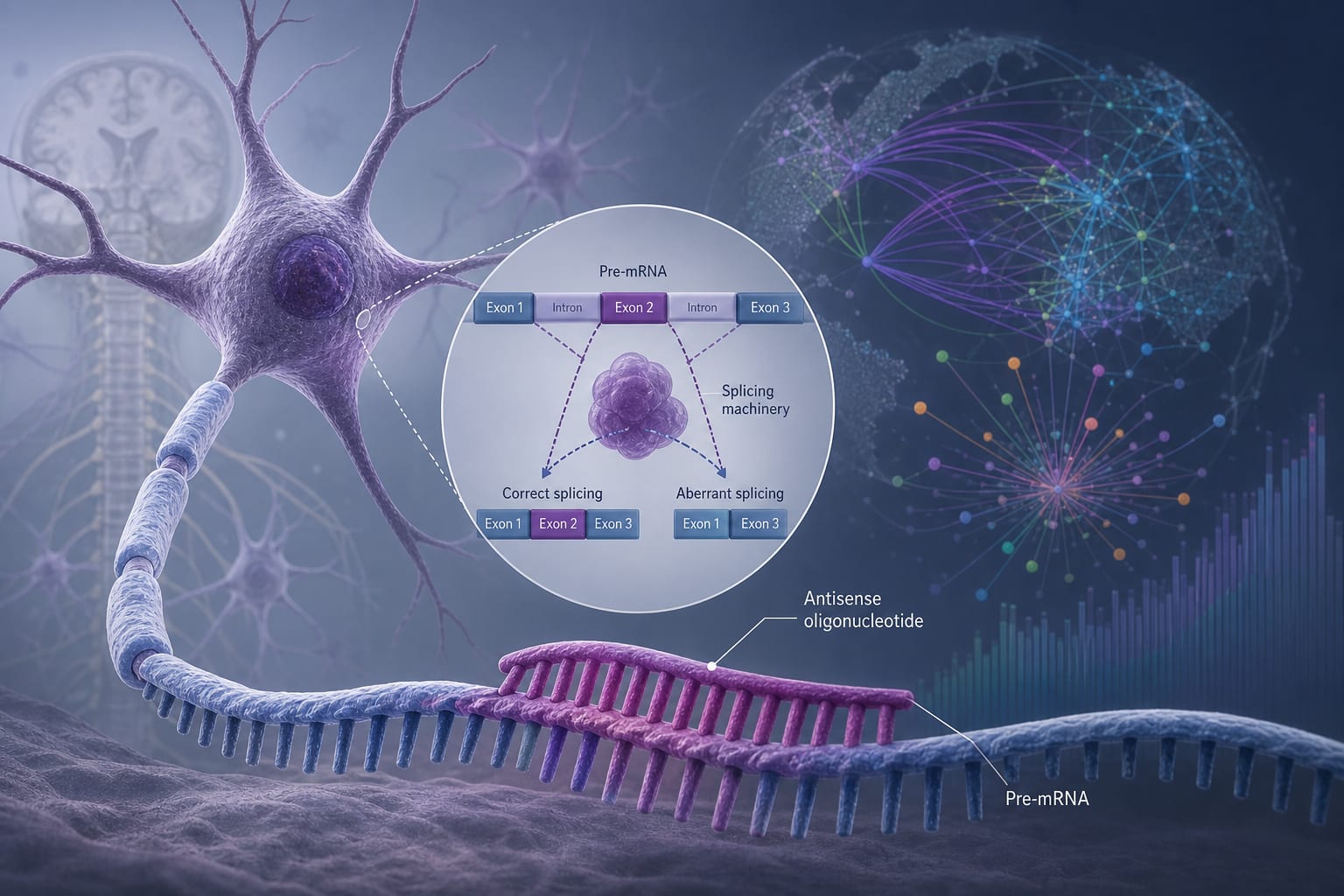
Aberrant alternative splicing (AS) as a critical pathogenic mechanism
Target Population
Individuals affected by neurodegenerative diseases, including pediatric and adult populations
Care Setting
Clinical trials and translational research environments
Key Highlights
Sustained linear growth in publication output from 2000 to 2025
Dominance of the United States and Western Europe in collaborative research
Identification of three core conceptual axes: molecular mechanisms, disease-specific models, and translational methodologies
Concentration of splicing-modifying interventions in pediatric spinal muscular atrophy (SMA)
Shift from descriptive molecular biology to clinically actionable splicing interventions
Guideline-Based Recommendations
Diagnosis
Focus on molecular dysregulation and aberrant splicing in NDDs
Management
Utilization of splicing-targeted therapeutics such as antisense oligonucleotides (ASOs) and small molecules
Monitoring & Follow-up
Assessment of clinical trial outcomes and efficacy of splicing-modifying therapies
Risks
Complexity of pathogenesis in NDDs may hinder the development of disease-modifying therapies
Patient & Prescribing Data
Patients with neurodegenerative diseases, including Alzheimer’s disease, Parkinson’s disease, and amyotrophic lateral sclerosis
Emerging therapies targeting aberrant splicing show promise in preclinical and clinical settings