A CDK4/6 inhibitor-armed oncolytic adenovirus reverses T cell exhaustion through the Rb-p65-CCL5 pathway and potentiates the antitumor activity of anti-PD-1 or CAR-T therapy in colorectal cancer - Scorecard - MDSpire
Advertisement
A CDK4/6 inhibitor-armed oncolytic adenovirus reverses T cell exhaustion through the Rb-p65-CCL5 pathway and potentiates the antitumor activity of anti-PD-1 or CAR-T therapy in colorectal cancer
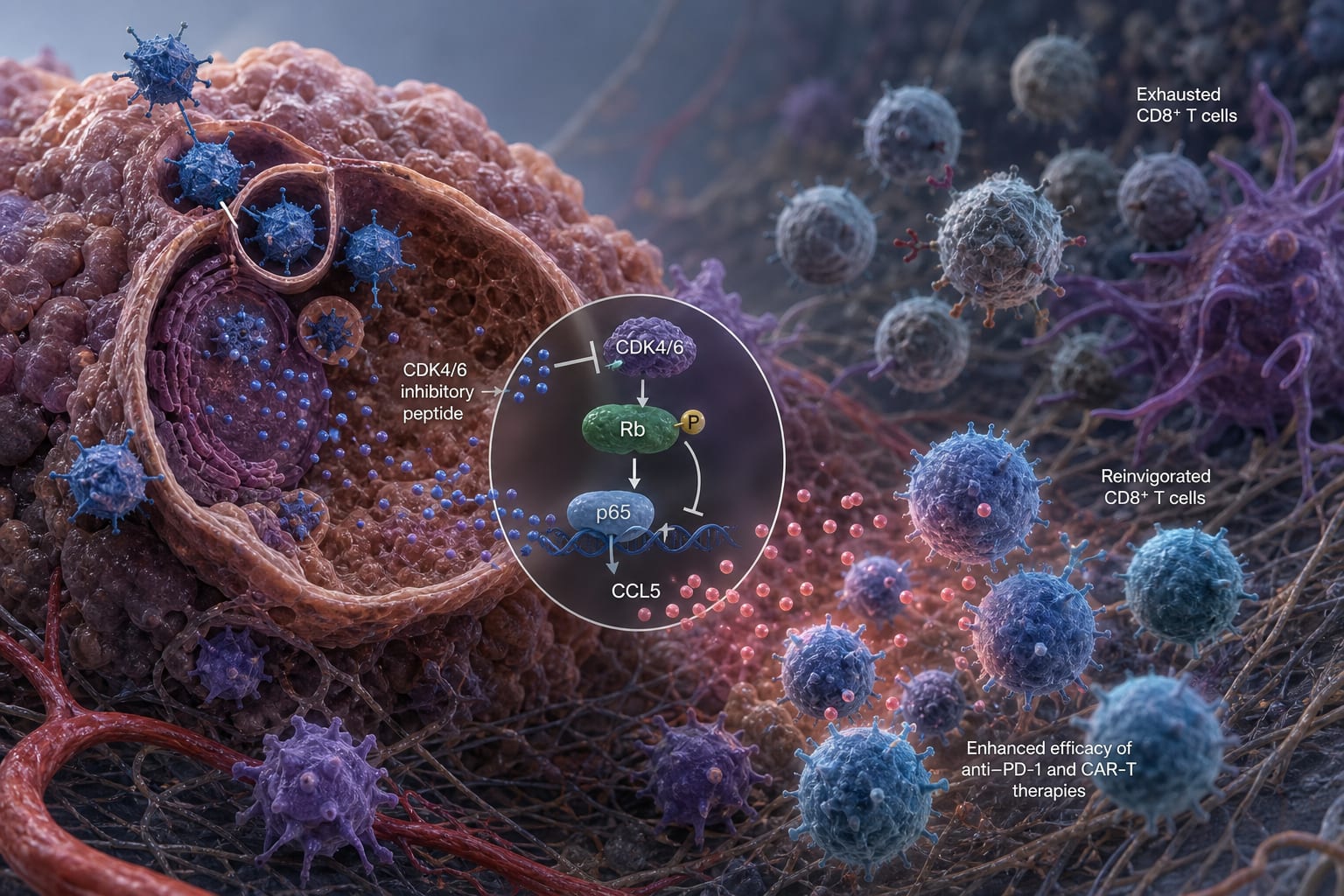
Clinical Scorecard: An Oncolytic Adenovirus Engineered with a CDK4/6 Inhibitor Reverses T Cell Exhaustion via the Rb-p65-CCL5 Pathway and Enhances the Efficacy of Anti-PD-1 and CAR-T Therapies in Colorectal Cancer
At a Glance
Category
Detail
Condition
Colorectal Cancer
Key Mechanisms
Oncolytic adenovirus ADV-PTD4-D3 inhibits CDK4/6, reducing Rb phosphorylation, enhancing CCL5 expression, and reversing T cell exhaustion.
Target Population
Patients with microsatellite stable (MSS) colorectal cancer.
Care Setting
Oncology, specifically for treatment of colorectal cancer.
Key Highlights
ADV-PTD4-D3 improves tumor control and induces robust immunological memory.
Mechanism involves Rb-p65-CCL5 signaling pathway.
Reverses CD8+ T cell exhaustion and enhances T cell infiltration.
Potentiates efficacy of PD-1 blockade and CAR-T therapies.
Demonstrates no significant off-target toxicity in immunocompetent hosts.
Guideline-Based Recommendations
Diagnosis
Identify microsatellite stable (MSS) colorectal cancer patients.
Management
Utilize ADV-PTD4-D3 for localized CDK4/6 inhibition in colorectal cancer.
Monitoring & Follow-up
Monitor T cell infiltration and functional status post-treatment.
Risks
Consider potential for chronic antigen exposure leading to T cell exhaustion.
Patient & Prescribing Data
Patients with refractory colorectal cancer.
ADV-PTD4-D3 serves as a localized therapeutic factory, minimizing systemic exposure.
Clinical Best Practices
Combine ADV-PTD4-D3 with PD-1 blockade and CAR-T therapies for enhanced efficacy.
Assess immune response and T cell functionality regularly.