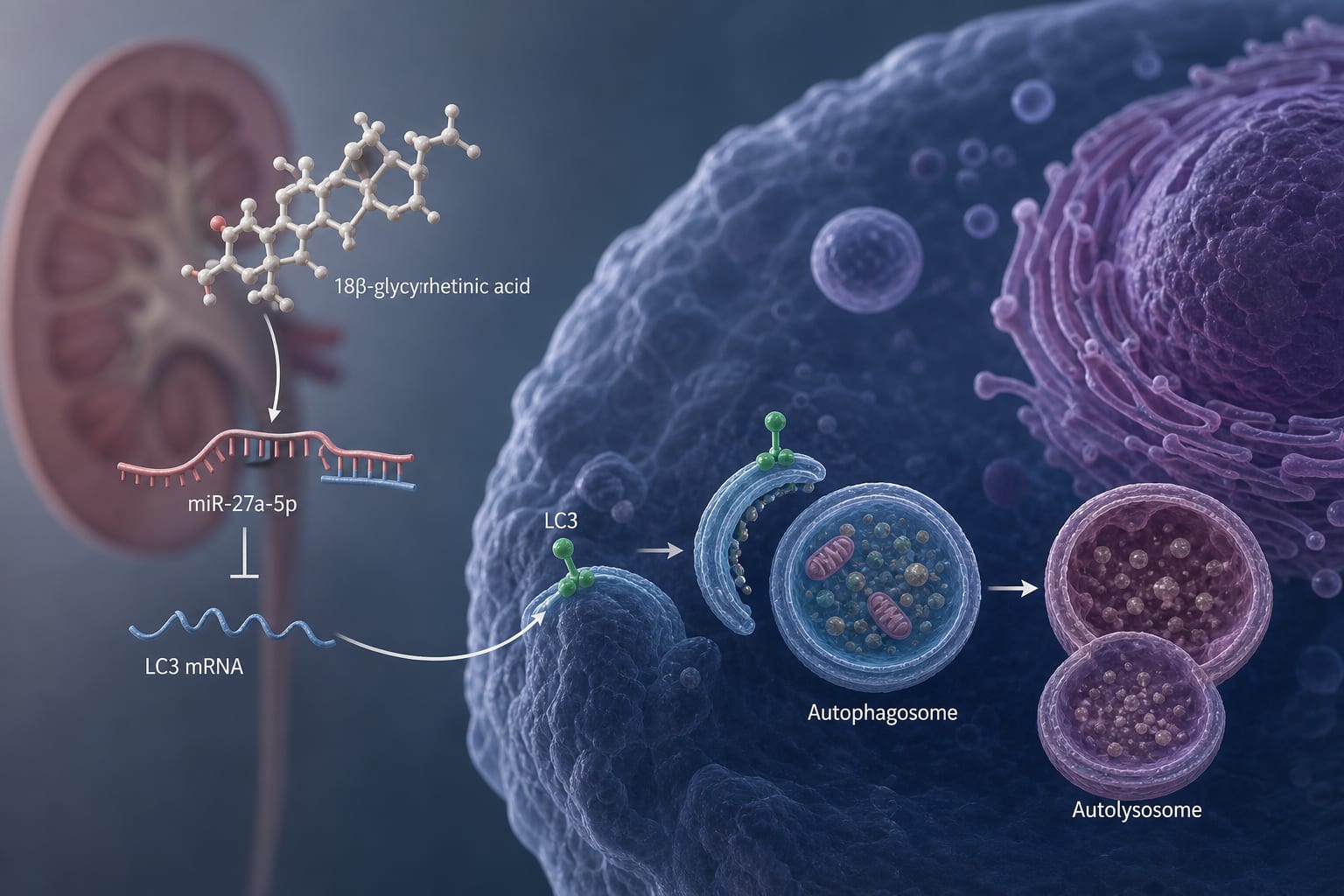
Correction: Study on the mechanism of 18β-glycyrrhetinic acid inhibiting the proliferation of renal cancer cells by inducing autophagy through the miR-27a-5p/LC3 axis - Scorecard - MDSpire
Advertisement
Correction: Study on the mechanism of 18β-glycyrrhetinic acid inhibiting the proliferation of renal cancer cells by inducing autophagy through the miR-27a-5p/LC3 axis
Clinical Scorecard: Correction: Investigation into the Role of 18β-glycyrrhetinic Acid in Suppressing Renal Cancer Cell Growth via Autophagy Induction through the miR-27a-5p/LC3 Pathway
At a Glance
Category
Detail
Condition
Renal Cancer
Key Mechanisms
Autophagy induction via the miR-27a-5p/LC3 pathway
Target Population
Patients with renal cancer
Care Setting
Oncology
Key Highlights
18β-glycyrrhetinic acid suppresses renal cancer cell growth
Mechanism involves autophagy induction
Involves the miR-27a-5p/LC3 signaling axis
Correction issued for figure misplacement
Study published in Frontiers in Oncology
Guideline-Based Recommendations
Diagnosis
Consider renal cancer diagnosis in patients with relevant symptoms.
Management
Utilize 18β-glycyrrhetinic acid as a potential therapeutic agent.
Monitoring & Follow-up
Monitor autophagy markers in renal cancer treatment.
Risks
Evaluate potential side effects of 18β-glycyrrhetinic acid.
Patient & Prescribing Data
Individuals diagnosed with renal cancer
18β-glycyrrhetinic acid may enhance treatment outcomes through autophagy.
Clinical Best Practices
Ensure accurate figure representation in published studies.
Regularly review and update clinical data as necessary.
Incorporate autophagy modulation strategies in renal cancer management.
The U.S. Food and Drug Administration (FDA) has approved pembrolizumab, an immunotherapy, plus belzutifan, a HIF-2alpha inhibitor, as adjuvant treatment for adult patients with renal cell carcinoma with a clear cell component (ccRCC) at intermediate-high or high risk of recurrence following nephrectomy, with or without resection of metastatic lesions.
REGENXBIO reports phase III AAV data in Duchenne; plus: adenoviral immunotherapy, preconditioning-free CAR-T, in vivo immune programming, and DNA-guided CRISPR