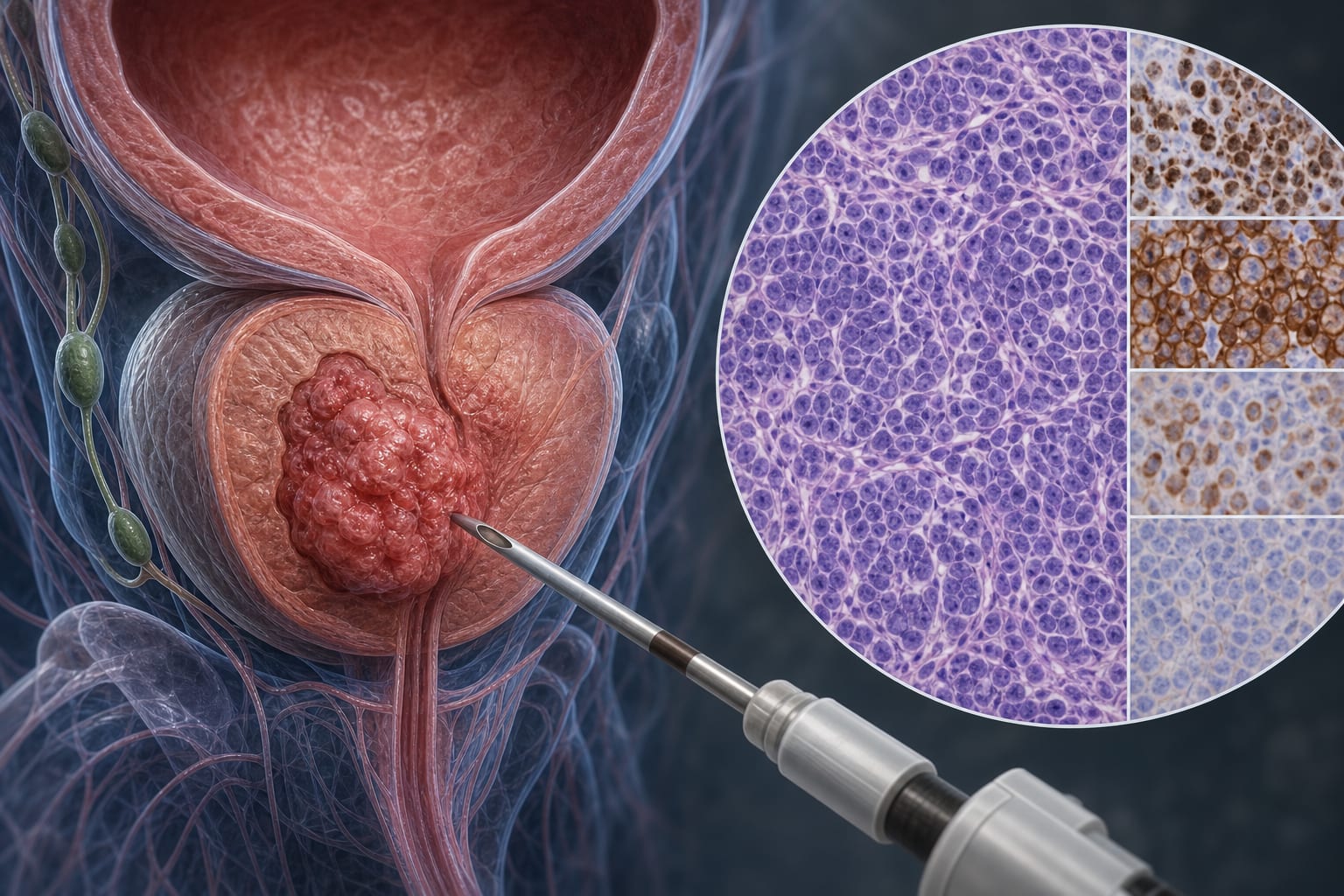
Case Report: a rare case of small cell carcinoma of the prostate
-
By
-
Kexin Geng
-
Feng Gao
-
June 8, 2026
-
Clinical Scorecard: Uncommon Presentation of Small Cell Carcinoma in the Prostate: A Case Study
At a Glance
| Category | Detail |
|---|
| Condition | |
| Key Mechanisms | |
| Target Population | Older men, particularly those with prostate enlargement and non-specific symptoms, as illustrated by the case study. |
| Care Setting | |
Key Highlights
- SCCP accounts for approximately 0.5%–2% of prostate cancers.
- Diagnosis can be challenging due to non-specific symptoms and normal PSA levels.
- Early biopsy is crucial when imaging suggests invasive prostate disease.
- The patient received etoposide and cisplatin chemotherapy but deteriorated rapidly.
- SCCP is one of the most aggressive forms of neuroendocrine prostate cancer.
- Early diagnosis and imaging are critical for effective management.
Guideline-Based Recommendations
Diagnosis
- Consider biopsy in patients with invasive-appearing prostate lesions despite normal PSA levels.
Management
- Chemotherapy with etoposide and cisplatin is a common treatment approach.
Monitoring & Follow-up
- Monitor for signs of acute complications during chemotherapy, such as leukocytosis and infection.
- Implement follow-up care strategies post-chemotherapy.
Risks
- High risk of rapid deterioration and poor outcomes following diagnosis.
Patient & Prescribing Data
Chemotherapy may lead to severe complications, including acute changes in mental status, cardiopulmonary failure, and specific examples from the case.
Clinical Best Practices
- Perform early biopsy when imaging suggests malignancy.
- Monitor patients closely during chemotherapy for acute complications.
- Incorporate multidisciplinary management for optimal patient outcomes.
Related Resources & Content