Post-traumatic hydrocephalus in adults: the mechanisms of development, predictors of progression and management strategies. A narrative review and case series analysis - Scorecard - MDSpire

Post-traumatic hydrocephalus in adults: the mechanisms of development, predictors of progression and management strategies. A narrative review and case series analysis

  • By

  • Bruno Splavski

  • Dario Muzevic

  • June 24, 2026

  • 0 min

Share

Clinical Scorecard: Adult Post-Traumatic Hydrocephalus: Understanding Development Mechanisms, Progression Predictors, and Management Approaches Through a Narrative Review and Case Series Evaluation
At a Glance

CategoryDetail
ConditionPost-Traumatic Hydrocephalus (PTH)
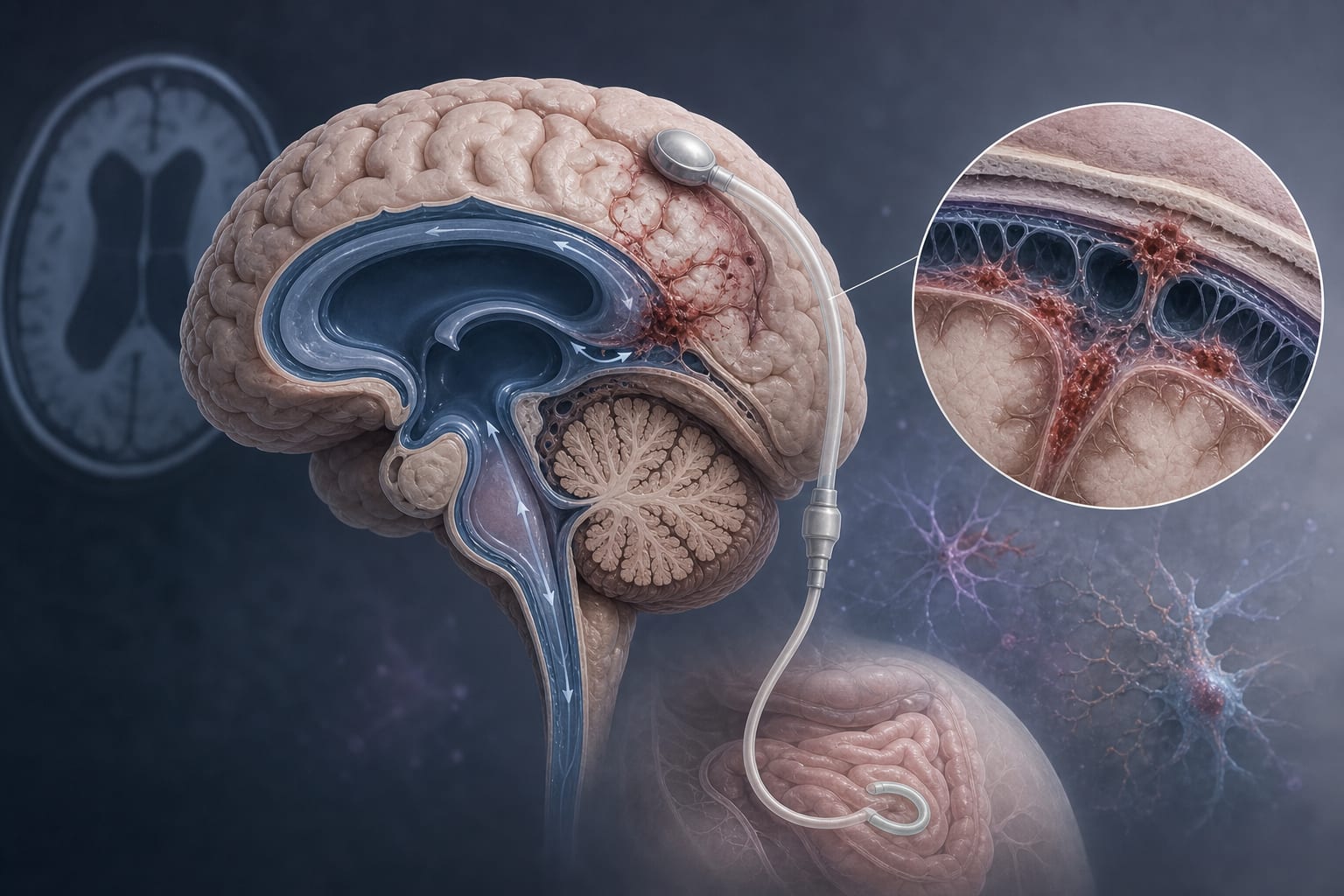
Key MechanismsCerebrospinal fluid disturbances, neuroinflammation, subarachnoid obstruction
Target PopulationAdults with traumatic brain injury (TBI)
Care SettingNeurosurgical and rehabilitation settings

Key Highlights

  • PTH occurs in approximately 21.05% of TBI patients.
  • Strong predictors of unfavorable outcomes include low admission Glasgow Coma Score (GCS), acute subdural hematoma (aSDH), and elevated intracranial pressure (ICP).
  • Management involves detailed diagnostics, external or V-P shunting, and regular follow-ups.

Guideline-Based Recommendations

Diagnosis

  • Use a combination of clinical assessment and neuroradiological imaging.
  • Monitor for progressive ventricular enlargement on CT scans.

Management

  • Surgical intervention is required for patients with increased ICP.
  • Chronic PTH symptoms may be observed for progression.

Monitoring & Follow-up

  • Regular follow-ups to assess for complications such as CSF leaks and shunt malfunctions.

Risks

  • Increased morbidity and mortality if PTH is not recognized and treated early.

Patient & Prescribing Data

Adults with traumatic brain injury who develop PTH.

Management strategies include surgical options and monitoring for complications.

Clinical Best Practices

  • Early identification of PTH in TBI patients is crucial.
  • Consider age and initial GCS when assessing prognosis.

Related Resources & Content

    Original Source(s)

    Related Content