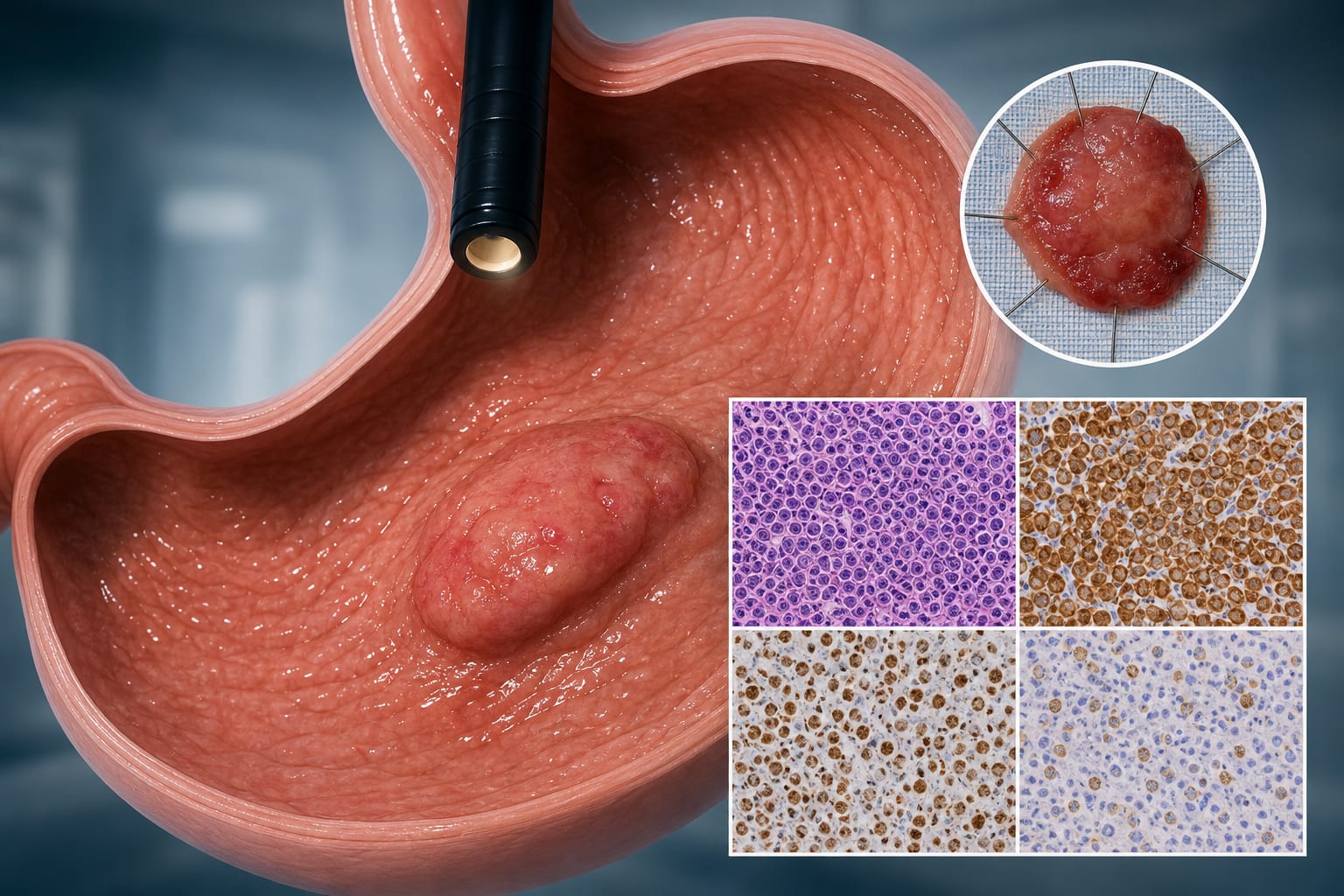
Case Report: A case of incidentally discovered isolated gastric plasmacytoma
-
By
-
Ya-nan Zhang
-
Qing-xin Li
-
Lin-chong Ma
-
Yong-tai Jin
-
Wen-qi Li
-
Jin-chen Du
-
July 7, 2026
-
Clinical Scorecard: Case Study: An Incidentally Identified Isolated Gastric Plasmacytoma
At a Glance
| Category | Detail |
|---|
| Condition | Gastric Plasmacytoma |
| Key Mechanisms | Rare plasma cell malignancy arising from B lymphocytes, characterized by monoclonal plasma cell infiltration. |
| Target Population | Adults, with a notable male predominance. |
| Care Setting | Clinical practice focusing on rare gastric plasma cell tumors. |
Key Highlights
- Gastric plasmacytoma accounts for approximately 2% of extramedullary plasmacytoma cases.
- Diagnosis relies on histopathology, immunohistochemistry, and exclusion of multiple myeloma.
- Surgical or endoscopic resection is the first-line therapy for early localized disease.
Guideline-Based Recommendations
Diagnosis
- Histopathology and immunohistochemistry are essential for diagnosis.
- Exclude multiple myeloma and other extramedullary lesions.
Management
- Endoscopic mucosal resection is recommended for localized gastric plasmacytoma.
- Advanced cases may require adjuvant chemoradiotherapy.
Monitoring & Follow-up
- Regular follow-up with imaging and laboratory tests to monitor for recurrence.
Risks
- Potential misdiagnosis as benign lesions or gastric carcinoma.
Patient & Prescribing Data
Adult males with symptoms of upper gastrointestinal discomfort.
Proton pump inhibitors may provide symptomatic relief but do not address the underlying malignancy.
Clinical Best Practices
- Consider gastric plasmacytoma in differential diagnosis for patients with persistent upper gastrointestinal symptoms.
- Utilize comprehensive diagnostic approaches including imaging and laboratory tests.
Related Resources & Content