Case Report: Primary sporadic intramedullary malignant peripheral nerve sheath tumor with intracranial extension and a subpial nodule suggestive of early dissemination - Scorecard - MDSpire

Case Report: Primary sporadic intramedullary malignant peripheral nerve sheath tumor with intracranial extension and a subpial nodule suggestive of early dissemination

  • By

  • Fangyu Zhu

  • Xiyu Zhao

  • Zhiqiang Ouyang

  • June 29, 2026

  • 0 min

Share

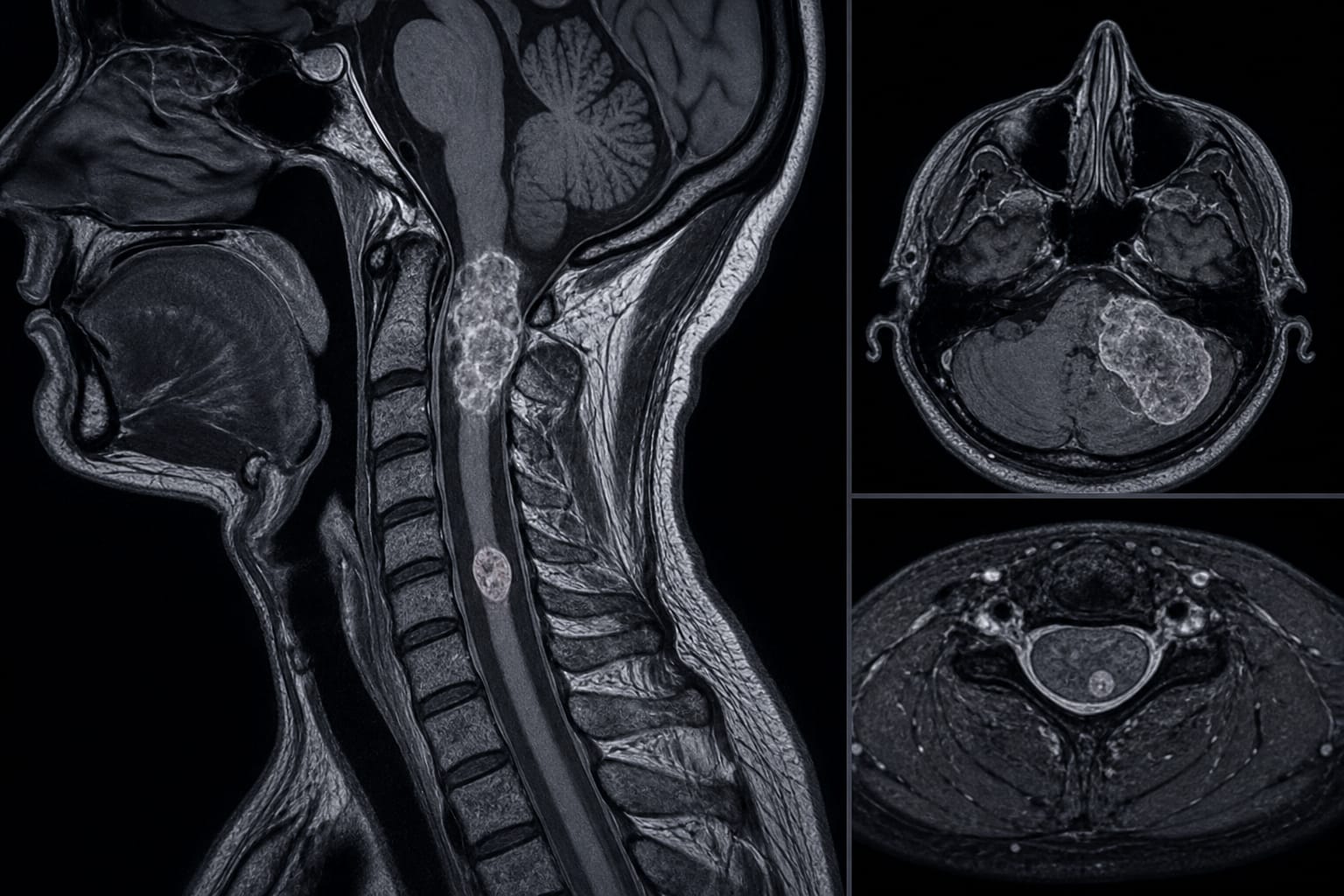
Clinical Scorecard: Clinical Case Analysis: Rare Sporadic Intramedullary Malignant Peripheral Nerve Sheath Tumor with Intracranial Involvement and Subpial Nodule Indicating Possible Early Dissemination

At a Glance

CategoryDetail
ConditionIntramedullary Malignant Peripheral Nerve Sheath Tumor (MPNST)
Key MechanismsAggressive biological behavior with potential for rapid progression and dissemination.
Target PopulationYoung adults, specifically a 22-year-old male in this case.
Care SettingNeurosurgical and oncological management in a clinical setting.

Key Highlights

  • Intramedullary MPNSTs are exceptionally rare, particularly in sporadic cases without NF−1.
  • The patient presented with progressive neurological symptoms and imaging suggestive of early dissemination.
  • Gross total resection was achieved, but recurrence occurred 18 months later with significant clinical deterioration.
  • Immunophenotypic dedifferentiation was noted at recurrence, indicating aggressive tumor behavior.
  • Adjuvant radiotherapy was recommended but declined due to financial limitations.

Guideline-Based Recommendations

Diagnosis

  • Use MRI for initial imaging evaluation of suspected intramedullary tumors.

Management

  • Maximal surgical resection is the primary treatment for MPNST.

Monitoring & Follow-up

  • Regular follow-up imaging is essential to monitor for recurrence.

Risks

  • High recurrence and metastatic potential associated with MPNST.

Patient & Prescribing Data

Young adults with sporadic intramedullary MPNST.

Consider multimodal treatment strategies for aggressive cases.

Clinical Best Practices

  • Early recognition of atypical imaging features suggestive of dissemination is crucial.
  • Multimodal treatment strategies may optimize management and surveillance.

Related Resources & Content

    Original Source(s)

    Related Content