Two cases of pancytopenia characterized by severe neutropenia induced by anti-PD-1 tislelizumab combined with chemotherapy in non-small cell lung cancer patients and a literature review - Scorecard - MDSpire
Advertisement
Two cases of pancytopenia characterized by severe neutropenia induced by anti-PD-1 tislelizumab combined with chemotherapy in non-small cell lung cancer patients and a literature review
Clinical Scorecard: Two Instances of Immune-Related Pancytopenia with Severe Neutropenia Following Anti-PD-1 Tislelizumab and Chemotherapy in Patients with Non-Small Cell Lung Cancer: A Review of Relevant Literature
At a Glance
Category
Detail
Condition
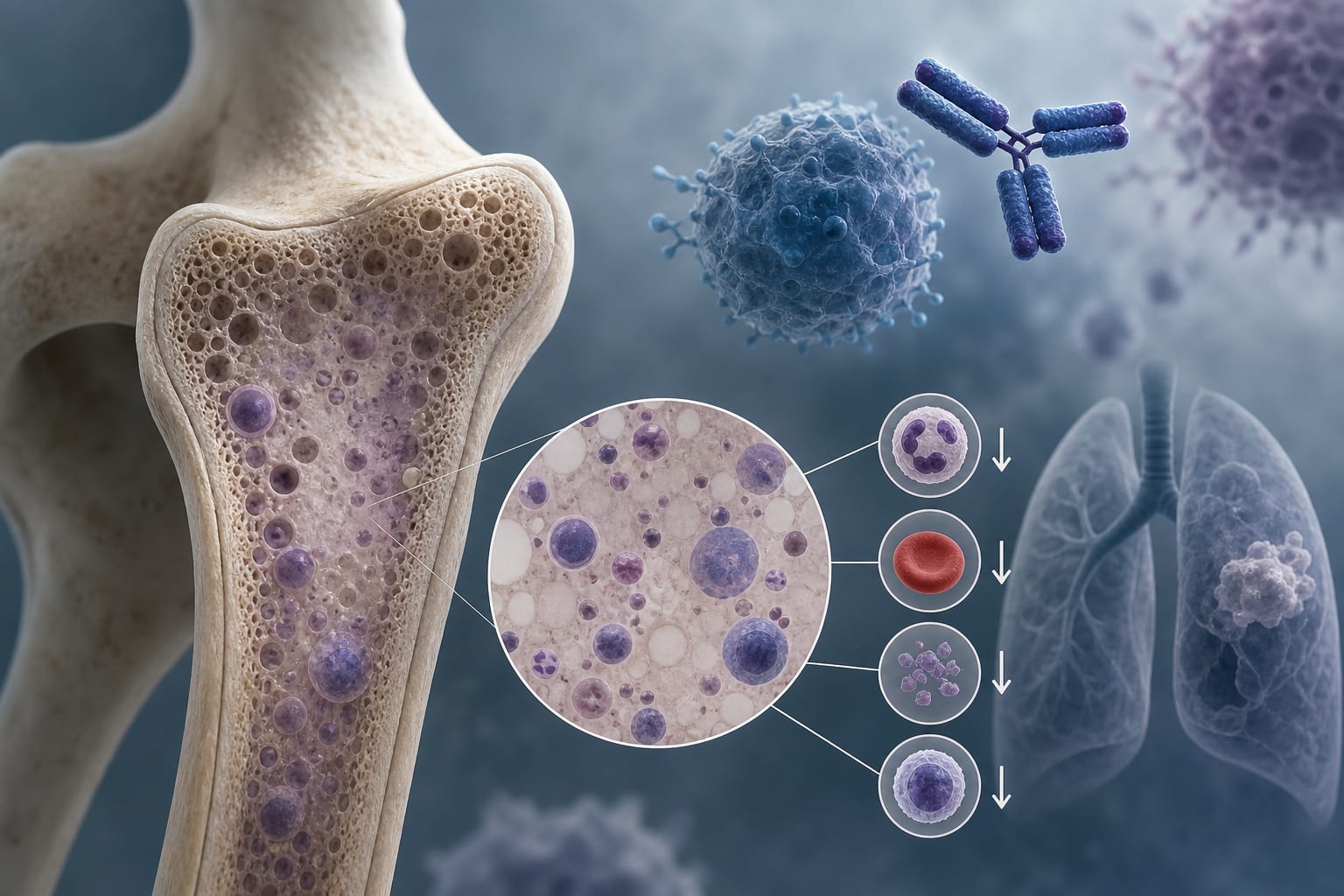
Immune-related Pancytopenia
Key Mechanisms
Immune checkpoint inhibitors (ICI) activate the immune system, leading to adverse events.
Target Population
Patients with Non-Small Cell Lung Cancer (NSCLC) receiving tislelizumab and chemotherapy.
Care Setting
Oncology clinics managing advanced lung cancer.
Key Highlights
Two cases of immune-related pancytopenia following tislelizumab treatment.
Grade 4 neutropenia and other hematologic complications observed.
Both patients experienced severe adverse events leading to multiple organ dysfunction syndrome.
Management included G-CSF, corticosteroids, and component transfusions.
Differentiation from chemotherapy-induced myelosuppression is critical.
Guideline-Based Recommendations
Diagnosis
Monitor blood cell counts regularly to identify hematologic irAEs.
Management
Use G-CSF, thrombopoietin, and corticosteroids for treatment of severe hematologic irAEs.
Monitoring & Follow-up
Regular monitoring of liver function and blood counts is essential.
Risks
High mortality rate associated with hematologic irAEs, particularly in the context of concurrent chemotherapy.
Patient & Prescribing Data
Patients with advanced NSCLC receiving immunotherapy.
Combination therapy with tislelizumab and chemotherapy can lead to severe hematologic adverse events.
Clinical Best Practices
Distinguish between immune-related and chemotherapy-induced myelosuppression.
Prompt intervention is necessary to prevent severe complications.
Dana-Farber Cancer Institute's Dr. Julia Rotow reported on a study looking at silevertinib, with data showing it may offer a new first-line option for hard-to-treat EGFR non-small cell lung cancer variants, with encouraging brain activity and manageable side effects.