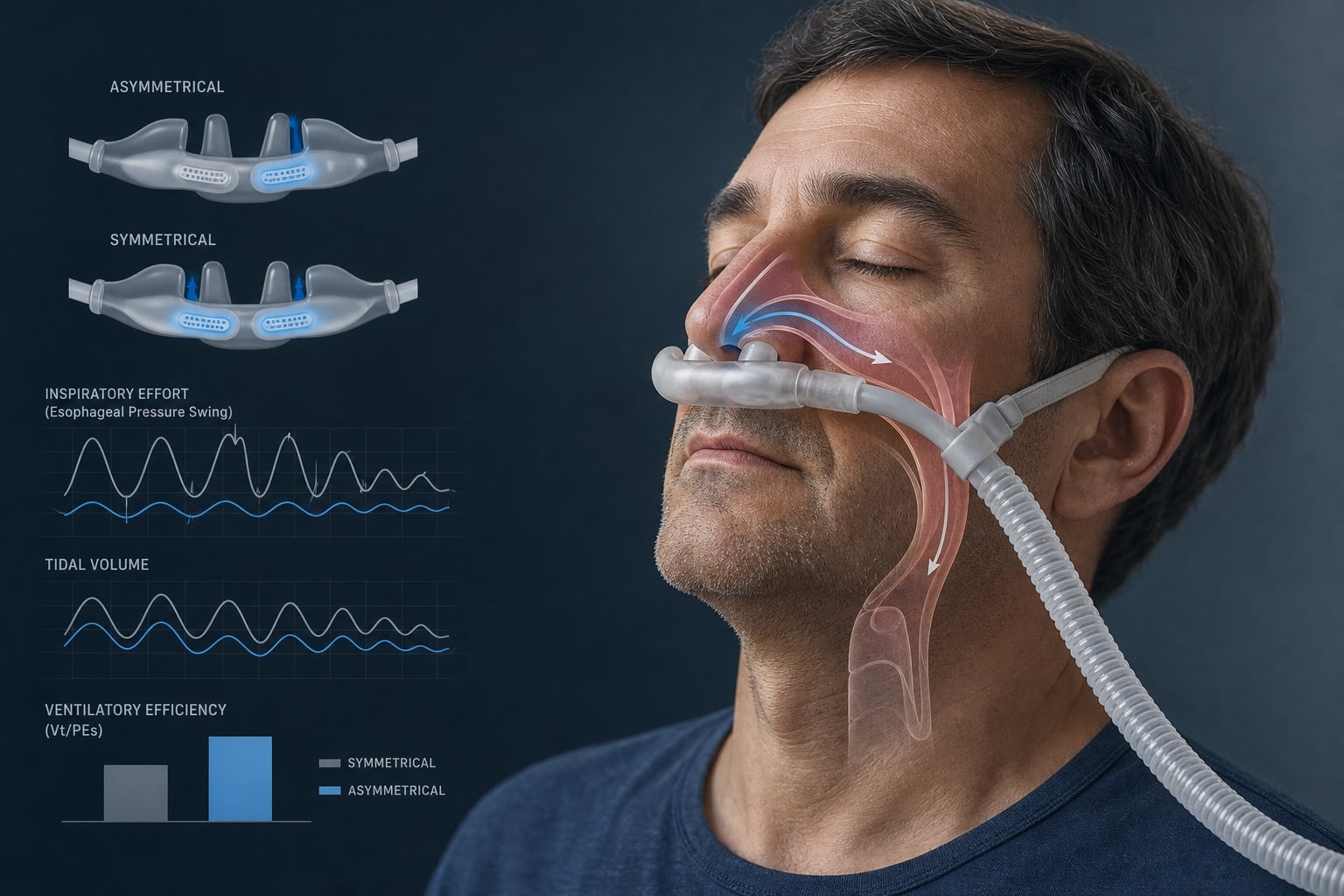
Clinical Scorecard: Comparative Analysis of Asymmetrical and Symmetrical High-Flow Nasal Cannula on Inspiratory Workload
At a Glance
Category
Detail
Condition
Nasal high-flow therapy
Key Mechanisms
Reduces inspiratory effort through washout of upper-airway dead space, generation of low positive airway pressure, and improved ventilatory efficiency.
Target Population
Clinically stable adults post-discharge from a respiratory ward.
Care Setting
Physiologic assessment in a controlled clinical environment.
Key Highlights
Asymmetrical NHF interface associated with lower PTPes and ΔPes.
Higher tidal volume observed with asymmetrical interface compared to symmetrical.
No significant difference in respiratory rate and minute ventilation between interfaces.
Lower heart rate and mean arterial pressure during asymmetrical NHF.
Physiological advantages suggest more efficient breathing with asymmetrical cannula.
Guideline-Based Recommendations
Diagnosis
Assess clinical stability and oxygenation before NHF application.
Management
Consider asymmetrical NHF interfaces for patients with preserved oxygenation.
Monitoring & Follow-up
Monitor esophageal pressure and tidal volume during NHF therapy.
Risks
Caution against extrapolating findings to clinical efficacy or patient comfort.
Patient & Prescribing Data
Adults aged ≥ 18 years with clinical stability and SpO₂ ≥95% on room air.
Asymmetrical NHF may reduce inspiratory workload while maintaining effective ventilation.
Clinical Best Practices
Utilize consistent device settings across NHF interfaces for accurate comparison.
Evaluate patient response to different NHF interfaces in stable conditions.