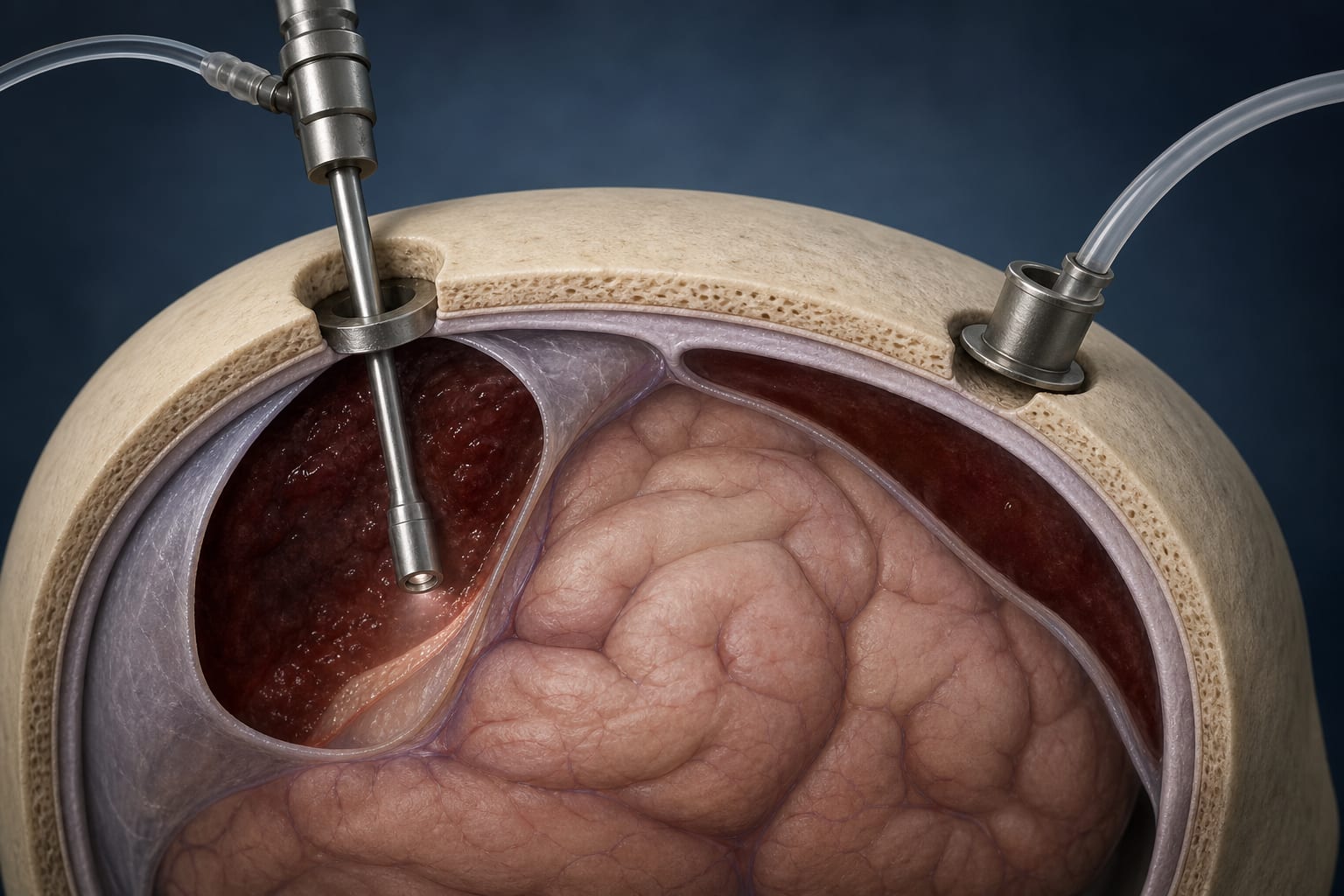
Clinical Scorecard: Long-term Outcomes of Programmable Gravitational Valves in Patients with Idiopathic Normal Pressure Hydrocephalus: A Three-Year Follow-Up Study
At a Glance
Category
Detail
Condition
Idiopathic normal pressure hydrocephalus (iNPH), characterized by gait disturbance, cognitive impairment, and urinary incontinence
Key Mechanisms
Cerebrospinal fluid (CSF) shunting using ventriculoperitoneal shunt (VPS) with adjustable gravitational valves to optimize CSF drainage and reduce overdrainage complications
Target Population
Adult patients diagnosed with probable iNPH undergoing VPS surgery
Care Setting
Neurosurgical clinical setting with long-term postoperative follow-up
Key Highlights
Adjustable gravitational valves (GV) integrate gravitational units to reduce position-dependent CSF overdrainage and improve safety.
Valve pressure settings are individualized based on patient height, activity level, and intra-abdominal pressure factors such as obesity.
Postoperative valve adjustments are noninvasive and guided by clinical and radiological evaluations to optimize neurological outcomes.
Guideline-Based Recommendations
Diagnosis
Diagnose iNPH based on clinical triad and Japanese Society of Normal Pressure Hydrocephalus guidelines.
Perform preoperative lumbar tap test with timed up and go test (TUGT) and 10-m walking test (10MWT) to assess eligibility for VPS.
Management
Implant adjustable differential pressure valves with gravitational units (e.g., M.blue plus®).
by Stefano Colonna, Carla Paracampo, Elena Garro, Enrico Lo Bue, Alberto Morello, Alessandro Pesaresi, Luca Ceroni, Salvatore Petrone, Diego Garbossa, Fabio Cofano, Alessandro Fiumefreddo