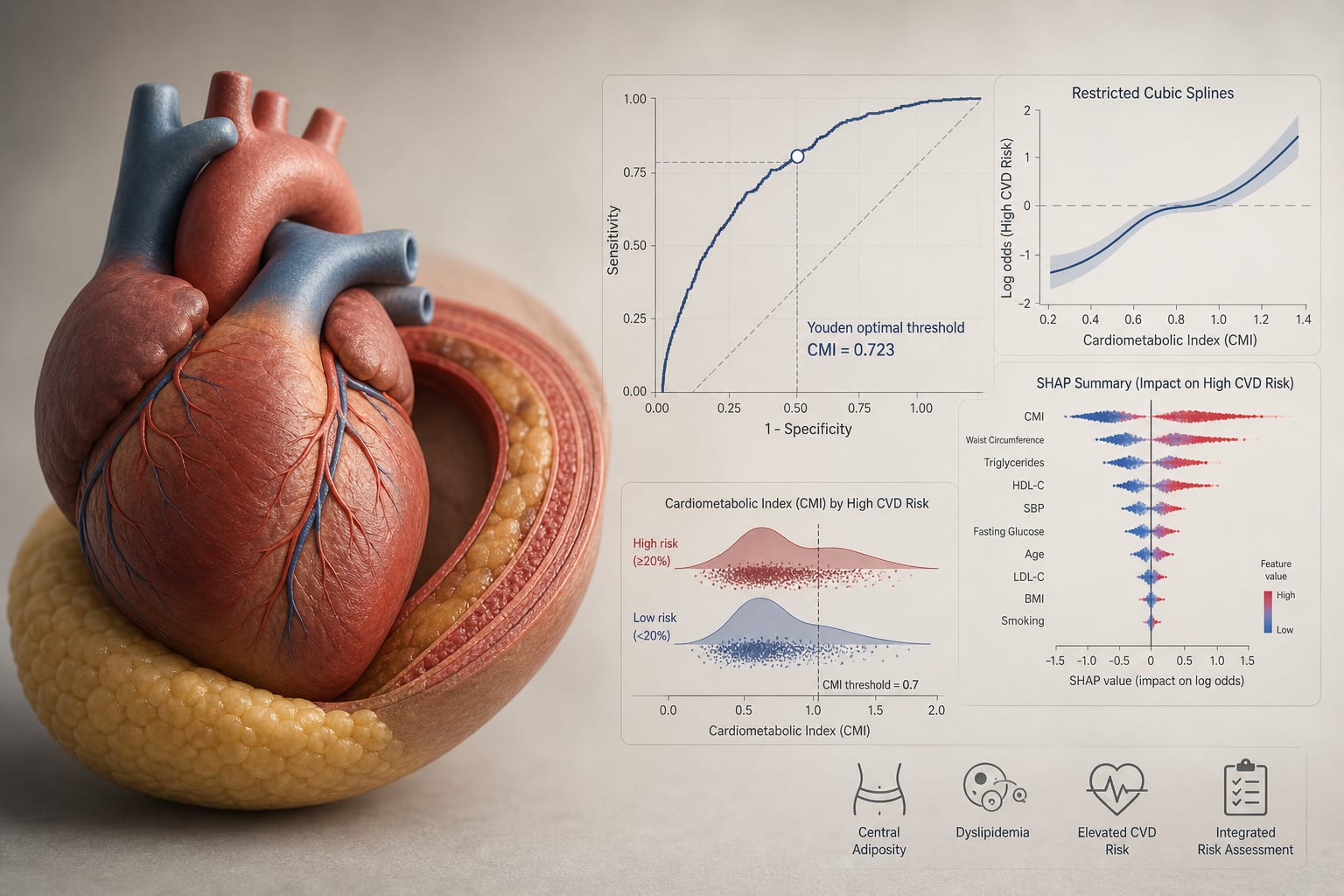
Clinical Scorecard: Variations in Cardiovascular Disease Risk Factor Prevalence Among London Adults: Insights from the TOGETHER Study
At a Glance
Category
Detail
Condition
Cardiovascular Disease (CVD)
Key Mechanisms
Traditional modifiable risk factors including hypertension, diabetes, obesity, dyslipidemia, and smoking; influenced by ethnicity, socioeconomic deprivation, health literacy, and healthcare access
Target Population
Ethnically diverse adults aged 30–90 years residing in London without established CVD
Care Setting
Primary care settings in London utilizing electronic health records from general practices
Key Highlights
CVD remains the leading cause of death and disability in the UK, with significant premature mortality before age 75, disproportionately affecting South Asian and Black ethnic groups.
Existing UK evidence on ethnic disparities in CVD risk is outdated or limited by cohort diversity and geographic coverage; the TOGETHER study provides contemporary data from a diverse urban population.
National CVD risk assessment programs like NHS Health Checks face challenges including low uptake and may not fully address ethnic disparities due to variations in risk factor exposure and detection.
Guideline-Based Recommendations
Diagnosis
Use standardized clinical coding systems in primary care EHR to identify and record CVD risk factors and diagnoses.
Expand cardiovascular risk assessments beyond traditional age ranges (40–74 years) to include adults aged 30–90 years for comprehensive risk profiling.
Management
Implement population-level and opportunistic CVD risk assessments in primary care to identify modifiable risk factors early.
Tailor prevention strategies to address ethnic disparities and cumulative risk exposures starting earlier in life.
Monitoring & Follow-up
Regularly monitor blood pressure, lipid profiles, BMI, and smoking status during primary care visits.
Utilize routinely collected EHR data to track risk factor prevalence and management effectiveness across diverse populations.
Risks
Recognize that traditional midlife risk factors do not fully explain ethnic variations in CVD risk, indicating potential gaps in detection and management.
Address socioeconomic and healthcare access barriers that contribute to disparities in CVD outcomes.
Patient & Prescribing Data
Adults aged 30–90 years without established CVD attending primary care in London
Data supports the need for early and ethnically sensitive risk factor identification and management to reduce premature CVD morbidity and mortality.
Clinical Best Practices
Leverage routinely collected primary care EHR data for comprehensive cardiovascular risk assessment in diverse populations.
Incorporate ethnicity and socioeconomic factors into CVD risk stratification and prevention strategies.
Promote increased uptake of NHS Health Checks and opportunistic risk assessments to improve early detection of CVD risk factors.
Expand age criteria for cardiovascular risk screening to capture earlier life exposures and improve equity in prevention.