Single-point insulin sensitivity estimator and left main and/or three-vessel disease in patients aged 45 years or older with acute coronary syndrome: findings from the CCC-ACS project - Scorecard - MDSpire
Advertisement
Single-point insulin sensitivity estimator and left main and/or three-vessel disease in patients aged 45 years or older with acute coronary syndrome: findings from the CCC-ACS project
Clinical Scorecard: Association of Single-Point Insulin Sensitivity Estimator with Severe Coronary Disease in Patients Aged 45 and Older Experiencing Acute Coronary Syndrome: Insights from the CCC-ACS Study
At a Glance
Category
Detail
Condition
Acute Coronary Syndrome (ACS)
Key Mechanisms
Association of insulin sensitivity with severe coronary anatomical patterns.
Target Population
Patients aged 45 and older experiencing ACS.
Care Setting
National registry and quality improvement initiative for ACS care.
Key Highlights
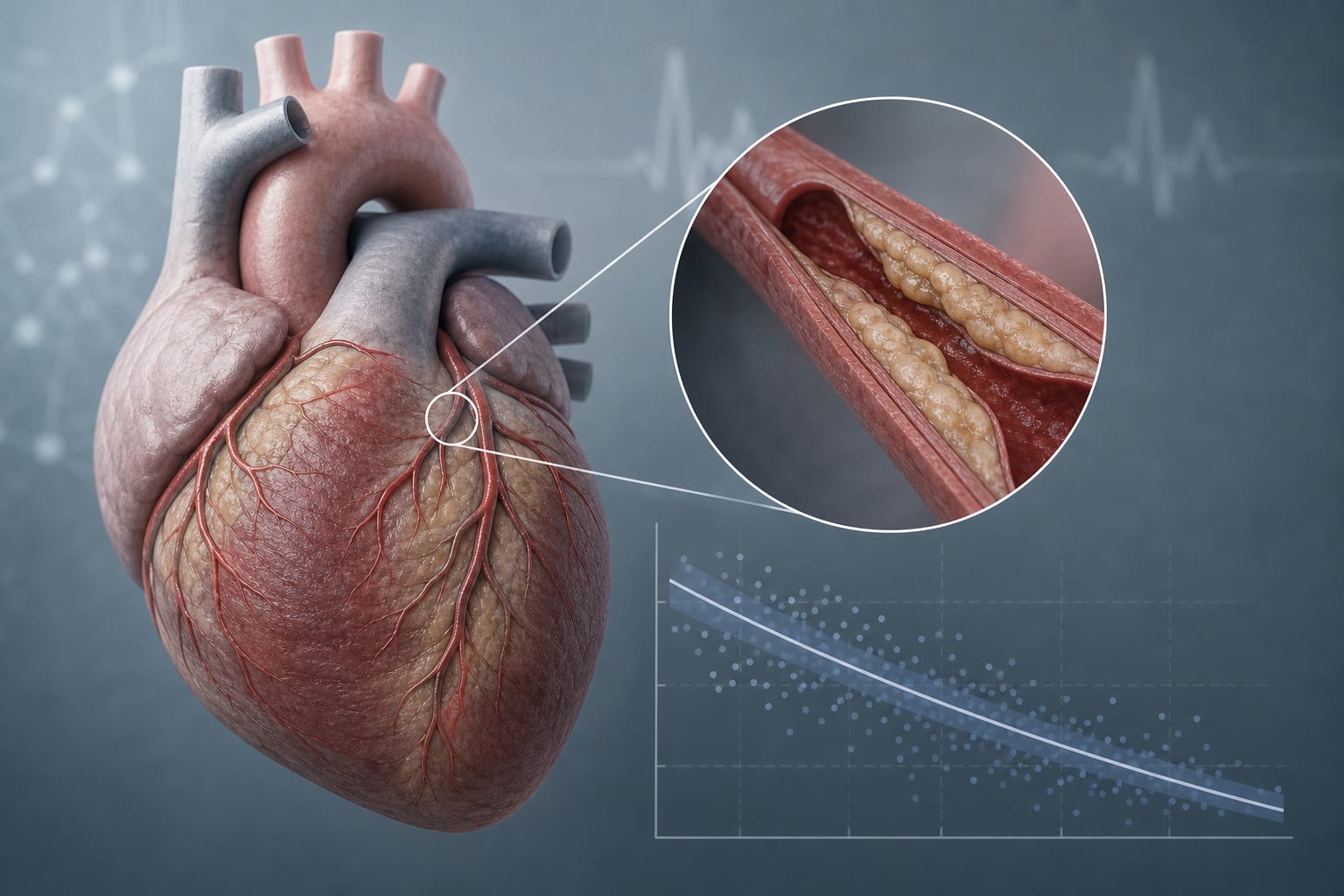
Higher SPISE associated with lower odds of severe coronary anatomical outcomes.
Each 1-unit increase in SPISE linked to lower odds of left main and/or three-vessel disease.
Inverse associations mainly observed in patients aged <65 years.