Antibody-drug conjugates in colorectal cancer: current landscape and future perspectives from clinical trials
-
By
-
Jingyi Li
-
Yemin Xu
-
Lu Wang
-
Ying Zhu
-
Bin Deng
-
June 19, 2026
-
Clinical Scorecard: Antibody-Drug Conjugates in Colorectal Cancer: An Overview of Current Clinical Trials and Future Directions
At a Glance
| Category | Detail |
|---|
| Condition | Colorectal Cancer |
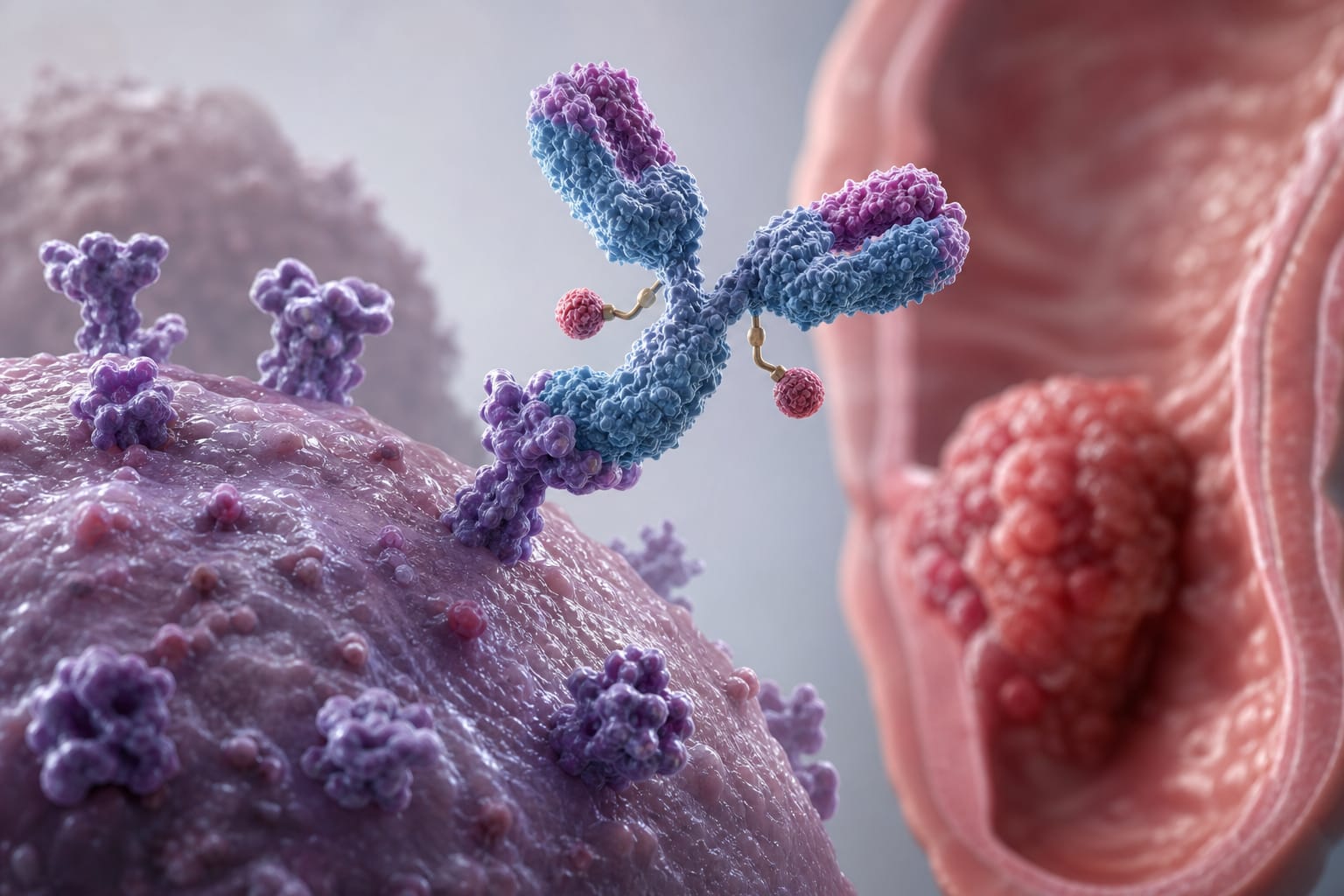
| Key Mechanisms | Antibody-drug conjugates (ADCs) deliver cytotoxic agents selectively to tumor cells, minimizing systemic toxicity. |
| Target Population | Patients with advanced colorectal cancer. |
| Care Setting | Clinical trial landscape for ADC therapy. |
Key Highlights
- 194 eligible ADC trials identified, with a peak in 2024.
- Majority of trials are in early phases (Phase I/II).
- HER2, Trop-2, and c-Met are the most frequently studied targets.
- Topoisomerase I inhibitors are the most common payloads.
- Trials predominantly conducted in China and the United States.
Guideline-Based Recommendations
Diagnosis
Management
Monitoring & Follow-up
Risks
Patient & Prescribing Data
Patients with advanced colorectal cancer participating in clinical trials.
Current ADC trials focus on safety and tolerability as primary endpoints.
Clinical Best Practices
- Cautious interpretation of efficacy due to early-stage trial nature.
- Awareness of publication bias and industry dominance in trial sponsorship.
Related Resources & Content