Aesthetic abdominal contouring enhancement with combined abdominoplasty and circumferential liposuction in normal-BMI postpartum Asian women - Scorecard - MDSpire
Advertisement
Aesthetic abdominal contouring enhancement with combined abdominoplasty and circumferential liposuction in normal-BMI postpartum Asian women
Clinical Scorecard: Enhancing Aesthetic Abdominal Contours in Normal-BMI Postpartum Asian Women Through Combined Abdominoplasty and Circumferential Liposuction
At a Glance
Category
Detail
Condition
Postpartum abdominal wall laxity and localized adiposity in normal-BMI Asian women
Key Mechanisms
Combined abdominoplasty with rectus plication and circumferential liposuction of flanks, hip rolls, and upper abdomen to reduce waist circumference and improve abdominal contour
Target Population
Postpartum Asian women aged 18-55 years with stable normal BMI (~22.1 kg/m2) dissatisfied with abdominal contour
Care Setting
Elective plastic surgery performed under general anesthesia in a surgical facility
Key Highlights
Significant reduction in waist circumference from 90.9 cm to 80.4 cm postoperatively
Low complication rates including seroma and wound dehiscence, all managed successfully
High patient satisfaction with improved aesthetic abdominal contour and waist-to-hip ratio
Guideline-Based Recommendations
Diagnosis
Assess abdominal laxity, protrusion, and localized adiposity via physical examination and pinch test
Confirm BMI stability (<2 kg/m² variation for at least 6 months)
Exclude patients with prior abdominoplasty or significant comorbidities
Management
Preoperative marking of liposuction areas (flanks, hip rolls, upper abdomen) and low transverse incision design
Perform tumescent liposuction with 3 mm blunt cannula using fan-shaped technique for uniform contour
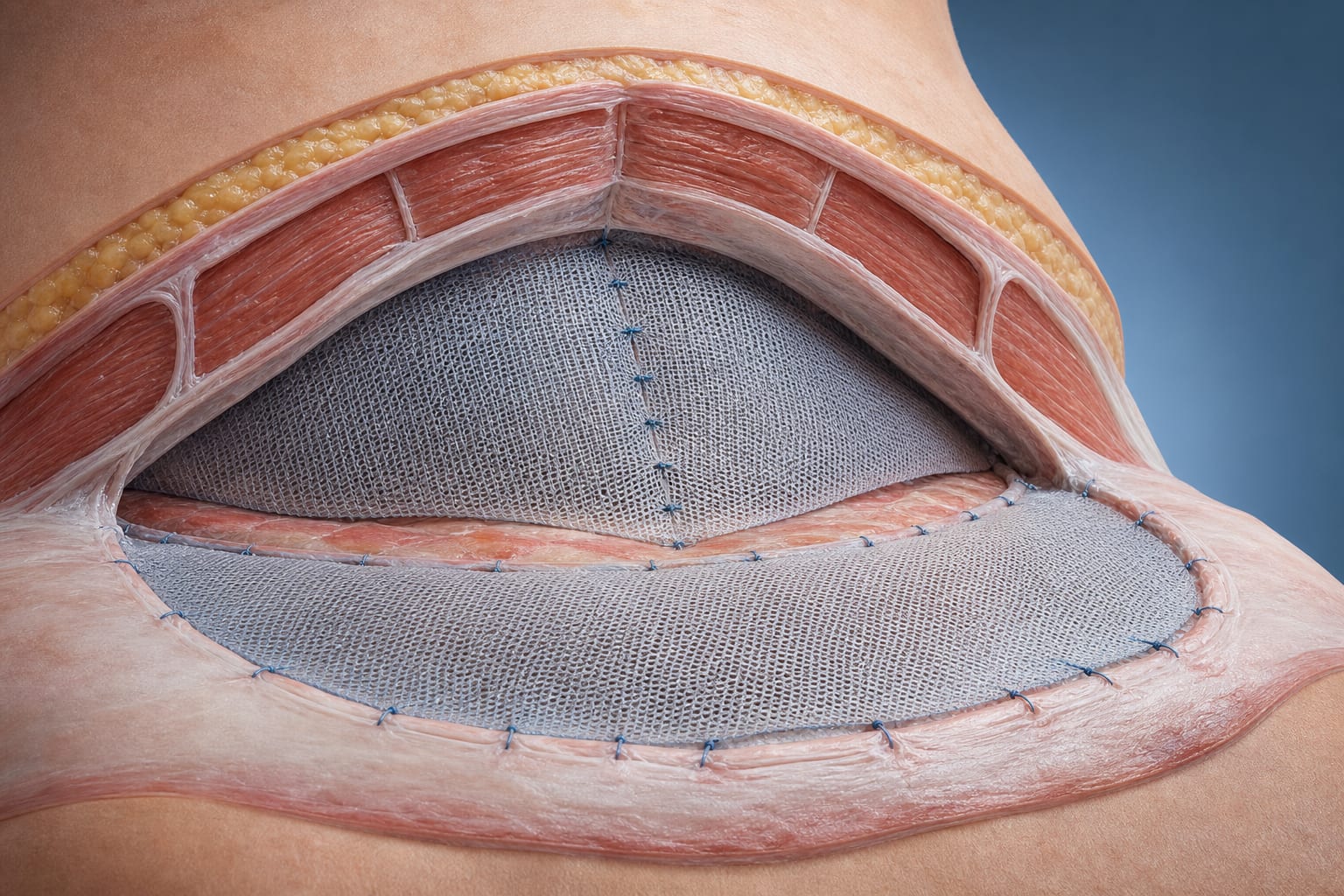
Conduct abdominoplasty with rectus plication, progressive tension sutures, and meticulous umbilicoplasty
Use tumescent infiltration around umbilical incision to facilitate dissection
Monitoring & Follow-up
Monitor for postoperative complications such as seroma and wound dehiscence
Assess patient satisfaction and anthropometric measurements postoperatively
Follow-up to ensure wound healing and contour stability
Risks
Seroma formation
Umbilical and abdominal wound dehiscence
Potential for uneven contour if liposuction is insufficient or excessive
Patient & Prescribing Data
Normal-BMI postpartum Asian women seeking aesthetic abdominal contour improvement
Combined abdominoplasty and circumferential liposuction is safe and effective, yielding significant waistline refinement and high patient satisfaction with an acceptable complication profile
Clinical Best Practices
Individualize surgical strategy based on extent of skin laxity and musculofascial condition
Use preoperative pinch test to estimate tissue resection and closure tension
Perform sufficient liposuction of lateral flanks and hips to prevent postoperative bulkiness
Employ progressive tension sutures to reduce dead space and seroma risk
Design umbilical incision under skin tension for optimal umbilicoplasty