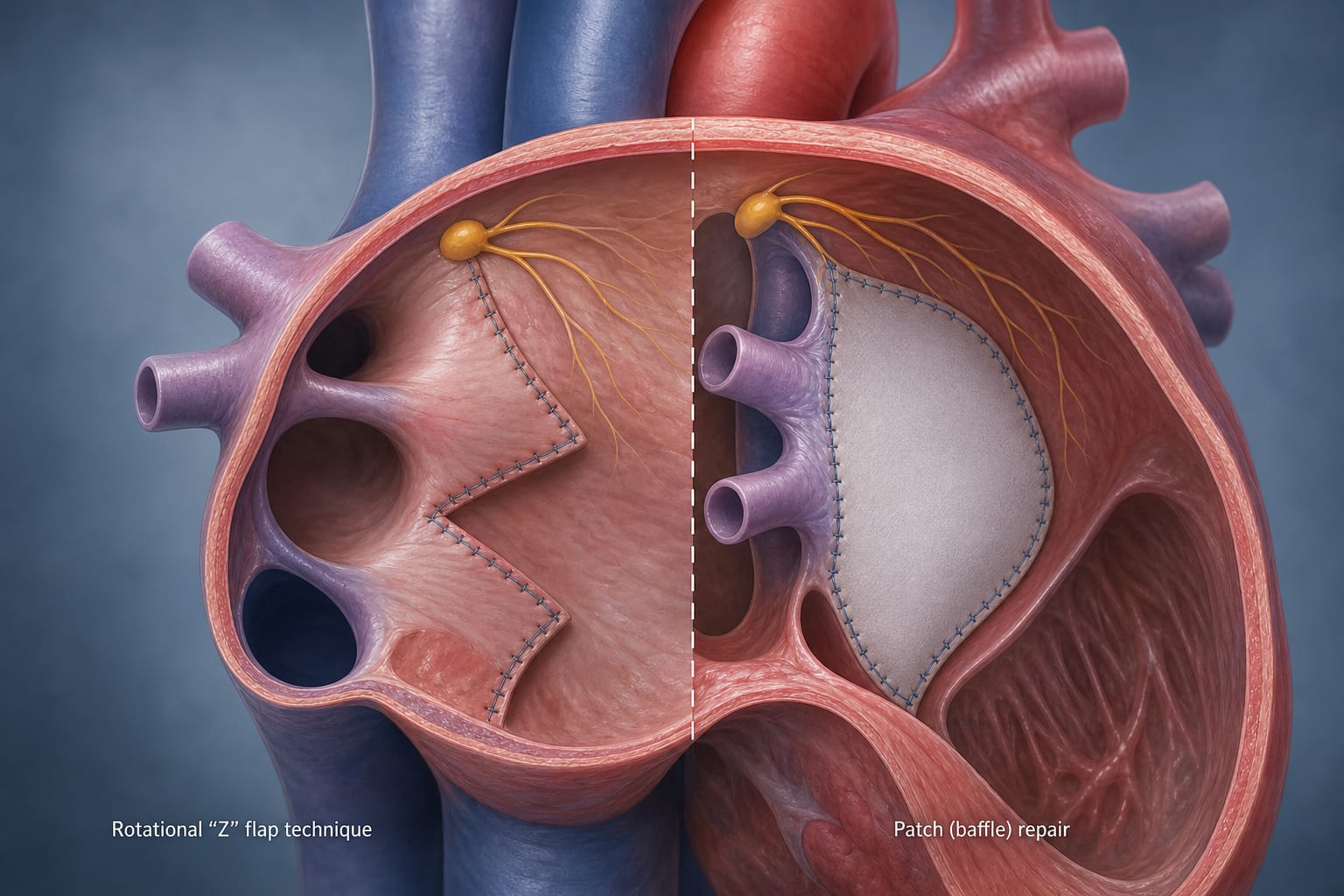
Same-same, but different? Postoperative rhythm disturbances and other analysis after rotational Z-flap vs. patch repair of sinus venosus atrial defects - Scorecard - MDSpire
Clinical Scorecard: Comparative Analysis of Postoperative Arrhythmias Following Rotational Z-Flap Versus Patch Repair Techniques for Sinus Venosus Atrial Septal Defects
At a Glance
Category
Detail
Condition
Key Mechanisms
Target Population
Care Setting
Single-center, retrospective cohort study.
Key Highlights
Postoperative rhythm disturbances occurred in 54.5% of patients (p-value needed).
Right bundle branch block was the most frequent arrhythmia (40.1%).
The 'Z' flap group had a higher incidence of sinoatrial block with junctional rhythm (17.5% vs. 4.3%; p = 0.035).
Operative times were shorter for the 'Z' flap technique (182.6 min vs. 209 min; p-value needed).
No patients required permanent pacemaker implantation.
Guideline-Based Recommendations
Diagnosis
Management
Monitoring & Follow-up
Monitor for postoperative rhythm disturbances, particularly junctional rhythms, at 3-6 months follow-up.
Risks
Patient & Prescribing Data
Both surgical methods are effective with different risk profiles for postoperative arrhythmias; specify risks associated with each.
Clinical Best Practices
Exclude patients with preoperative arrhythmias or concomitant procedures.
Utilize EKG monitoring for early detection of postoperative rhythm disturbances.
Consider patient selection criteria based on arrhythmia risk.