Multi-omics analysis of kidney renal cell carcinoma in silico with preliminary in vivo validation
-
By
-
Tingyu Su
-
Fan Jiang
-
Jianjun Gao
-
Xiubin Li
-
Hongmei Cheng
-
Yang Wang
-
June 8, 2026
-
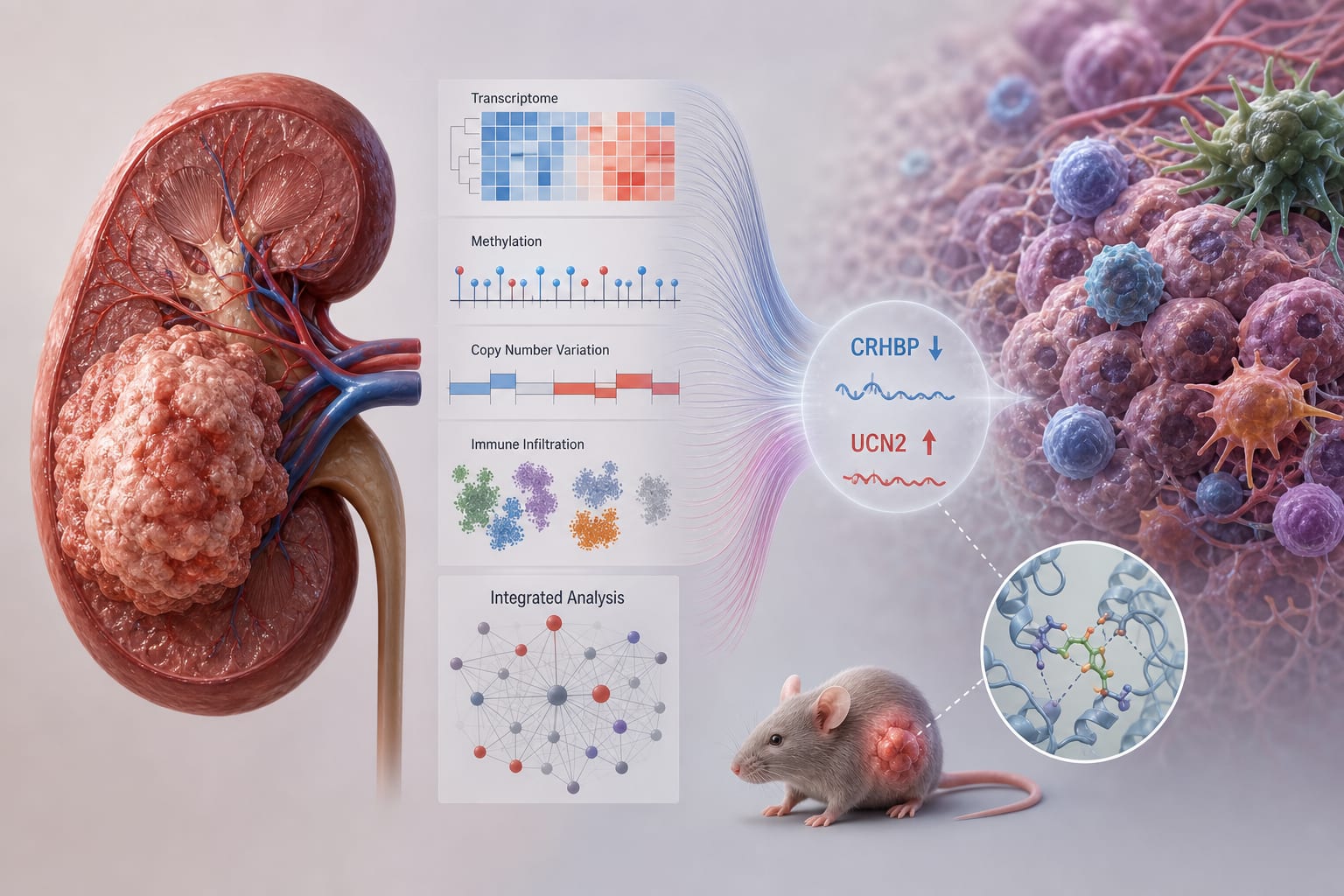
Clinical Scorecard: Integrative Multi-Omics Investigation of Kidney Renal Clear Cell Carcinoma with Initial In Vivo Confirmation
At a Glance
| Category | Detail |
|---|
| Condition | |
| Key Mechanisms | Genomic aberrations and immune microenvironment disorders (source needed) |
| Target Population | |
| Care Setting | Oncology and Urology (source needed) |
Key Highlights
- CRHBP identified as a downregulated prognostic biomarker in KIRC (source needed)
- UCN2 negatively correlates with tumor angiogenesis and hypoxia (source needed)
- Dabrafenib shown as a candidate drug targeting CRHBP/UCN2 (source needed)
- CRHBP expression is stage-dependent with survival predictive value (source needed)
- Study integrates multi-omics data for KIRC analysis (source needed)
Guideline-Based Recommendations
Diagnosis
- Utilize multi-omics data for identifying prognostic biomarkers in KIRC (source needed)
Management
- Consider dabrafenib as a therapeutic agent targeting CRHBP/UCN2 (source needed)
Monitoring & Follow-up
- Monitor CRHBP and UCN2 expression levels for prognostic assessment (source needed)
Risks
- KIRC has a poor clinical prognosis and is associated with late diagnosis (source needed)
Patient & Prescribing Data
Dabrafenib may be effective in targeting the CRHBP/UCN2 axis (source needed)
Clinical Best Practices
- Integrate genomic and immune cell dynamics in treatment planning (source needed)
- Utilize single-cell RNA sequencing for validation of biomarkers (source needed)
- Assess immune cell infiltration in relation to tumor progression (source needed)
Related Resources & Content