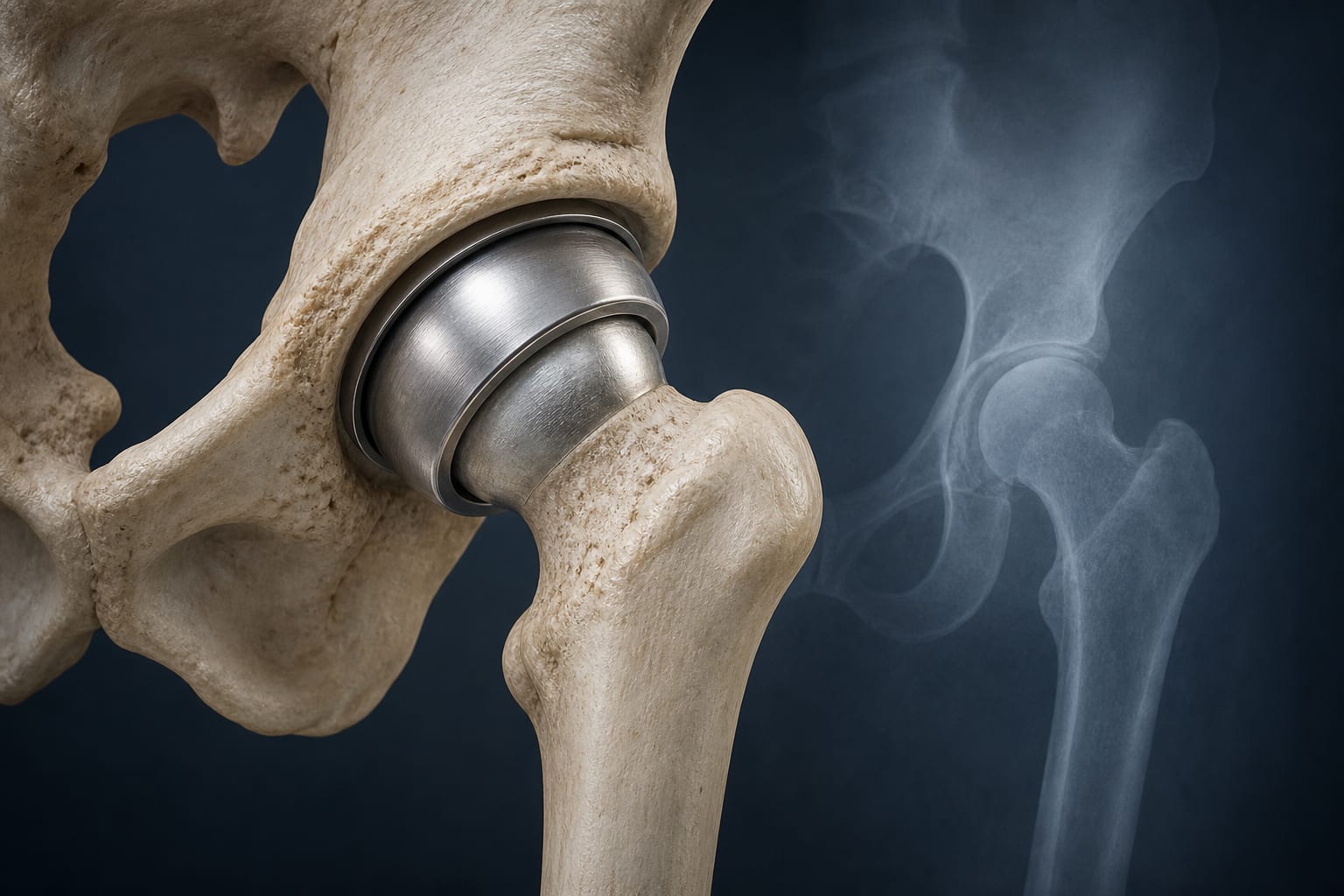
Hip resurfacing arthroplasty at a minimum of 14 years: revision is concentrated among female patients with dysplasia and small components - Scorecard - MDSpire
Clinical Scorecard: Long-term Outcomes of Hip Resurfacing Arthroplasty: Higher Revision Rates in Female Patients with Dysplasia and Smaller Components After 14 Years
At a Glance
Category
Detail
Condition
Hip Resurfacing Arthroplasty
Key Mechanisms
Bone-conserving alternative to total hip arthroplasty, maintaining biomechanics and allowing conversion to THA.
Target Population
Young, active individuals aged 18-65 with symptomatic hip arthritis unresponsive to conservative treatment.
Care Setting
Tertiary referral center
Key Highlights
20-year survivorship: 96.5% in men, 87.0% in women.
Higher revision rates observed in women with developmental dysplasia and smaller components.
Long-term outcomes for non-OA causes, including AVN, remain inadequately defined.
Adverse reactions to metal debris (ARMD) are a concern with metal-on-metal bearings.
Comprehensive evaluation requires serum metal-ion measurements and MARS-MRI.
Guideline-Based Recommendations
Diagnosis
Stratify hips by etiology: Primary OA, DDH, Non-OA, and AVN.
Management
Use appropriate patient selection criteria, considering sex, component size, and dysplasia.
Monitoring & Follow-up
Conduct clinical follow-up at 6 weeks, 3 months, 6 months, 1 year, and yearly thereafter.
Risks
Monitor for adverse reactions to metal debris and potential for femoral component loosening.
Patient & Prescribing Data
Patients aged 18-65 with sufficient bone quality and symptomatic hip arthritis.
Implantation of femoral components sized 36-54 mm, with preference for larger diameters.
Clinical Best Practices
Perform thorough preoperative assessment including DEXA T-score and radiographic evaluation.
Advise against high-impact sports during the initial 6 months post-surgery.
Utilize standard posterolateral approach for HRA procedures.