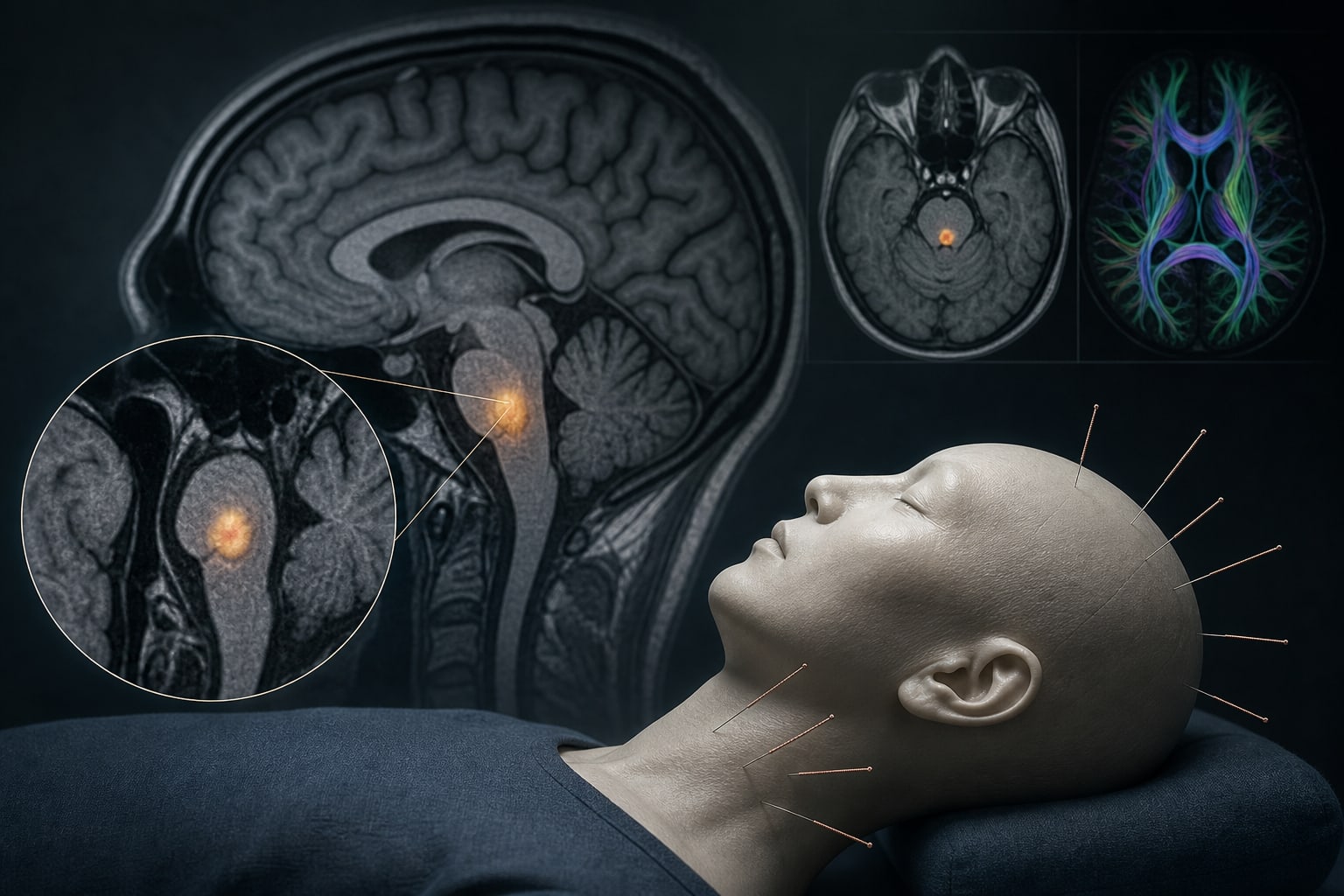
Shallow Acupuncture for brainstem infarction: a randomized controlled trial protocol
-
By
-
Hongge Zuo
-
Yan Huang
-
Weikang Huang
-
Jiahui Lin
-
Jinyuan Fang
-
Zhenhua Xu
-
July 10, 2026
-
Clinical Scorecard: Protocol for a Randomized Controlled Trial on Shallow Acupuncture in Patients with Brainstem Infarction
At a Glance
| Category | Detail |
|---|
| Condition | Brainstem Infarction |
| Key Mechanisms | Adjunctive Shallow Acupuncture targeting functional recovery and neural changes. |
| Target Population | Patients with brainstem infarction. |
| Care Setting | Single-center, randomized controlled trial. |
Key Highlights
- Study evaluates the efficacy of Shallow Acupuncture on activities of daily living.
- Involves 62 patients assigned to conventional acupuncture or adjunctive Shallow Acupuncture.
- Primary outcome measured by the Barthel Index; secondary outcomes include NIH Stroke Scale and modified Rankin Scale.
- Neuroimaging assessments include resting-state fMRI and diffusion tensor imaging.
- Ethics approved by Guangdong Provincial Hospital of Chinese Medicine.
Guideline-Based Recommendations
Diagnosis
- Brainstem infarction diagnosed through clinical assessment and imaging.
Management
- Standard medical management and rehabilitation strategies for stroke.
Monitoring & Follow-up
- Clinical outcomes assessed at baseline, post-treatment, and 1-month follow-up.
Risks
- Potential for severe clinical manifestations due to brainstem lesions.
Patient & Prescribing Data
Patients with brainstem infarction requiring rehabilitation.
Shallow Acupuncture as an adjunctive therapy to improve functional recovery.
Clinical Best Practices
- Incorporate acupuncture into integrative rehabilitation for stroke.
- Focus on individualized rehabilitation strategies based on functional deficits.
Related Resources & Content