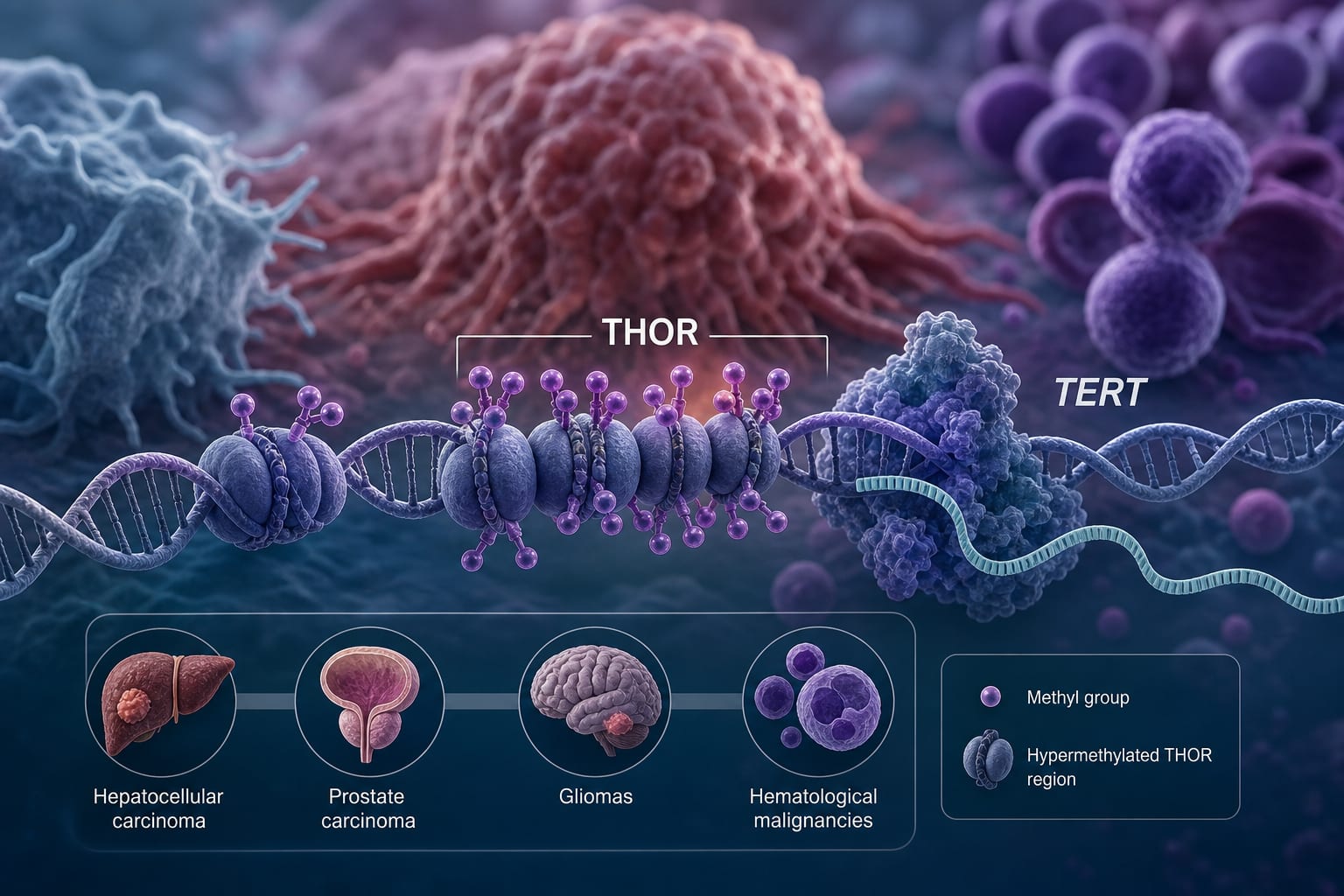
THOR methylation as a pan-cancer mechanism of TERT activation: toward a clinically relevant epigenetic biomarker
-
By
-
Alain Chebly
-
Edith Chevret
-
July 17, 2026
Clinical Scorecard: THOR Methylation: A Universal Mechanism for TERT Activation in Cancer and Its Potential as an Epigenetic Biomarker
At a Glance
| Category | Detail |
|---|
| Condition | Cancer |
| Key Mechanisms | Methylation of the TERT Hypermethylated Oncological Region (THOR) associated with increased TERT expression. |
| Target Population | Patients with solid and hematological cancers. |
| Care Setting | Oncology |
Key Highlights
- THOR methylation is linked to increased TERT expression across various cancers.
- It is frequently observed in tumors lacking TERT promoter mutations.
- THOR methylation may serve as a diagnostic and prognostic biomarker.
- The mechanism involves a dual-methylation pattern affecting transcriptional regulation.
- Current limitations include methodological heterogeneity and the need for assay standardization.
Guideline-Based Recommendations
Diagnosis
- Assess THOR methylation as a potential biomarker for TERT activation.
Management
- Investigate therapeutic targeting of THOR as a future treatment strategy.
Monitoring & Follow-up
- Monitor THOR methylation levels in relation to TERT expression and disease progression.
Risks
- Consider the implications of THOR methylation in aggressive clinical behavior.
Patient & Prescribing Data
Patients with various malignancies, particularly those without TERT promoter mutations.
THOR methylation may inform treatment strategies and prognostic assessments.
Clinical Best Practices
- Standardize assays for THOR methylation assessment.
- Conduct prospective clinical validation of THOR as a biomarker.
Related Resources & Content