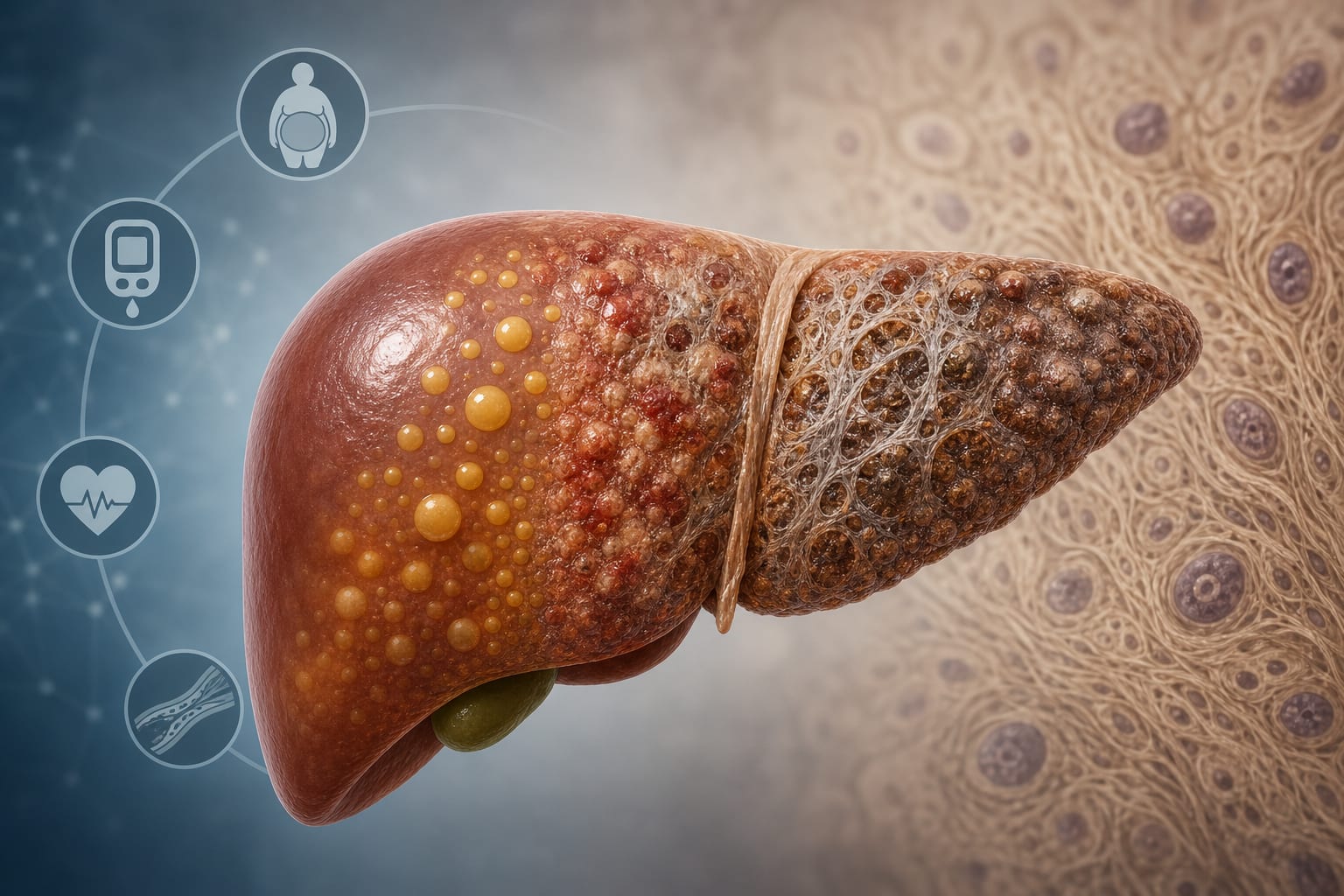
Metabolic Dysfunction-Related Steatotic Liver Disease in Children: An Increasing Health Challenge Amidst Rising Childhood Obesity Rates
By
Swathilakshmi Venu
Manu Raj
May 20, 2026
Clinical Scorecard: Metabolic Dysfunction-Related Steatotic Liver Disease in Children: An Increasing Health Challenge Amidst Rising Childhood Obesity Rates
At a Glance
Category Detail
Condition Metabolic Dysfunction-Associated Steatotic Liver Disease (MASLD) Key Mechanisms Insulin resistance, genetic predisposition, inflammation, gut-liver axis dysregulation. Target Population Children and adolescents, particularly those with obesity. Care Setting Pediatric clinical settings.
Key Highlights
MASLD is the most common chronic liver disease in children and adolescents. Prevalence is 13% in the general pediatric population and 47% among children with obesity. The condition is often asymptomatic in early stages, complicating diagnosis. Lifestyle interventions, including diet and physical activity, are central to management. Pharmacotherapy options are limited, with ongoing research into potential treatments. Guideline-Based Recommendations
Diagnosis
Diagnosis requires the presence of hepatic steatosis and at least one cardiometabolic risk factor. Management
Lifestyle modification is the cornerstone of treatment, emphasizing a balanced, calorie-controlled diet and regular physical activity. Monitoring & Follow-up
Regular monitoring for progression to advanced liver disease is essential. Risks
Progression to steatohepatitis, fibrosis, cirrhosis, and liver failure in some patients. Patient & Prescribing Data
Children and adolescents with MASLD, particularly those with obesity.
Weight loss is associated with histological improvement; pharmacotherapy remains limited.
Clinical Best Practices
Encourage a Mediterranean diet or low-calorie free-sugar diet. Promote regular physical activity. Be vigilant for asymptomatic progression to advanced liver disease. Related Resources & Content