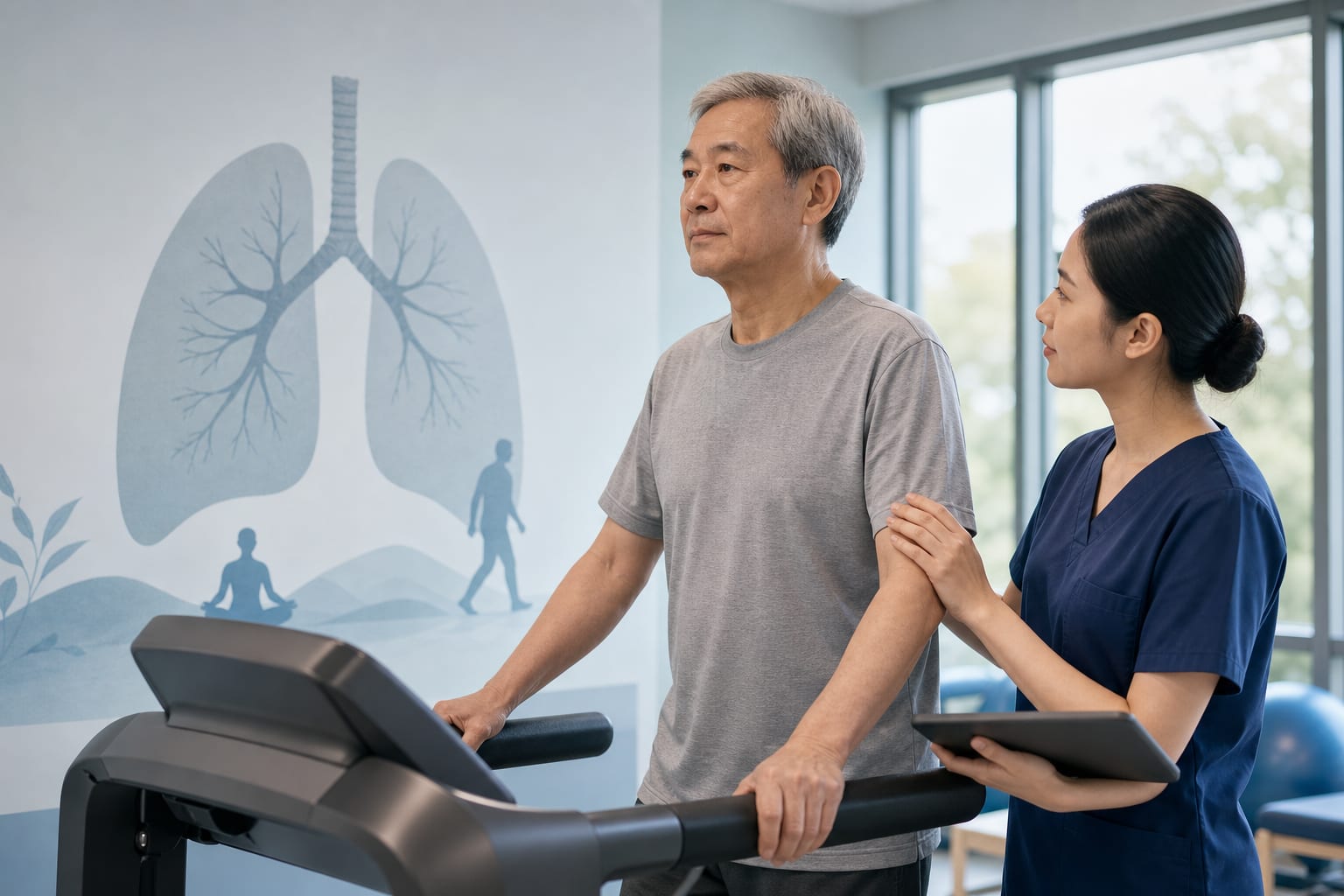
Impact of exercise rehabilitation and behavioral interaction nursing on postoperative quality of life and psychological outcomes in lung cancer patients - Scorecard - MDSpire
Advertisement
Impact of exercise rehabilitation and behavioral interaction nursing on postoperative quality of life and psychological outcomes in lung cancer patients
Clinical Scorecard: Effects of Combined Exercise Rehabilitation and Behavioral Nursing on Postoperative Quality of Life and Psychological Well-Being in Lung Cancer Patients
At a Glance
Category
Detail
Condition
Key Mechanisms
Combined exercise rehabilitation and behavioral interaction nursing (as per study findings).
Target Population
Care Setting
Key Highlights
Quality of life scores improved by 27.3% in the intervention group (source: results).
Significant improvements in arterial oxygenation and muscle tone recovery (source: results).
Depression prevalence decreased by 62.0% and anxiety by 53.3% in the intervention group (source: results).
Systemic inflammation marked by hs-CRP level reduced by 20.9% (source: results).
Improvements in hope scores (34.5%) and self-efficacy (28.5%) observed (source: results).
Guideline-Based Recommendations
Diagnosis
Management
Implement combined exercise rehabilitation and behavioral interaction nursing for postoperative lung cancer patients (as per study findings).
Monitoring & Follow-up
Assess quality of life, psychological well-being, and physical recovery at baseline, 2, 4, and 8 weeks, and at 5-month follow-up (as per study findings).
Risks
Residual confounding cannot be excluded from the study (as per study findings).
Patient & Prescribing Data
205 patients with lung cancer (103 intervention, 102 control)
Combined interventions showed significant improvements across multiple domains of recovery.
Akeso’s PD-1/VEGF bispecific beats PD-1 plus chemo in lung cancer, Amgen wins EC approval for its DLL3-targeted T-cell engager, and Aragen scales Renaissance’s Fast Track anti-GD2 antibody