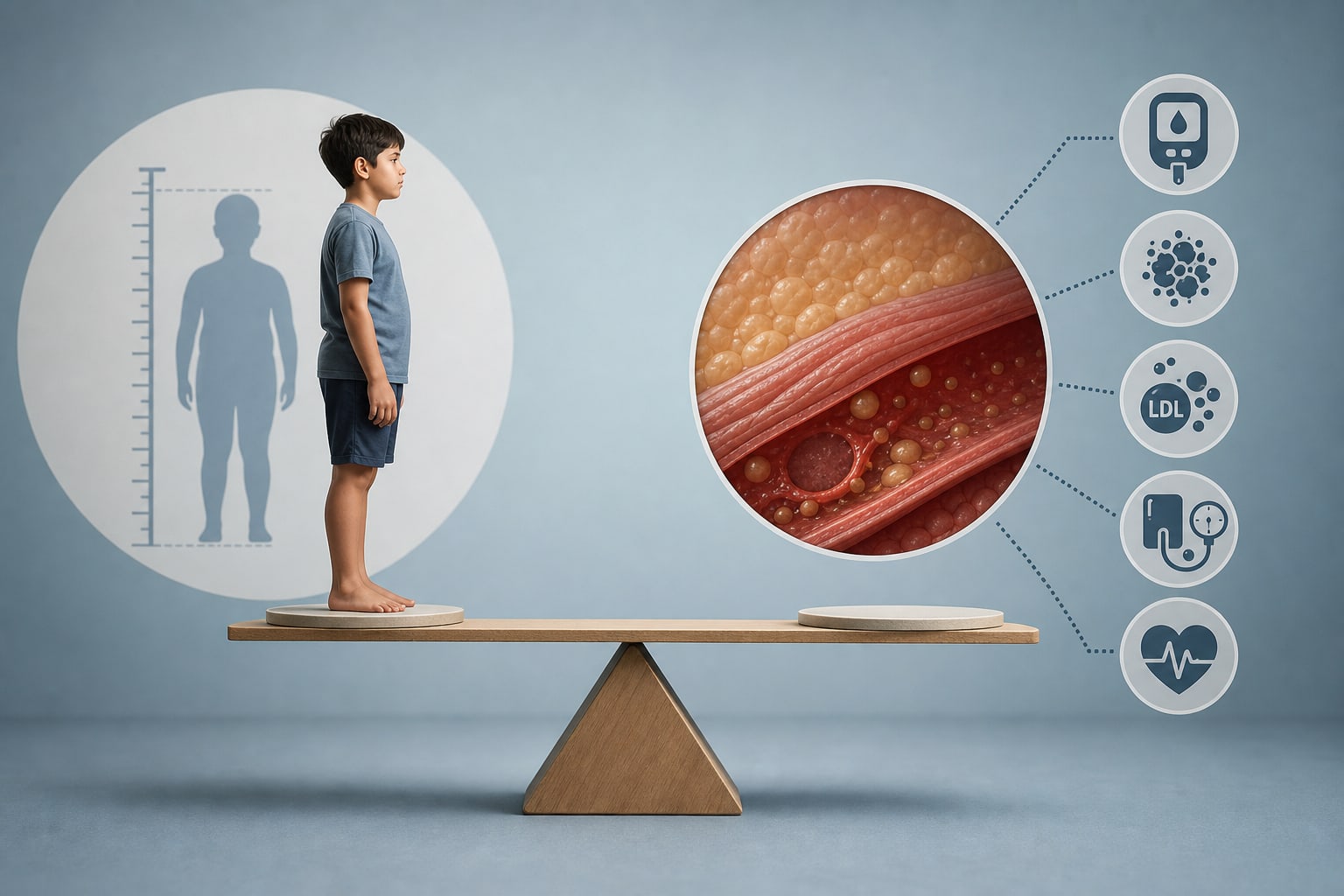
Systematic Review of the Metabolically Obese Normal Weight Phenotype in Children and Adolescents Aged 3 to 18 Years
-
By
-
Mariyam Farooqui
-
Sumithra Selvam
-
Rebecca Kuriyan
-
April 24, 2026
Clinical Scorecard: Systematic Review of the Metabolically Obese Normal Weight Phenotype in Children and Adolescents Aged 3 to 18 Years
At a Glance
| Category | Detail |
|---|
| Condition | Metabolically Obese Normal Weight (MONW) Phenotype |
| Key Mechanisms | Higher visceral adiposity, insulin resistance, dyslipidaemia, hypertension, impaired glucose metabolism, elevated markers of low-grade inflammation |
| Target Population | Children and adolescents aged 3–18 years |
| Care Setting | Pediatric metabolic health assessment |
Key Highlights
- Prevalence of MONW ranges from 10.6% to 56.2% depending on diagnostic criteria.
- Children with MONW exhibit significant metabolic abnormalities despite normal BMI.
- Early-life determinants include extremes of birth weight, rapid infant weight gain, and unhealthy dietary patterns.
- The review emphasizes the need for metabolic risk screening beyond BMI.
- Harmonised definitions of MONW are necessary for effective screening and prevention.
Guideline-Based Recommendations
Diagnosis
- Utilize metabolic markers alongside BMI for identifying MONW.
Management
- Implement early risk stratification integrating metabolic proofing and central adiposity measures.
Monitoring & Follow-up
- Regular assessment of metabolic health indicators in children with normal BMI.
Risks
- Increased risk of long-term cardiometabolic complications in children with MONW.
Patient & Prescribing Data
Children and adolescents with normal BMI but exhibiting metabolic abnormalities.
Focus on lifestyle modifications and early intervention strategies.
Clinical Best Practices
- Incorporate body composition assessments in routine pediatric evaluations.
- Advocate for dietary and physical activity interventions in at-risk populations.
- Encourage longitudinal studies to better understand MONW and its implications.
Related Resources & Content