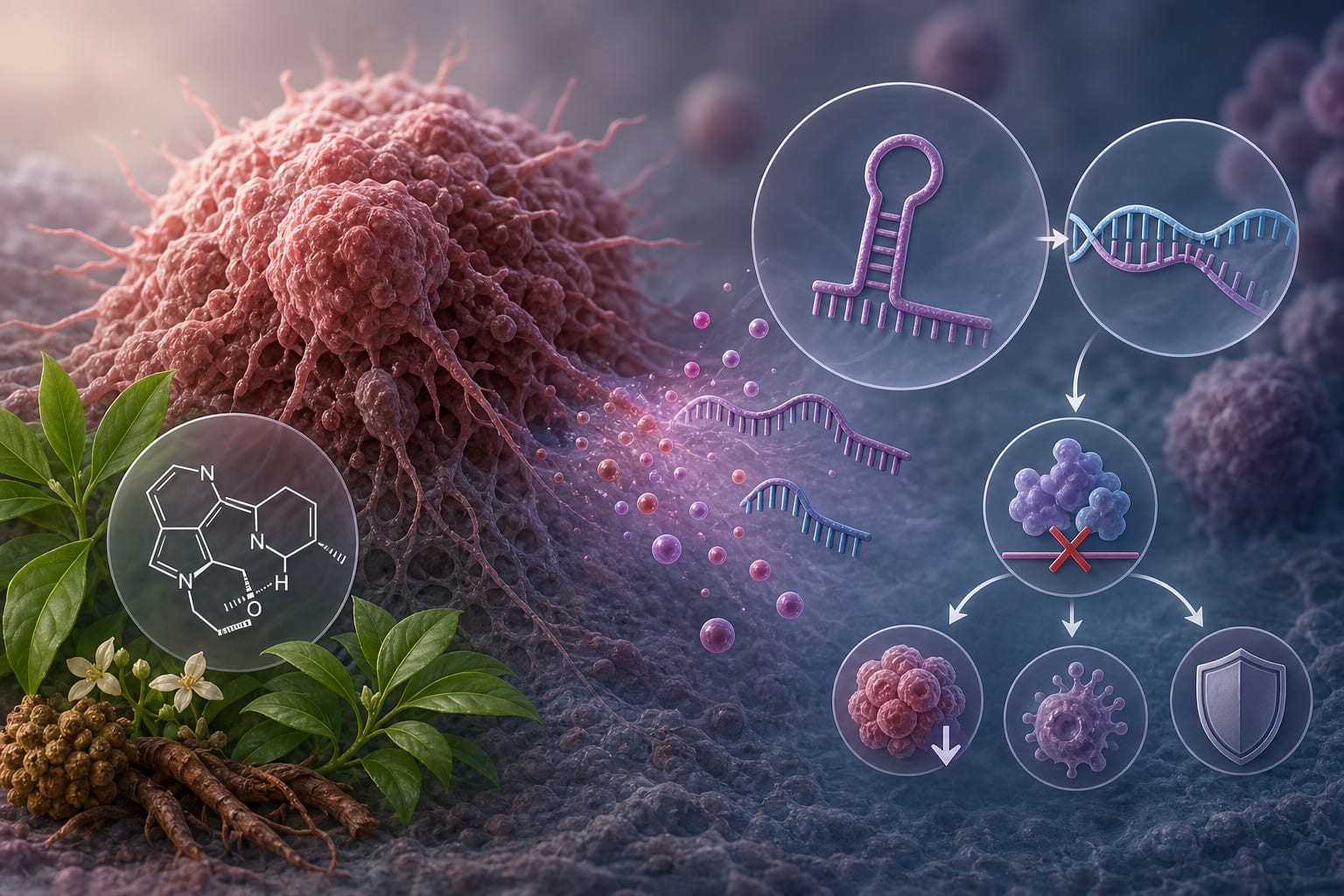
Alkaloids mediated regulation of microRNA in cancer: molecular insights and emerging therapeutic strategies
-
By
-
Syed Gulfishan
-
Marya Ahsan
-
Md Ali Mujtaba
-
Pratibha Pandey
-
Meenakshi Verma
-
Sorabh Lakhanpal
-
Shivani Sharma
-
Mir Waqas Alam
-
Fahad Khan
-
June 5, 2026
-
Clinical Scorecard: Regulation of microRNA in cancer through alkaloids: molecular mechanisms and potential therapeutic approaches
At a Glance
| Category | Detail |
|---|
| Condition | |
| Key Mechanisms | Deregulation of microRNAs (miRNAs) contributes to tumorigenic processes; alkaloids regulate miRNA expression. |
| Target Population | |
| Care Setting | |
Key Highlights
- Alkaloids can induce apoptosis and inhibit cancer cell growth through miRNA regulation.
- Numerous anticancer drugs derived from alkaloids are widely used in cancer therapeutics.
- Alkaloids influence cellular processes related to cancer development, including apoptosis and cell cycle regulation.
Guideline-Based Recommendations
Diagnosis
- Selection of treatment approaches depends on cancer type, disease stage, and progression.
Management
- Multimodal approaches combining surgery, chemotherapy, and radiation therapy are recommended.
Monitoring & Follow-up
- Monitoring of miRNA expression may provide insights into treatment efficacy and cancer progression.
Risks
- Cancer treatments can cause side effects and may lead to disease recurrence.
Patient & Prescribing Data
Natural compounds from plants, including alkaloids, may serve as adjunctive therapies.
Clinical Best Practices
- Consider the use of plant-derived compounds in cancer management.
- Evaluate the role of miRNAs in individual patient treatment responses.
Related Resources & Content