Comparative efficacy of traditional and modern mind-body exercises in middle-aged and older adults with knee osteoarthritis: a network meta-analysis of randomized controlled trials - Scorecard - MDSpire
Advertisement
Comparative efficacy of traditional and modern mind-body exercises in middle-aged and older adults with knee osteoarthritis: a network meta-analysis of randomized controlled trials
Clinical Scorecard: Efficacy Comparison of Traditional Versus Contemporary Mind-Body Exercises for Knee Osteoarthritis in Older Adults: A Network Meta-Analysis of Randomized Trials
At a Glance
Category
Detail
Condition
Knee Osteoarthritis (KOA)
Key Mechanisms
Mind-body exercises improve pain, function, stiffness, and mental health through physical activity, breathing regulation, and meditation.
Target Population
Middle-aged and older adults with knee osteoarthritis.
Care Setting
Rehabilitation treatment for knee osteoarthritis.
Key Highlights
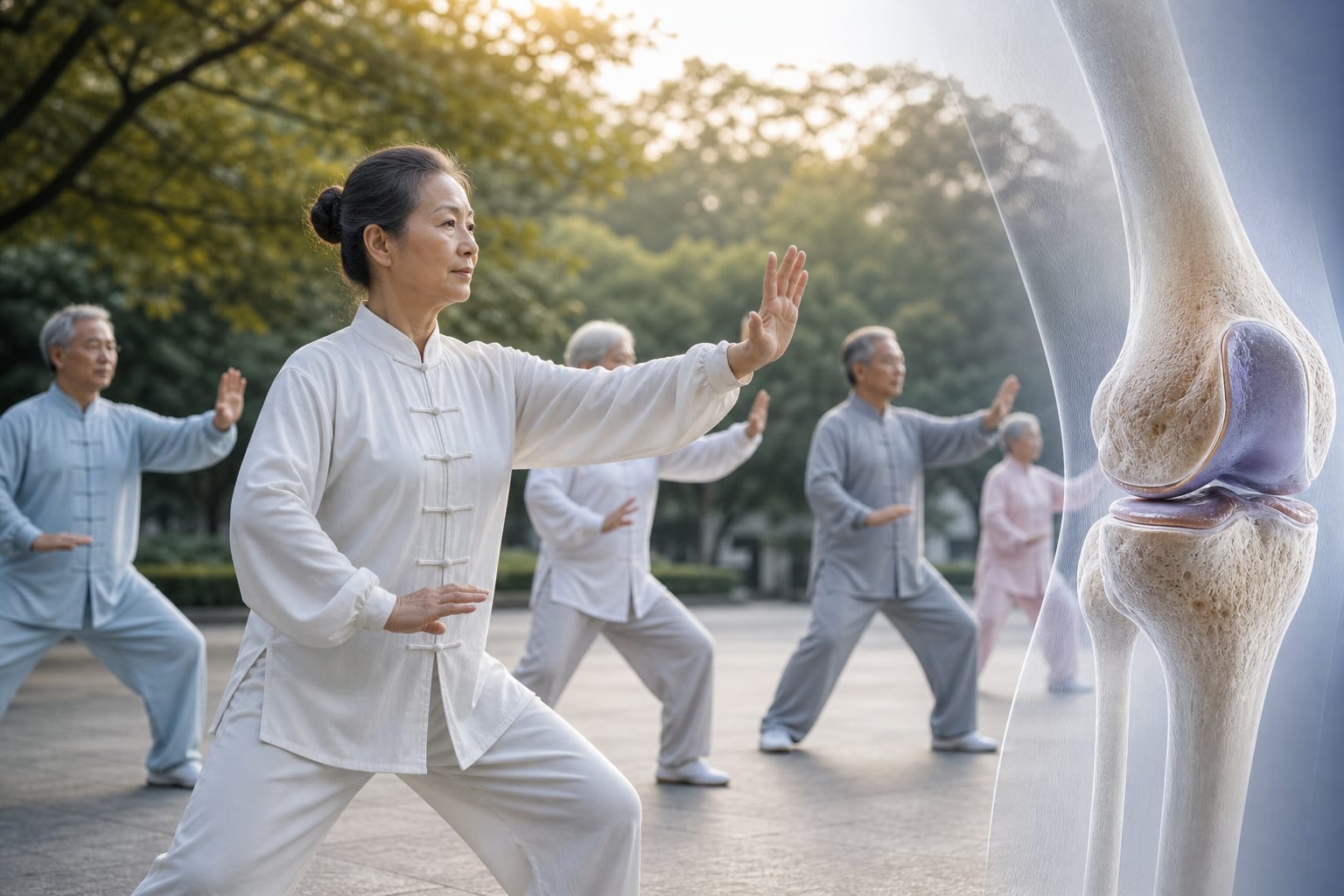
Tai Chi and Wuqinxi significantly reduced WOMAC pain scores compared to no exercise.
Pilates, Baduanjin, and Tai Chi improved WOMAC physical function scores.
Baduanjin significantly improved stiffness in KOA patients.
Yijinjing, yoga, and Tai Chi showed benefits for mental health.
The study emphasizes the need for high-quality, long-term RCTs for more precise exercise prescriptions.
Guideline-Based Recommendations
Diagnosis
Knee osteoarthritis is diagnosed based on clinical symptoms and imaging findings.
Management
Mind-body exercises are recommended as an auxiliary treatment for knee osteoarthritis.
Monitoring & Follow-up
Monitor pain, function, and stiffness using WOMAC scores.
Risks
Long-term use of drug therapy may lead to adverse reactions such as gastrointestinal problems.
Patient & Prescribing Data
Older adults with knee osteoarthritis.
Different mind-body exercises provide specific benefits; Tai Chi and Wuqinxi for pain relief, Pilates for physical function, Baduanjin for stiffness, and Yijinjing for mental health.
Clinical Best Practices
Incorporate mind-body exercises into rehabilitation programs for KOA.
Evaluate individual patient needs to tailor exercise prescriptions.