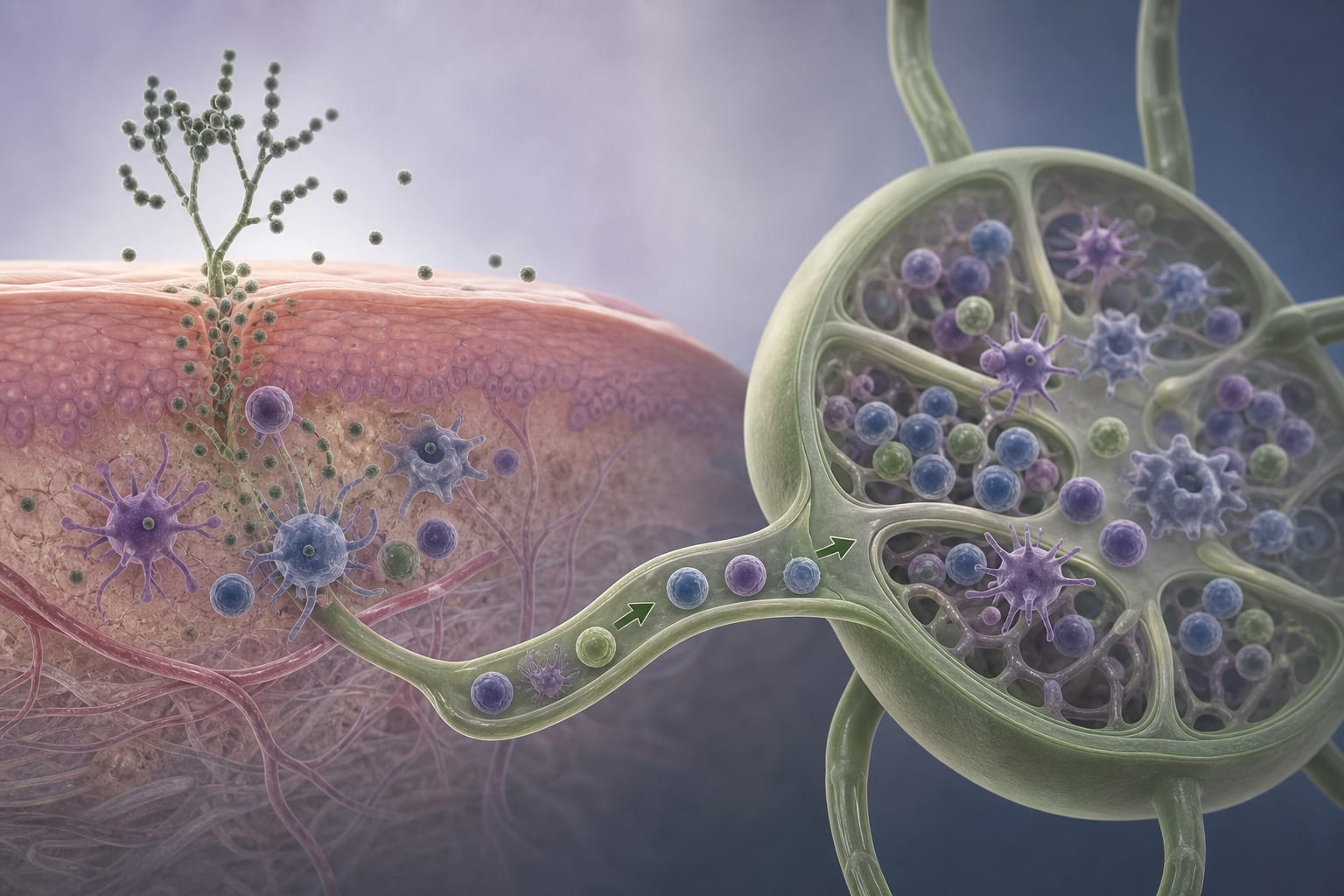
Clinical Scorecard: Cutaneous Introduction of the Non-Pathogenic Filamentous Fungus Aspergillus oryzae Triggers an Immune Response in Lymph Nodes Draining the Skin
At a Glance
Category
Detail
Condition
Key Mechanisms
Transdermal entry of Aspergillus oryzae induces immune responses characterized by lymph node enlargement and cytokine expression changes, as observed in the study.
Target Population
Care Setting
Key Highlights
Aspergillus oryzae induces a marked increase in activated B cells and type 2 resident dendritic cells, as reported in the study.
The immune response includes increased IL-4 expression and antibody production specific to Ao, based on study findings.
Remove unsupported claim about pre-inoculation with Ao inhibiting allergic responses.
Live Ao elicits a more pronounced lymph node response compared to heat-inactivated forms, as demonstrated in the study.
Ao entry promotes immune memory without enhancing responses to other antigens, as indicated by study results.
Guideline-Based Recommendations
Diagnosis
Evaluate immune cell subsets in lymph nodes post-Ao inoculation, as suggested by the study.
Management
Consider the immunomodulatory effects of non-pathogenic fungi in therapeutic contexts, based on study observations.
Monitoring & Follow-up
Assess cytokine expression levels (e.g., IL-4, TNF-α) following Ao exposure, as indicated in the study.
Risks
Potential for altered immune responses in the context of allergic diseases, as noted in the study.
Patient & Prescribing Data
Clarify that Aspergillus oryzae may have effects on immune modulation based on study findings.
Clinical Best Practices
Utilize non-pathogenic fungi in research to explore their effects on immune system balance, as suggested by the study.
Monitor immune responses in lymph nodes for insights into allergic disease management, based on study results.