Construction and verification of a prediction model for sleep disorders in older patients with coronary heart disease based on machine learning algorithms - Scorecard - MDSpire
Advertisement
Construction and verification of a prediction model for sleep disorders in older patients with coronary heart disease based on machine learning algorithms
Clinical Scorecard: Development and validation of a machine learning-based predictive model for sleep disorders in elderly individuals with coronary heart disease
At a Glance
Category
Detail
Condition
Sleep disorders in older adults with coronary heart disease
Key Mechanisms
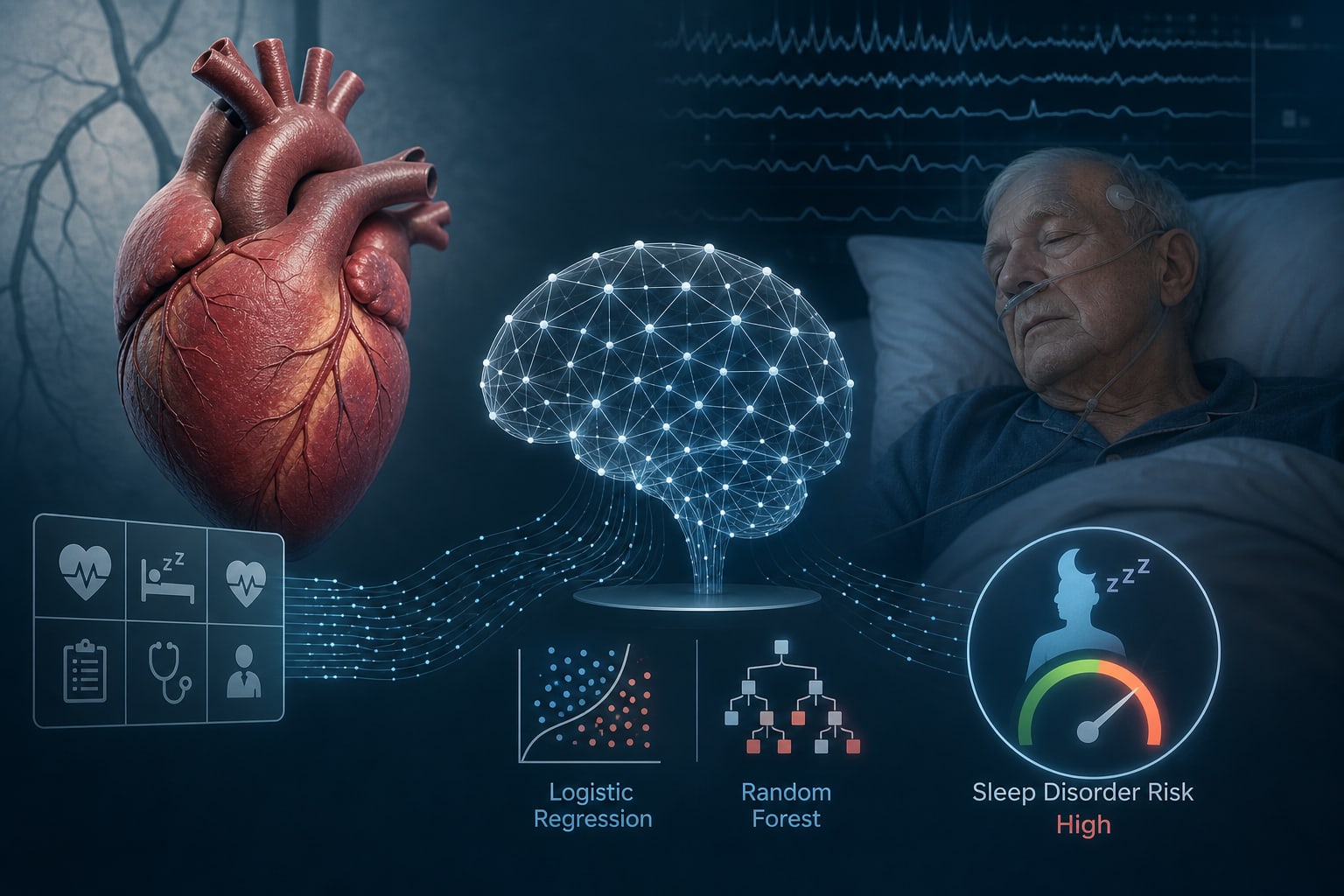
Machine learning algorithms for predictive modeling
Target Population
Older adults (≥ 60 years) with coronary heart disease
Care Setting
Cardiology department of a hospital
Key Highlights
24.26% of older CHD patients experienced sleep disorders.
LASSO regression identified five key risk factors: sex, duration of CHD, chronic gastritis, anxiety, and depression.
Random forest model achieved the highest AUC (0.839) and accuracy (0.766) in the training set.
Logistic regression showed the best specificity (0.875) in the validation set.
External validation of the Logistic regression model demonstrated an AUC of 0.785.
Guideline-Based Recommendations
Diagnosis
Use PSQI to assess sleep disorders in older CHD patients.
Management
Implement targeted interventions for identified risk factors such as anxiety and depression.
Monitoring & Follow-up
Regularly evaluate sleep quality in older patients with CHD.
Risks
Patients with CHD and sleep disorders face increased risks of malignant arrhythmias and myocardial infarction.
Patient & Prescribing Data
Older adults with coronary heart disease
Focus on managing comorbidities that may affect sleep quality.
Clinical Best Practices
Utilize machine learning models for improved prediction of sleep disorders.
Incorporate comprehensive health management strategies for older CHD patients.