Clinical Scorecard: Enhancing Screening for Retinopathy of Prematurity in China Through a Unified Objective Criterion: A Decade-Long Retrospective Study
At a Glance
Category
Detail
Condition
Retinopathy of Prematurity (ROP)
Key Mechanisms
Birth weight < 2000g or gestational age < 32 weeks as screening criteria
Target Population
Premature infants undergoing ROP screening
Care Setting
Tertiary neonatal care institutions
Key Highlights
705 ROP cases (48.5%) and 370 severe ROP cases (25.5%) identified among 1,453 infants
Objective screening criteria identified 98.2% of ROP cases and 99.2% of severe ROP cases
Lower gestational age and birth weight are independent risk factors for severe ROP
Guideline-Based Recommendations
Diagnosis
Use objective criteria of BW < 2000g or GA < 32 weeks for ROP screening
Management
Avoid subjective extended screening in tertiary hospitals with advanced neonatal care capabilities
Monitoring & Follow-up
Follow infants who meet the objective criteria for ROP diagnosis and treatment
Risks
Over-screening can lead to unnecessary procedural risks and increased psychological stress for families
Patient & Prescribing Data
Premature infants with BW < 2000g or GA < 32 weeks
Severe ROP defined as type 1 ROP requiring clinical treatment
Clinical Best Practices
Implement a unified objective screening criterion to reduce over-screening
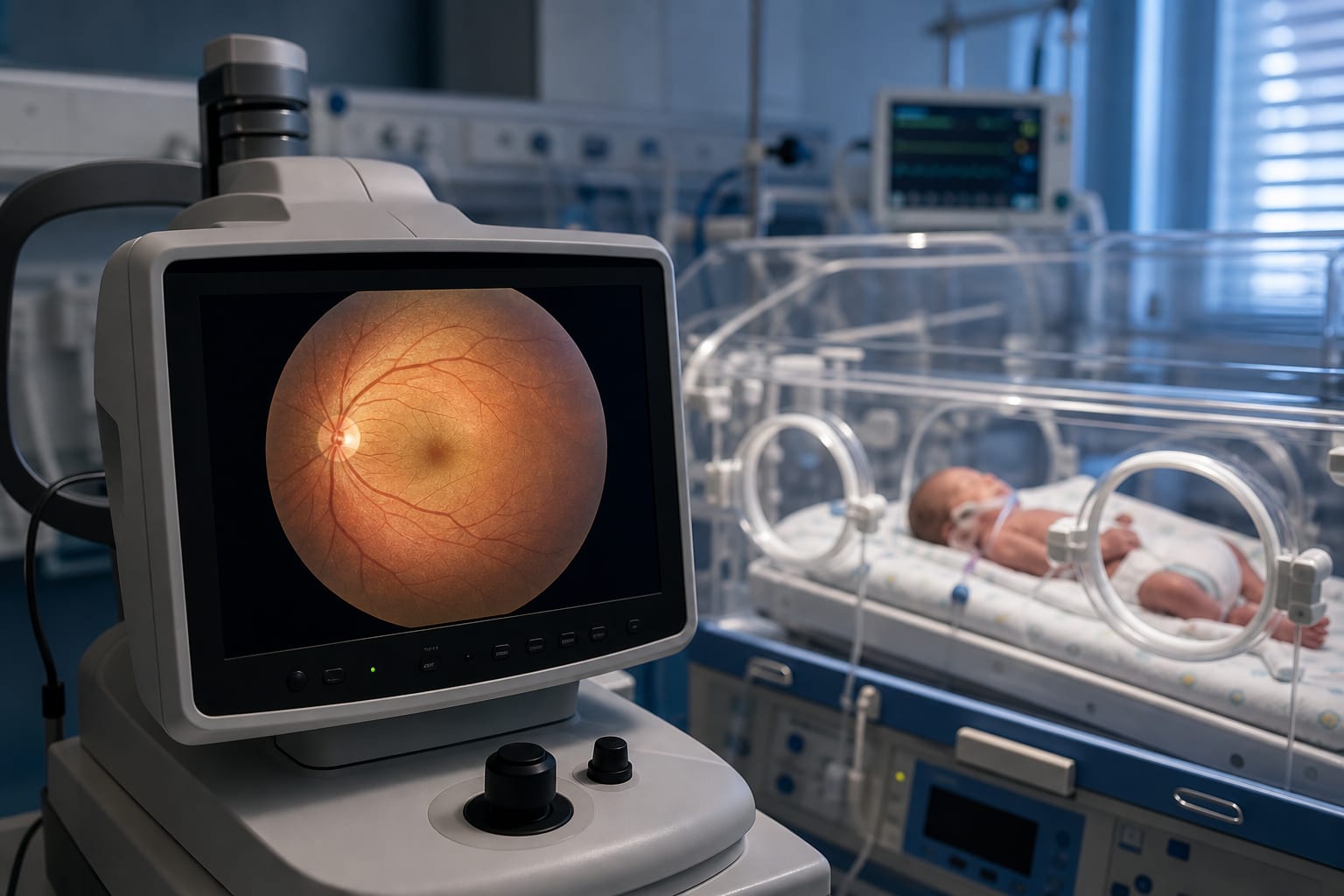
Conduct fundus examinations using binocular indirect ophthalmoscopy or RetCam III