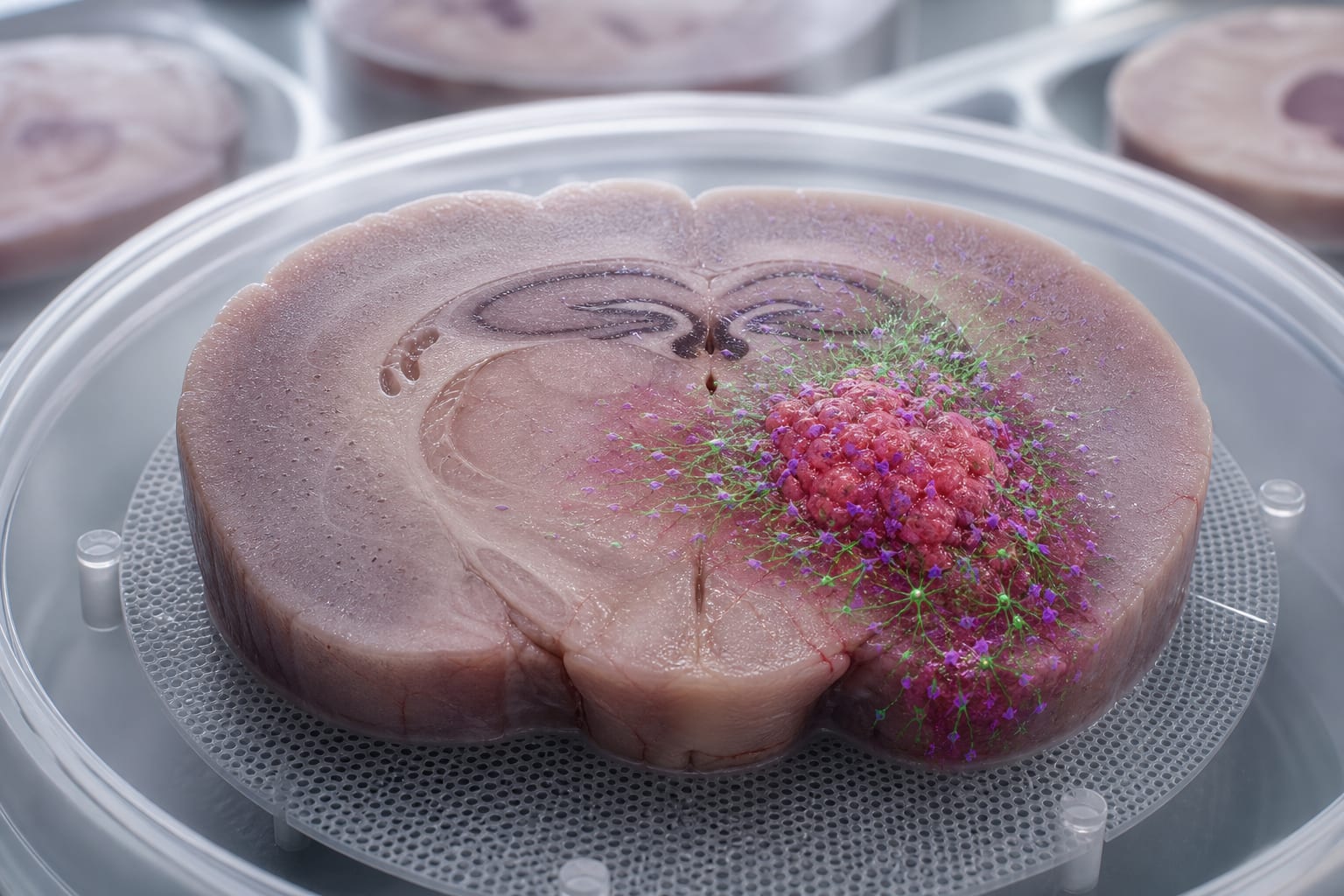
Enhancing glioblastoma studies through the development of a comprehensive brain slice model
-
By
-
Katharina Fuchs
-
Clara Keller
-
Bianca Layer
-
Katja Nadler
-
Ellaine Salvador
-
Tobias Weigel
-
Bastian Christ
-
Sofia Dembski
-
Ralf-Ingo Ernestus
-
Mario Löhr
-
Carsten Hagemann
-
June 24, 2026
Clinical Scorecard: Enhancing glioblastoma studies through the development of a comprehensive brain slice model
At a Glance
| Category | Detail |
|---|
| Condition | Glioblastoma (GBM) |
| Key Mechanisms | Dynamic interaction with the tumor microenvironment (TME) including neurons, glial cells, immune populations, and extracellular matrix components. |
| Target Population | Adults with glioblastoma, particularly focusing on tumor biology and therapeutic responses. |
| Care Setting | Research laboratories utilizing organotypic brain slice cultures. |
Key Highlights
- Development of a whole murine brain slice model for GBM research.
- Model preserves complex cellular architecture and diverse cell populations.
- Spheroids of rat 9L/lacZ GBM cells used to simulate tumor growth and invasion.
- Model maintains viability for at least 7 days under stable conditions.
- Facilitates investigation of GBM-TME interactions with high spatial and temporal resolution.
Guideline-Based Recommendations
Diagnosis
Management
Monitoring & Follow-up
Risks
Patient & Prescribing Data
Adults diagnosed with glioblastoma.
The model allows for the evaluation of potential therapeutic approaches in a controlled environment.
Clinical Best Practices
- Utilize organotypic brain slice cultures to study tumor invasion and migration mechanisms.
- Incorporate fluorescence-based methods for assessing model health and tissue viability.
- Target specific brain regions to enhance understanding of glioblastoma pathology.
Related Resources & Content